


Jun 10, 2014 5:03 PM
Updated Feb 10, 2022 11:03 PM
Mark Naison: Industrial union organizers insisted, to their credit, that Black, Latino and Asian workers had to be included in any movement to achieve collective bargaining rights and respect at the workplace, and made that a central part of the organizing strategy.
Many of my friends on the left, with the best of motives, have raised questions about my willingess to work with Conservatives and Libertarians in the movement against Common Core and other top-down attacks on public education. They think that alliances of this kind are both dangerous and historically unprecedented.
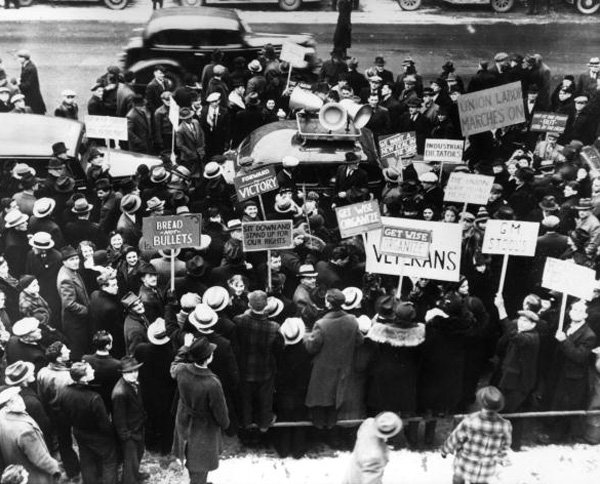
However, while such alliances may not have been very common in the post World War 2 Era, they were extremely common during the Great Depression and in fact contributed to the enormous success of the American labor movement as well as the breadth of New Deal policy in that era.
During the Great Depression, labor activists in the American left were one relatively small portion of a great populist upheaval that swept through the US.
Related stories
During the Great Depression, labor activists in the American left were one relatively small portion of a great populist upheaval that swept through the US, taking the form of huge grassroots movement that challenged the excessive concentration of wealth in the US and the overwhelming power of banking interests.
The largest of these uprisings were the "Share Our Wealth Movement" led by Louisiana Senator Huey Long, the grassroots movement for Old Age Pensions led by Dr. Francis Townshend, and the movement led by Father Charles Coughlin, the Michigan-based radio priest. Each of these movement attracted millions of followers and each caught the attention of the politically astute advisors of President Franklin Roosevelt, who feared they might coalesce into a European style fascist movement if he didn't undercut their appeal.
Two key aspects of the array of Second New Deal reforms, Social Security and the Wealth Tax on the highest incomes, were a direct response to these movements. Both were policies which wrought a permanent change in the American political landscape.
Industrial union organizers insisted, to their credit, that Black, Latino and Asian workers had to be included in any movement to achieve collective bargaining rights and respect at the workplace, and made that a central part of the organizing strategy.
But the impact of these movements was not just reflected in legislative policy. They had a tremendous impact "on the ground" in labor organizing. Everywhere organizers for the new industrial labor movement, who were primarily from the socialist and communist left, tried to get masses of workers to put their jobs and lives on the line to win collective bargaining rights, with the great Flint Strike of 1936/37 being the greatest example. In doing so, they ran into many more followers of the Long, Coughlin and Townshend movements than they did those who followed traditional left wing parties.
And this shaped how they organized. They did not inject their own long-term political goals into these life-and-death struggles. They fought for ideas of dignity, self-respect and democratic control that touched a chord with all workers who felt victimized by powerful interests -- adding one crucial element that the conservative movements had NOT promoted -- interracial solidarity.
Industrial union organizers insisted, to their credit, that Black, Latino and Asian workers had to be included in any movement to achieve collective bargaining rights and respect at the workplace, and made that a central part of the organizing strategy in all the great strikes of the Depression Era, from San Francisco, to Minneapolis, to Toledo, to Flint.
The lesson here, for me, is that as long as people on put their anti-racist politics front and center, they should be open to working with grass roots activists from across the political spectrum, because the left alone cannot achieve victories over corporate School Reform now any more than their counterparts in the 30’s could have built the industrial labor movement by staying in their comfort zone.

Mark Naison
With A Brooklyn Accent
Comments

Powered by RoundtableAn AI/DeFi-powered Enterprise Media Operating System. Learn more at Roundtable.io.© Roundtable 2026. By using this site you agree to the Terms of Use and Privacy Policy