


Sep 14, 2015 5:14 PM
Updated Feb 10, 2022 10:54 PM
Failing Students
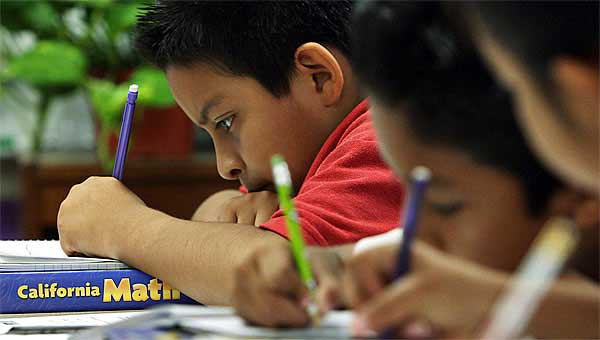
I could just scream when I read about downward trends in California, let alone nationwide, when it comes to student-readiness for post-high school life. Not to be too simplistic, it seems to me that these latest dire predictions should be relatively easy to rebut and reverse.
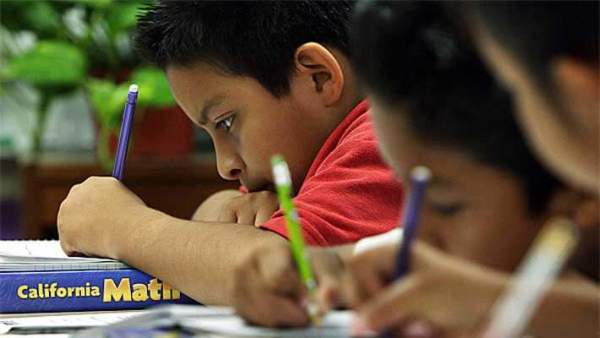
Perhaps, first and foremost, let’s throw out altogether a majority of the “new-fangled” programs and strategies (with all their bells and whistles) and get back to the basics from which most of us benefitted a generation ago. I think a lot of the coursework today has been created only to justify the existence of a program or a person’s position in it and not, in the long run, for the common good of our children (the unfortunate results which we witness every day as our young people emerge from our currently imperfect, unevenly applied, dismally inadequate, and somewhat myopic educational system).
I consider myself a successful product of the broad foundation I acquired during the early days of my education, the basis from which I have ever since benefitted. However, I have also been a teacher for nearly four decades and understand how the contrast between former and current strategies produces vastly and dramatically different results–outcomes that do not generally fulfill our reasonable hopes and expectations.
To be honest, as a teacher I did my best to skirt many State and District mandates which essentially wanted educators to teach to the tests—something which occurred so frequently that those incessant (and rather useless) exams often interrupted and, thus, prevented the natural flow of the curricular process. Consequentially, those testing regimens generally created constant setbacks to achieving, in a timely manner, the benchmarks that had been set.
Related stories
What I tried to do was to review curricula from the previous grades and to create a foundation early in the school year in an attempt to get all my students up to speed. Thus, from day one of each new school year, I would begin (regardless of class level or academic ability—remedial to advanced) with a review of the basics [almost as if the students knew nothing—like the blank slates (tabula rasa) that they are, waiting to be imprinted with the skills that can and will inevitably lead to success].
Following those chiefly productive efforts, I would proceed in a systematic way. My methods would not only incorporate the skills that were necessary to be acquired in a sequential way but, in so doing, would also wind up addressing the subject matter covered on the many standardized tests that faced us.
Too many educators today are reticent about teaching the fundamentals that the natural progression of education-acquisition requires—in large part, because they avoided taking the classes which would teach those necessary skills.
Too many educators today are reticent about teaching the fundamentals that the natural progression of education-acquisition requires—in large part, because (for somewhat specious reasons) they avoided taking the classes which would teach those necessary skills. And, often, if they did select such classes to complete their degree requirements, many professors (inscrutably) were negligent by not teaching those skills.
In today’s search to find answers to all our current educational problems, too many have forgotten about what worked in the past. Yes, we are faced with many problems that overall were not an issue before, but such reality does not preclude us from working through those challenges.
Yes, we do have a large immigrant population whose needs must be addressed (but recall that only two generations ago, America witnessed a large influx of people from around the world who were able to assimilate more easily because that was the expectation held by both educators and parents--for themselves and for the children being schooled). Considering this circumstance, there is no reason why we cannot promote a bi-lingual and multi-ethnic culture (and be proud of it) for such immigrants and for ourselves.
Furthermore, it is also essential that we attend to the needs of the disabled and mentally impaired and to the slow learners but also to the needs of those who soar past everyone else in their classes. Doing so does not mean that addressing the discrete needs of those fitting into certain categories, negates teaching the educational pyramid from the bottom of up! It is simply counter-intuitive that placing one goal over the other or at the expense of the other is a rational way to proceed.
What seems to be omitted of late from our standard curricula is the teaching of deeper thinking (which is one of the goals of the Common Core Program which I endorse for the most part). We must recognize how essential analysis is in preparing our children for real-life scenarios. Such an objective is all about critical thinking—a plan that includes creativity, innovation, real-life problem-solving as opposed the regurgitation of answers from rote memorization (it is less important to know the date an event occurred than the why).
It is logical to recognize that those who can analyze and subsequently become problem-solvers will be the most successful in life and will ultimately be the most helpful for their respective communities. This kind of enlightening and didactic scrutiny is more challenging to teach and to learn but ultimately is worth the demands of the process (think of Socratic methodology).
For these and other reasons, I am a supporter of Common Core which emphasizes deeper thinking and real-life expectations. Many schools and school districts are beginning to come around to this way of thinking, in large part because of the push by government at various levels to make it part of the regular curriculum (as well as by having convinced increasing numbers of parents and teachers to support this plan).
To quote from a Los Angeles Times article on the subject, the goal is as follows: “The idea is to get students to think more deeply, solve problems and better express themselves in writing and speaking. Those objectives are reflected in the new [Common Core] test.” (Incidentally, did you catch the two grammatical errors in this quote—a good example of my point.)
But I digress. . . . I attend meetings of various types on a regular basis. Too frequently, the literature passed out contains sloppy errors and/or confusing statements that are difficult to comprehend—both of which make me question the capabilities of those leading the forum. Speakers are often guilty of similar mistakes, either misspeaking in a rather embarrassing way or presenting information they have not adequately researched. As a result, I generally lose faith in the veracity of what is being presented (and that includes any trust I might otherwise have had in the presenters themselves).
Even the writing on television Chyrons reflects writers who have failed to communicate clearly (perhaps through no fault of their own or because they believe they are making the extra, though erroneous, effort to be correct). The sad part is that so many people are making the same mistakes that people who should know better simply don’t notice any problems in the communication process of their co-workers.
As a simply example, a frequent problem is not knowing when to use the word “I” or “me.” I suppose that many would consider the issue inconsequential, but ask the attorney (composing a brief or a contract) or the engineer (writing exact instructions for constructing a bridge) just how important preciseness is!
I believe these people are striving for correctness (which is a good thing) but instead make errors which could have been avoided had a proper education prepared them for using the rules of language. Think of how many times the intent of laws is misconstrued after the fact—confusion that often leads to sentencing disparities, later requiring clarifying amendments to the legislation in question? Think of the collapse of the bridge under construction that led to injury and death. Remember the apartment building in Northridge during the 1994 earthquake that killed tenants and flattened cars. Surely, miscommunication was in part at fault!
This scenario reminds me of Keith Olbermann and how Ben Affleck made fun of him on SNL for using language “too” perfectly—it is ironic how funny the segment was. Poor us!
Remember the NASA space project in 1999 when aero-physicists in two locations were using a different set of numbers (the Metric versus the Imperial/English systems) which caused the space probe (upon which they had been working for years) to fail because of the difference in calculations and lack of exacting communication? To quote its report: “The peer review preliminary findings indicate that one team used English units (e.g., inches, feet and pounds) while the other used metric units for a key spacecraft operation. This information was critical to the maneuvers required to place the spacecraft in the proper Mars orbit.”
Oops! This highlights how life is all about communication—a symbiotic process that must never be taken lightly!! It is a good thing that no animal life was on board!
I remember a father recalling how he would literally get angry with his daughter when he would repeatedly tell the little girl to lean over her plate when she was eating and thought she was deliberately being stubborn when she did not comply. At length, he finally learned that she didn’t know what “lean” meant when he assumed she did. What a lesson to learn, process, and utilize for any teacher—parent or professional.
Again, it is all about the foundations and assumptions regarding the sequential progressions of learning.
Another fact about which not enough people are aware is that all of us learn through three modalities—seeing, hearing, and feeling—with one modality having preponderance over the others (this does include the blind and deaf in a somewhat modified way). It is, therefore, incumbent upon us to utilize all three methods when instructing others.
In school, the teacher can write on the board (for visual learning) as she reads her words out loud (auditory acquisition) while the students take notes (kinesthetic learning). If you have ever wondered why you have a hard time remembering a joke to share, it might be you are a visual learner (because you need to see the joke written down first). On the other hand, those jokesters among us (and we know many children who have that delightful skill) are likely to be auditory learners who can recall what they have heard and can readily pass it on.
So let’s decide to get back to the basic and most natural methods to educate. Let’s discard most of the new and confusing and costly programs which simply have not proven themselves. If this were not true, why are the newer programs (with increasing frequency) replacing only slightly older programs? The current programs, for the most part, do not address the needs of a broad spectrum of learners.
This might explain why charter schools so often find reasons to send “problem” students elsewhere. Could it be that they only want to retain those children who will contribute to the higher scores they can subsequently extol, proving the school’s success rate? Could it be that the entire charter school campaign is, in the long run, to eliminate free public education—virtually leaving the problem students and their parents to fend for themselves?!
Let us insist that all our teachers at every level be taught the fundamentals first (as part of the training and credentialing program). We, as a society, must insist that our educators use those fundamentals every day in every class as a foundation on which to build. Children must be allowed to move slowly but inexorably up the educational pyramid as sufficient knowledge and challenges are imparted and acquired. Ultimately, with few exceptions, each student will be able to reach his or her highest potential.
Let’s not make excuses for our children (realizing that each one faces perhaps extraordinary challenges outside the classroom). We must be able to provide the best pathway to achievement for each one. Let us not be enablers for failure (by both teacher and parent) but cheerleaders for success.
We must insist on the highest standards while offering whatever assistance our students need. Certainly, reducing class size is indispensable to making the concepts, expressed here, a reality. More and better-trained, committed, and dedicated educators should be the only ones accepted into our school programs. Willing and receptive students, who are enthusiastically supported by parents or guardians, must be taught to recognize just how essential a quality education is—a concept that will make all the difference in achieving the educational goals we want for our children.
And by the way, a quality education does not mean a costly private school. Free public education is one of the tenets on which this country is based. Throughout history, public education has generally served us well (and much better now for American children since laws have been put in place to guarantee their access to a quality education—which includes current laws that have been enacted to reverse the previous exclusions that were due to local prejudices). We must demand quality for every student in our free public schools—institutions that have and can again produce outstanding contributors to our greater communities. Such education will offer opportunities for our young people to pursue any occupation to which they are disposed.
Through providing a command of grammar and composition, to understanding what precipitated historical events, to comprehending why math is an integral part of the dynamics of every area of life, each student will benefit. Such analyses must be incorporated into each area of study and must also point out how each field affects the next. Similarly, this means that through understanding these concepts, such approaches will teach how each of our lives—past, present, and future--is and will continue to be impacted from the acquisition of broad and open-minded, open-ended education.
We must not give up on our children or on public education. We must be willing to discard methods (even some newer ones that have recently been introduced) that don’t really produce the results (which have often been skewed to make a program look better than it really is) that we seek.
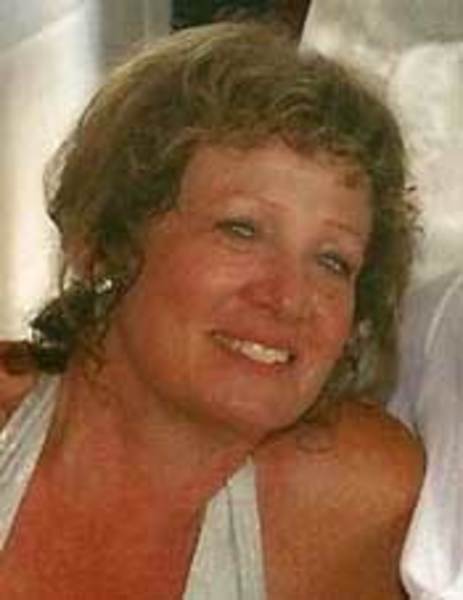
Rosemary Jenkins
Comments

Powered by RoundtableAn AI/DeFi-powered Enterprise Media Operating System. Learn more at Roundtable.io.© Roundtable 2026. By using this site you agree to the Terms of Use and Privacy Policy