
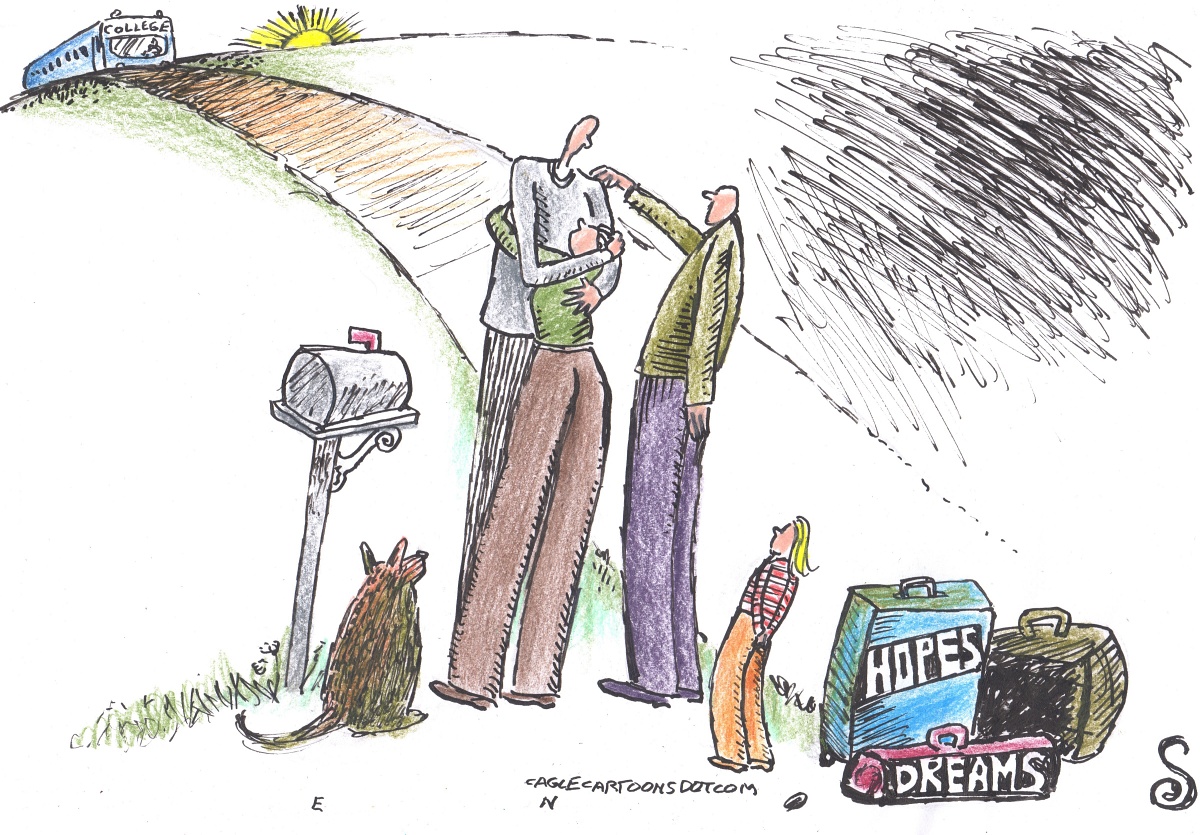
Cagle Cartoons: Randall Enox


Jun 6, 2025 4:01 PM
Never has it been more crucial to recognize education as both a force for empowerment and a powerful mode of colonization.
We are living through a dismal age, one where anti-intellectualism is no longer masked, but paraded as a form of virtue. A fascist monoculture thrives, dull and mechanized, overrun by wooden stuntmen, empathy-hating billionaires, and artists like Kanye West who unashamedly praise Hitler. Meanwhile, podcast ventriloquists spew algorithmic bile into the void. In the ruins of the university, too many so-called leaders and their bureaucratic accountants now lend legitimacy to what Marcuse once called "scholarshit", a travesty of thought, dressed in the empty rituals of managerial reason, budget-cutting cruelty, and unapologetic brutality. Never has the need for critical education and a shift in mass consciousness been more urgent. Never has it been more crucial to recognize education as both a force for empowerment and a powerful mode of colonization.
In an age when instrumentalism dominates, reducing education to mere training and suffocating pedagogy under the weight of indoctrination, it becomes more urgent than ever to reclaim the university as a space for reflection, critique, and ethical imagination. Instrumentalism erases social responsibility, dismisses matters of justice, and detaches learning from the deeper relations of power. It exchanges depth for compliance and, in the process, robs education of its emancipatory promise.
We have witnessed this logic unfold in so-called liberal movements like "teaching to the test" and in the ongoing proliferation of Teaching and Learning Centers, which often reduce education to a toolbox of technical skills. As Ariella Aïsha Azoulay warns, these practices resemble the workings of "imperial technologies", systems designed to manage learning without nurturing an awareness of injustice, to flatten thought, and to detach education from the struggle for democratic agency and pedagogical citizenship.
Consider Elon Musk, hailed by some as a visionary for creating Tesla and fueling fantasies of colonizing Mars. Yet beneath this gleaming myth lies a far more disturbing reality. Musk has made Nazi salutes, trafficked in dangerous conspiracy theories, and, as Michelle Goldberg noted in The New York Times, exhibits a chilling disdain for empathy, paired with "breathless cruelty." This cruelty is not abstract; it manifests in the real world, where the policies Musk champions have contributed to the deaths of hundreds of thousands of children in Africa. His power is not merely technological; it is ideological, shaping a culture that confuses megalomania with genius and elevates indifference to suffering as a mark of strength. This is more than a collapse of civic literacy, it is a toxic poison, destroying any vestige of civic consciousness, solidarity, and social responsibility.
Related stories
Cruelty has become the currency of power, the measure by which dominance is asserted and human worth discarded. Bill Gates, in a moment of moral clarity, acknowledged the gravity of shuttering USAID, conceding that he “bore the responsibility of risking a resurgence of diseases such as measles, HIV, and polio.” But his warning grew even more damning when, in the Financial Times, he described Elon Musk—once heralded as a symbol of techno-utopian promise—as “the world’s richest man killing the world’s poorest children.” Yet even Gates understates the larger architecture of violence at work. Trump’s so-called “beautiful budget bill” is not merely a policy document—it is a blueprint for social abandonment, a death sentence rendered in the language of austerity. It slashes funding for child nutrition programs, strips health care from millions, and eviscerates what remains of the social state. In its wake rises a machinery of disposability—a punishing state that targets the poor, the vulnerable, and people of color, turning the politics of governance into a war zone where compassion is silenced and suffering normalized. This is gangster capitalism on steroids--unleashed, utterly devoid of any social responsibility and drunk on its own greed, power, corruption, and fascist principles.
This silence speaks to a deeper void in higher education. It is no longer enough to champion STEM disciplines while starving the liberal arts and humanities. It is not enough for humanities students to dwell only in critique, disconnected from the technological world around them. What we need is a fusion of literacies, a pedagogy that teaches technical competence without sacrificing moral imagination; a pedagogy that nurtures civic literacy, historical awareness, the capacity to think beyond disciplines, and the courage to cross borders of culture, identity, and thought.
Language itself has been hijacked, bent to the will of a colonizing legacy steeped in hatred, disposability, genocide, and a culture of unapologetic cruelty. Neo-Nazis march without shame, white supremacists shape the conservative cultural machinery, and racist policies are no longer whispered but codified. Nazi salutes are back in fashion. Universities are increasingly transformed into sites of indoctrination and surveillance, more attuned to the logic of police precincts than places of critical learning. Students who dare to protest the genocidal assault on Palestinians in Gaza are abducted, vilified, and silenced. The most powerful white nationalist on the planet parades corruption as a political virtue and deploys state terror as a primary tool of governance. Solidarity is reconfigured into communities of hate, while resistance to fascism is rebranded as terrorism. Beneath these crimes against humanity lies a culture hollowed out by the absence of reason, moral clarity, and the capacity to hold power accountable. The ghost of fascism has not merely returned; it has taken up residence and been made ordinary.
The age of lofty visions has been cast aside, discarded like ideological refuse. Yet without such visions, rooted in the hard labor and hopeful promise of democracy and the critical function of education, we are left adrift. In their place stand administrators who act as high-powered accountants, students shaped by a culture of commodification and conformity, and a precarious academic labor force paid less than Wall-Mart greeters and clerks. Meanwhile, racism, white nationalism, and Christian fundamentalism gather momentum, extinguishing the flickering lights that once illuminated the path toward a radical democracy. When higher education no longer serves as a vessel for ethical imagination and collective hope, it becomes complicit in its own undoing, and with it, democracy itself teeters on the edge.
As educators, we must fight for a vision of higher education as both sanctuary and catalyst, a place where democracy is not only studied but enacted, where students are not trained to be efficient machines, but cultivated into thinking, feeling, and acting human beings. We need an education in which a culture of questioning is not punished but nurtured, where talking back is a civic virtue, and where the pursuit of equity and justice is central to the very purpose of teaching and learning. Such an education must be grounded in the principles of civic literacy, historical consciousness, and a systemic understanding of power—one that connects private troubles to public issues and expands the possibilities for individual and collective agency.
This is the foundation upon which a radical democracy must be built, and it is the defining pedagogical task of our time. If we fail in this responsibility, higher education will surrender its role as a vital civic sphere—one essential to producing the narratives, knowledge, and capacities that sustain the promise of equality, justice, freedom, and compassion. In abandoning that mission, it will not merely falter; it will aid in its own unraveling. If it fails, it will become complicit in its own unraveling. And with it, democracy will edge ever closer to collapse.
Donald Trump understands this. That is why he fears critical education. That is why he wages war on it.
Comments

Powered by RoundtableAn AI/DeFi-powered Enterprise Media Operating System. Learn more at Roundtable.io.© Roundtable 2026. By using this site you agree to the Terms of Use and Privacy Policy