
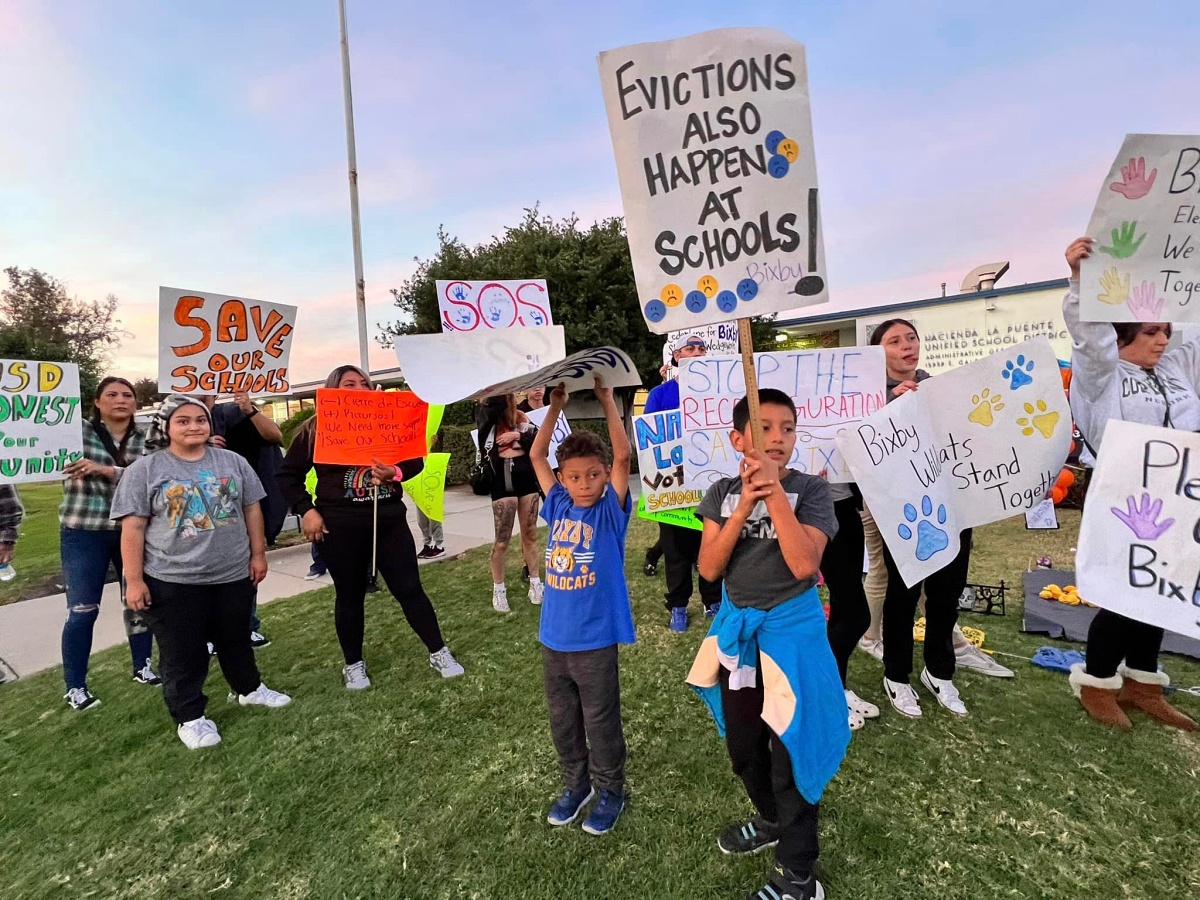
Rally Outside the District Office the Evening of the School Board Vote


Declining School Enrollments
Nov 25, 2023 7:17 PM
Decisions About Declining Enrollment, School Closures, and Reconfiguration Must Include Parents, Students, and Communities as True Partners
As California school districts decide how to address declining student enrollment, they must include parents, students, and community members at every step of the process. The recent process undertaken by the Hacienda La Puente Unified School District (HLPUSD) – one of the largest school districts in the San Gabriel Valley – is an example of what not to do. The results have been devastating. The school board shattered public trust and ignored community calls to slow down the process by instead voting to shut down 4 elementary schools, eliminate 2 middle schools and a K-5 school in current K-8 schools, and move 6th graders from 5 different schools. While the whole district is impacted, 72% of students affected attend schools in La Puente and Valinda, lower-income communities in the District, leaving many wondering “where is the equity?”
The District’s reconfiguration committee did not include any community, parent, or student members.
As part of the Local Control Funding Formula, districts have a responsibility for effective community engagement and shared-decision making. Yet, from inception to completion, HLPUSD’s process was exclusionary. The District’s reconfiguration committee did not include any community, parent, or student members. Written notice of the intent to close schools was not provided to parents or residents; instead, an app called Parent Square was used for parental notification. District community meetings were poorly advertised, unclear in their purpose, and scarcely attended.
Districts have an obligation to write in language understandable to the general public. In HLPUSD, district administrators used the undefined language of “reconfiguration” throughout the entire process. Words like “reconfiguration” obfuscate the reality of school closures and what they mean for learning. Research shows that school closures do not improve achievement, students are more likely to be moved, and communities are likely to be negatively impacted. However, these implications were not discussed, and community members were surprised to learn that reconfiguration meant closing schools and radically displacing students and educators.
Related stories
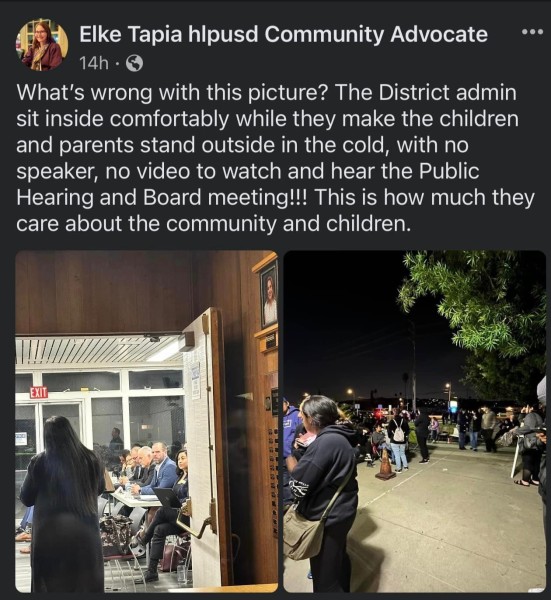
As word of proposed school closures spread among community members, hundreds of people attended school board meetings to speak during public hearings. Yet, the district reserved the limited seating for administrators and other employees, forcing most people outside to sit and stand outside of the chambers struggling to hear and stay warm.
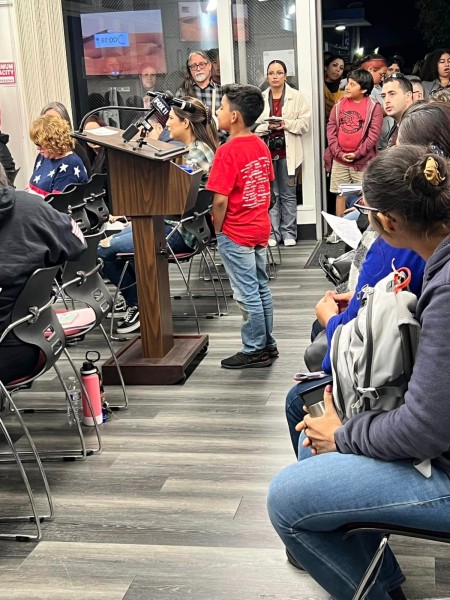
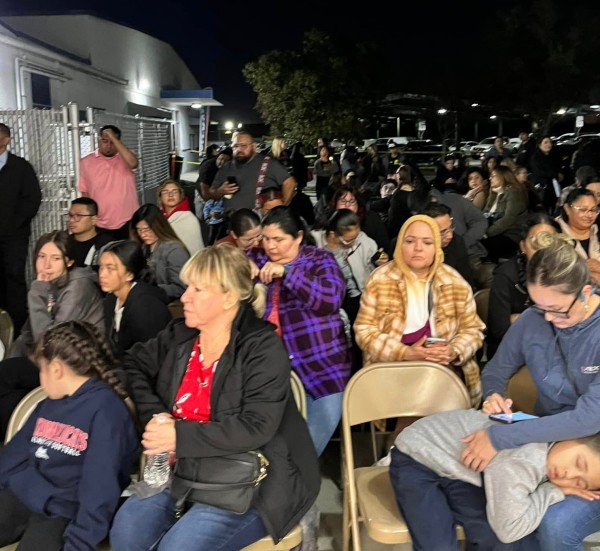
The board reduced public comments to 30 seconds a person. Several board meetings did not provide translation, and when translation was finally available, it was withheld from a Spanish-speaking parent who was told to go to the end of the line for translation. During two separate meetings, the board called an “unlawful assembly,” recessed meetings, had police officers clear the chambers, and community members were locked outside for hours in the cold listening to the meeting on their cell phones when meetings resumed. They were even denied access to the district bathroom – and told to use a port-a-potty in the parking lot. A couple of parents received letters forbidding them to attend upcoming meetings.
Most of the school board admitted that their reconfiguration process rollout could have been better. However, the district continued full speed ahead. Given that the superintendent and board president declared budgetary concerns were not driving reconfiguration and that the district is building an elementary school in Hacienda Heights that is a portable campus at a projected cost of over $52 million situated near a permanent school that is now scheduled to be closed, it is still not apparent why the district rushed to close schools and prevent real participation.
The district reiterated that no staff or teachers will be laid off due to reconfiguration. Parents were initially told that teachers will follow students and that reconfiguration will lead to more programs. However, without adequate discussion and community engagement, questions linger: How (if at all) were vulnerable, priority student populations considered? How will reconfiguration impact student learning? How will program quality and continuity be assessed? Parents feel like the district is pushing students out of their schools and forcing families to find schools that can respond to their children's needs. Some parents are considering using the Allen Bill to transfer schools near parent’s place of employment. All of this disrupts student learning and school communities.

Shutting out communities not only violates shared decision making as part of the Local Control Funding Formula. It also weakens public trust. The paternalistic approach taken by the HLPUSD is reminiscent of the years of discrimination that created unequal schools in the first place. Now it seems some districts have co-opted concepts, such as community, partners, and equity and are weaponizing them against communities. None of this is healthy for public education, student learning, or our democracy. We implore the District to be transparent about the reasons for closing down schools, reconsider, slow down this process, and listen to the community voices and community solutions as is their obligation. We also hope that other school districts learn from this negative example from HLPUSD of what not to do, especially when deciding on something as fundamental as where children go to public school.
Members of ¡Juntos Podemos!/Together We Can!
¡Juntos Podemos!/Together We Can! coalesced to address de jure disenfranchisement of the working-class communities of La Puente and Valinda using the California Voting Rights Act. The group is part of the decades of efforts for educational and social justice in HLPUSD
All photos by the authors
Comments

Powered by RoundtableAn AI/DeFi-powered Enterprise Media Operating System. Learn more at Roundtable.io.© Roundtable 2026. By using this site you agree to the Terms of Use and Privacy Policy