


May 2, 2025 5:18 PM
Updated May 2, 2025 6:03 PM
Trump’s University Crackdown: Ideological Purge by Financial Leverage
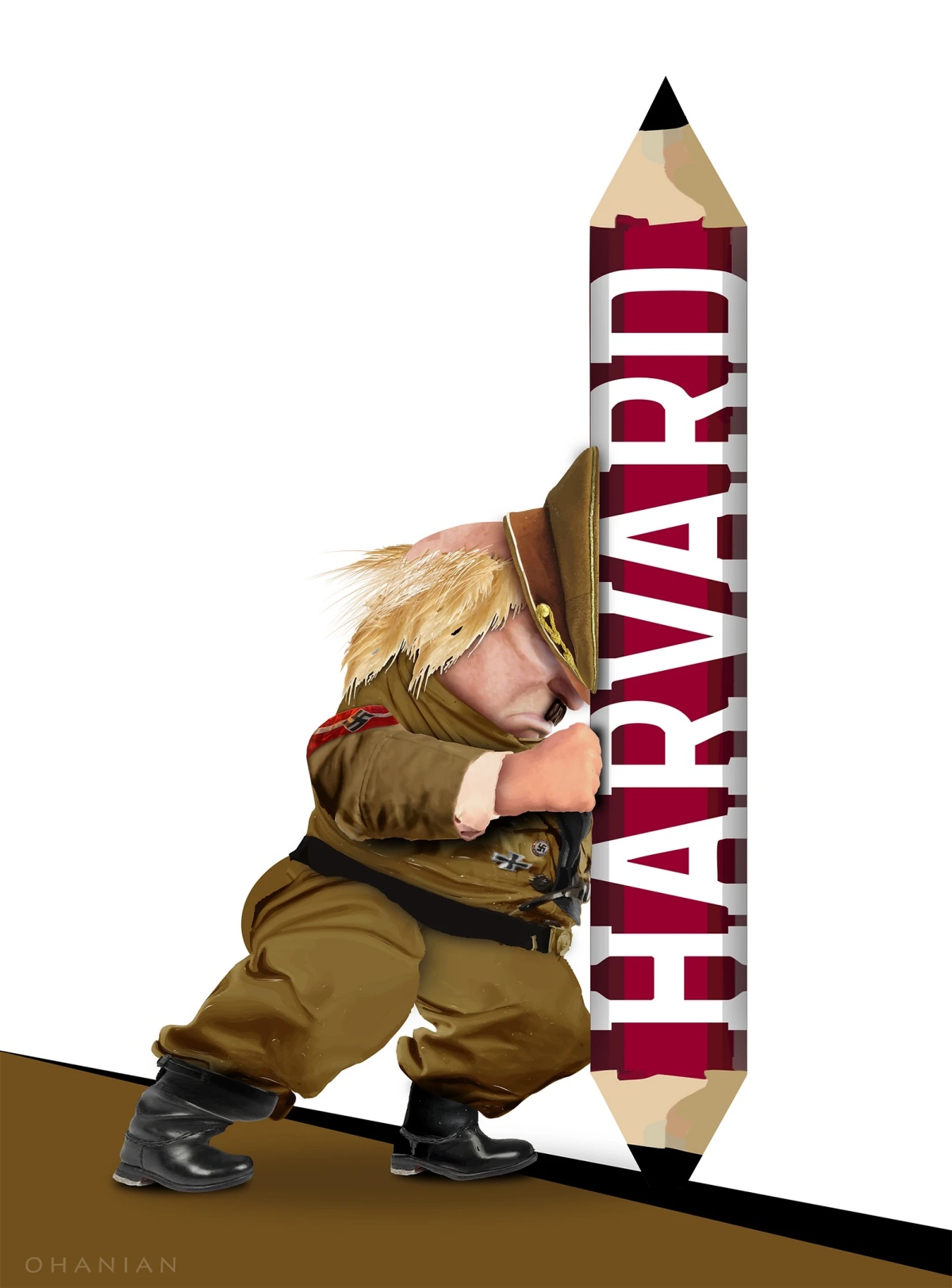
One hundred days into Donald Trump’s second term, American higher education stands like a besieged city under occupation, its libraries smoldering, its laboratories ransacked, its scholars compelled to kneel at the altar of political conformity. What began as a war of words during his first presidency has matured into a coordinated siege—a campaign of financial strangulation, legal sabotage, and ideological purging unlike anything in the modern history of U.S. education.
If the first Trump term threw gasoline on the conservative culture war against universities, the second lit the match. DEI programs were the first to burn. With a bureaucratic sleight of hand—a Valentine’s Day massacre in the form of a “Dear Colleague” letter—the Department of Education declared race-conscious initiatives unconstitutional and gave universities two weeks to comply or face funding cuts. Many capitulated, shuttering offices, rescinding scholarships, erasing years of institutional progress with the stroke of a trembling pen.
But this was not a surgical strike; it was a slow immolation. Federal grants—oxygen for the research and innovation that sustain American prestige—were cut or frozen outright. The National Institutes of Health, once a fountain of scientific advancement, saw its resources diverted, politicized, or dismantled. In this new regime, knowledge itself became suspect—especially if it came with a hyphenated identity or a passport from a Muslim-majority country.
International students, once the global lifeblood of U.S. universities, have become pawns in a xenophobic chess game. Visas revoked without warning. Records deleted. Futures exiled. The lantern of American academic diplomacy, long a beacon to the world, flickers dim in the wind.
Related stories
Speech, too, is under siege. On campuses from Columbia to NYU, protest has been rebranded as subversion. The crackdown has been surgical and symbolic. Students are detained. Talks canceled. Professors silenced. Not since the Red Scare has intellectual expression been so aggressively policed by the state.
The architecture of enforcement is paradoxical but effective: shrink the federal regulatory apparatus to rubble, then weaponize what remains. Investigations are launched not to protect students but to punish institutions. Financial precarity becomes the cudgel. Uncertainty is policy. Fear is the new curriculum.
And yet, not all have surrendered. Harvard has drawn a line in the sand. Princeton has girded for battle. Lawsuits multiply like antibodies in a system under attack. Even as Trump seeks to unmake the university in his image—blunt, obedient, uncurious—pockets of resistance endure.
What Trump’s first 100 days have revealed is not merely a vendetta against the ivory tower, but an attempt to torch the very idea of independent thought. It is not just a war on DEI, or Palestine protests, or student debt. It is a crusade against memory, complexity, nuance—against the laboratory, the seminar, the open question.
The bonfire has been lit. The coming months will tell whether the universities can rise from the ashes—or whether America is content to watch them burn.
The academy stands beneath a bruised sky, its libraries heavy with silence, its halls haunted by the acrid stench of betrayal. Once sanctuaries of inquiry and dissent, the universities now find themselves in the crosshairs of a regime that regards thought itself as a threat.
From the cracked mouth of empire, the Trump regime has unleashed its inquisitors — not in robes or hoods, but in tailored suits and soundbites — zealots not of God, but of grievance. They come not bearing books, but blacklists. Not to teach, but to purge.
They move through the lecture halls like bloodhounds, trained to sniff out the scent of unapproved thought. A metaphor here, a question there — and suddenly a professor is branded, their name pinned like a butterfly beneath the glass of the “watchlist,” the digital index of the damned.
This is not reform. This is a reconquest. A crusade to reclaim the academy for the pious architects of obedience — those who would bleach complexity from history, silence the margins, and install in the place of truth a polished idol called “patriotism,” hollow and immaculate.
The universities were not built for this. They are cathedrals of uncertainty, temples of tension — places where contradiction is not error, but essence. Now, they are under siege by those who mistake doubt for disloyalty and curiosity for crime.
And so the fight begins — not with swords, but syllabi; not with marches alone, but with memory, scholarship, solidarity. For if the regime succeeds in remaking the university in its own image, it will not just have won a battle of policy.
It will have stolen the future’s ability to think.
The heart of a civilization does not beat in its palaces or parliaments, but in the quiet thunder of its universities—those storm-lit summits where young minds are struck like flint, and the fire of a people’s future is kindled. A nation’s vitality—its capacity for growth, for wisdom, for renewal—can be measured by the vigor of its academies, where ignorance is smelted into insight, thought does battle with dogma, and the fragile, flickering spark of progress is kept alive against the bitter winds of apathy and power. The vitality of a nation is etched into the chalk dust and protest signs, the footnotes and footfalls echoing through lecture halls. When the questions cease, when the curious are silenced, when the stewards of inquiry are driven out and the soil of knowledge salted by fear—then, and only then, does a nation begin to truly die.
For a university is not merely brick and ivy, but the cathedral of a people’s becoming. And when its windows are shattered by police batons, when its arcane scrolls are burned or its voices mocked by the ruling class, the nation does not merely suffer—it forgets itself. It wanders blind in search of a destiny it once knew how to name.
The university once stood as a lighthouse—its beacon cutting through the mists of myth, its foundation rooted in the pursuit of truth. But today, that light has become intolerable to those who profit from the dark shadows of tyranny. What we are witnessing is not a reform movement, but a siege: a campaign waged with the language of renewal but bearing all the hallmarks of repression.
At its heart lies a quiet terror—not of chaos, but of awakening. The great fear animating today’s legislative crusades against higher education is not that students will be misled, but that they will begin to see clearly. That they might ask hard questions about history, power, and identity. That they might dare to imagine a country more honest, more inclusive, and more just than the one bequeathed to them.
Diversity, Equity, and Inclusion initiatives—targets of relentless caricature—are not radical ruptures. They are modest, necessary efforts to widen the circle of belonging. To open the gates of learning to voices long denied entrance. To face the long shadow of our national story not to wallow in guilt, but to move forward with eyes open. These programs are not demands for division, but invitations to dialogue. And that is precisely what makes them dangerous to the guardians of the status quo.
In the realm of American higher education, a storm is gathering—and the universities, long imagined as ivory towers, now resemble fortified citadels preparing for siege.
What was once subtle pressure has curdled into overt conquest. When the Trump administration sent its chilling decree to Harvard, it was not the sound of dialogue, but the clang of a gauntlet thrown. Jon Fansmith, senior vice president of government relations and national engagement at the American Council on Education, called it a “turning point,” but it was more than that—it was a flare shot into the night, illuminating the stark truth: this was not policy. It was power. Not partnership, but occupation. The regime’s aim is not to safeguard, but to subjugate—to remake the academy in its own ideological image, stripping it of its messy pluralism and binding it to the will of the state. Fansmith proclaimed that “the administration’s end goals here have nothing to do with addressing antisemitism or sustaining a partnership” with institutions… “It’s about wholly taking over the institutions and dictating what academic life looks like at these colleges and universities. For a lot of people, I think that was probably pretty chilling, but at the same time, pretty galvanizing. This is not something that we can ever accept”.
In the shadow of fascist regimes, the universities stand as the first sacred ground to be desecrated, to be breached by the thunderous march of tyranny, their gates torn open by forces that know the power of knowledge to unravel their assault on the rule of law. History has shown that the mind, once liberated, is the most dangerous of enemies to the shackles of authoritarian rule. And so, the university is the first to feel the weight of the fascist boot, its classrooms turned into battlegrounds where the spirit of inquiry is silenced, and where dissent is crushed beneath the weight of ideology. In their destruction, these regimes seek not merely to control the present, but to rewrite the future, to quash the flame of reason before it can ignite the hearts of the people. The university, in its wisdom, becomes the first target, for in it lies the spark of freedom that could one day light the fire of rebellion.
Scholars, once beacons of thought and reason, are swept away in a purge that seeks to sever the intellectual backbone of resistance. Among them are the public intellectuals—those who, with the power of their words and the weight of their convictions, chart the course toward a deeper, more robust democracy. Their classrooms were not just spaces of learning, but arenas of awakening, where the seeds of justice and liberation were sown. But under the shadow of authoritarian rule, these voices are silenced first, for they are the ones who dare to question, to challenge, to dream of a world unshackled by tyranny. In their removal, the dictatorship seeks not only to erase dissent but to rob the people of their compass, leaving them adrift in a sea of fear and confusion. For without these intellectuals—those who dare to envision a better tomorrow—the struggle for democracy weakens, and the chains of oppression grow ever tighter.
When the Nazis marched into occupied lands, they did not first seize the factories or the banks. They went for the books. For the professors. For the poets and the thinkers and the questions they asked aloud. In Poland, the halls of Jagiellonian University echoed with boots before screams, as scholars were rounded up like insurgents. To think was treason; to teach, sedition. To dissent, death.
And later, under the baleful lights of mid-century America, Senator Joseph McCarthy swapped jackboots for subpoenas. He too saw phantoms in philosophy departments and conspiracies in curriculum. Professors were summoned before committees and forced to confess not crimes, but thoughts. Students were paid to condemn their instructors. The blacklists swelled. The silence thickened. And a generation of students learned that to speak your mind might cost you your career — or worse.
History does not repeat, but it rhymes with bitter familiarity.
Now, under the Trumpian order, the tactics are digital, the ideology algorithmic. The crusade is dressed in the language of liberty, but beneath it lies the same cold desire: to control the narrative, to erase the inconvenient, to punish those who refuse to conform.
Harvard, Stanford, the very citadels of higher thought, are cast as enemies of the state, infiltrated by radicals, subverted by diversity. The DEI office is renamed like a conquered city. Curriculum is surveilled. Visas threatened. Funding frozen.
It is the old playbook, reprinted in high resolution.
But this time, the universities are not alone. The memory of past purges lingers. The ghosts of silenced minds march with us, whispering warnings and strategies alike. The faculty who resist today inherit the mantle of those who once stood before fascism with nothing but reason and a desire to do good in their hands — and refused to kneel.
The Nazis often portrayed intellectuals as effete, detached, and dangerous — “degenerate minds” infecting the volk with doubt, critique, and memory. The point was not just to eliminate them physically, but to strip them of public credibility first. We hear echoes of that today when professors are derided as “woke ideologues,” when classrooms are branded as sites of “leftist indoctrination,” and when the pursuit of truth is twisted into a partisan threat.
This isn’t new. This is a page from the fascist playbook — delegitimize the thinkers, discredit the teachers, and make the public suspicious of anyone who can name the system for what it is.
Paulo Freire knew this with the clarity of a prophet and the fire of the oppressed burning in his pen. In Pedagogy of the Oppressed, he did not merely write a book—he lit a torch to guide the way out of darkness. He understood that education is never neutral, that it either domesticates or liberates, anesthetizes or awakens. To Freire, the classroom was not a chamber of quiet absorption but a battlefield, where the soul of the people is contested word by word, question by question.
Freire saw the university not as a museum for the elite, but as a forge where the chains of fatalism could be broken, where the oppressed could come to name their world—and in naming it, change it. He warned of what happens when knowledge is hoarded, when students are treated as vessels to be filled, not voices to be heard. “To exist, humanly,” he wrote, “is to name the world, to change it.”. But when the universities fall silent, when the naming ceases and the echo chamber replaces the dialogue, the oppressed are left voiceless, and the future is written not by the many, but by the few.
Freire understood that when a nation abandons its commitment to critical education, it does not merely lose its schools—it loses its memory, its conscience, its capacity to dream. The decline of education is not the death of facts, but the death of imagination. And with it, the death of freedom.
Today’s sweeping language of university “reform” cloaks the blunt instruments of repression. Beneath it lies a deep unease—not of failure, but of awakening. What today’s reactionaries fear is not miseducation but illumination: students learning to question power, reckon with the past, and imagine a future not built on exclusion but on equity. Diversity, Equity, and Inclusion programs—so often distorted into scapegoats—are in fact modest attempts to widen the gates of belonging. To welcome voices once silenced. To confront the shadows of history not to shame, but to shed light.
That light, for some, is unbearable.
So they strike—not with reasoned debate, but with punitive laws and gag orders. They rewrite curriculums to sanitize history, silence professors for teaching truth, and demonize students who dissent. It is not discomfort they fear—it is change. And at the heart of this crusade lies a darker ambition: not to protect students, but to protect power from scrutiny.
Today’s assaults on the university by the likes of Donald Trump and Ron DeSantis are a case in point. Cloaked in the language of reform, they bear the unmistakable markings of a reactionary madness. They have launched a vicious attack on ‘wokeness’ and are playing their hands to the fullest with the electorate. The battleground is no longer just the faculty lounge or the curriculum committee; it is the very idea that a nation might look honestly at its past in order to chart a more just and inclusive future.
But for those who benefit from the myths of innocence and exceptionalism, this light is unbearable. So MAGA lashes out—not with argument, but with censorship, intimidation, and legislative bluntness. Their gaslighting has been so relentless, so surgically precise, that some parents have come to believe the absurd lie—that their child enters the schoolhouse doors as a son and returns home as a daughter, as though identity were a contagion passed through hallways or a costume donned between bells. It is a narrative crafted not from truth but from fear, spun by those who see education not as liberation but as threat, who mistake compassion for conspiracy and self-discovery for subversion.
This is not merely misinformation—it is a theater of distortion, a psychological sleight of hand meant to turn trust into suspicion, dialogue into outrage, and the sacred process of a young person learning who they are into a spectacle of moral panic. It is the old witch-hunt reborn in the language of modern politics: burn the books, silence the teachers, vilify the child.
And in this grotesque performance, the real harm is done not by the students who are exploring their identities, but by the adults who refuse to let them. The damage lies not in the child's journey, but in the unwillingness to walk beside them.
The goal is not simply to resist a policy, but to strangle a possibility: the possibility that America might yet become what it has long claimed to be. In demonizing diversity, they seek to preserve a brittle order. In silencing discussions of race and injustice, they hope to freeze the arc of progress. The attack on the university, then, is not about protecting students from discomfort—it is about protecting power from truth. Their purpose has been to silence our best minds, to turn the liminal space of learning into a post-truth mockery of knowledge production, to treat truth as just one opinion over another, bereft of any rational means of adjudication. They do not fear indoctrination — they fear liberation. They fear the critical mind that asks not only what is, but why, and who benefits. In their hands, education becomes a stage for performance, not inquiry; a battleground where dissent is punished and obedience rewarded. The university, once a sanctuary for thought, is recast as a factory for ideology — not to elevate the people, but to pacify them.
The recent attack on universities was ushered in by figures like Ron DeSantis and his political enforcers, such as Christopher Rufo, who have sought to reshape the academic landscape to fit their political agenda. The remaking of New College is a striking example of this ideological assault. What once was a liberal-leaning institution, known for its progressive approaches to education, has been re-engineered as a conservative stronghold. Rufo's role in this transformation exemplifies the broader strategy—his brand of culture war politics is now bleeding into higher education, where debates about the nature of free speech, academic integrity, and diversity are being distorted for political ends.
This attack is part of a larger pattern—an attempt to control the intellectual and cultural battleground of the university, to restrict the very freedom that should define it. By reshaping universities from institutions of independent thought into instruments of ideological conformity, these forces are trying to pave the way for a broader authoritarian shift. It's a move reminiscent of McCarthyism—an effort to stamp out dissent under the guise of patriotism and moral righteousness. And just like in the McCarthy era, the true cost is paid in the erosion of intellectual freedom and democratic principles. Universities cannot give in to this political siege. To do so would be to abandon their essential mission and open the gates for the kind of authoritarianism that threatens the very fabric of democracy itself.
The assault on higher education under Ron DeSantis has been nothing short of a blitzkrieg, dismantling academic freedom, intellectual diversity, and the core mission of universities as spaces for free thought and inquiry. DeSantis’ campaign, which has seen him purge universities like New College of Florida of "liberal" courses, has gone far beyond simple ideological critique—it is an orchestrated attempt to erase entire fields of study. Women’s studies, African American history, and critical race theory have been cast aside, swept from the curriculum like unwanted debris. It is as if DeSantis and his enforcers seek not only to control the direction of higher education but to obliterate entire intellectual traditions in the process.
The offensive doesn’t stop at curriculum changes. Under the guise of an "audit," DeSantis is demanding universities divulge the names, salaries, and details of their researchers' work—an alarming violation of privacy that mirrors the surveillance tactics of fascist regimes. In his view, higher education is simply a breeding ground for “unnecessary spending” and “inefficiencies,” and those who resist his agenda face purges, silencing, or exile.
This coordinated attack on academia, though often masked as a populist mission, is deeply entwined with the interests of the far-right. The Heritage Foundation, the Republican Party, and MAGA-aligned forces have strategically woven this assault into their broader culture war. DeSantis, in his own words and actions, reveals that he sees educators and academic institutions not as pillars of a free society but as adversaries to his vision of unchecked power.
The DeSantis agenda, while making significant strides, has been checked, for now, by the courts. Yet the broader ambition is undeniable. The right-wing effort is to fundamentally alter the ideological orientation of higher education, which they view as hostile to conservative values. It’s a clear attack on intellectual diversity and the autonomy of universities—a tactic employed not only by DeSantis but also by the Trump oligarchy, which has targeted top universities with threats to strip federal research funding.
What’s at stake is nothing less than the future of academic freedom and the intellectual integrity of American universities. This fight is far from over, but it is clear: the future of education is being written in the resistance to this concerted campaign.
And in this war, the frontlines are chalkboards and endowments, student walkouts and campus arrests, while the bombs fall not from planes but from press conferences and executive orders.
Ron DeSantis, Florida’s strongman in a navy blazer, is not improvising. He is executing a script—one written long ago by the architects of Reactionary Americaprofe: the Heritage Foundation, the Republican Party’s ideological curators, and the MAGA movement’s digital apostles. Their goal is no less than regime change within the mind—an epistemological coup. They aim to remake the university not as a sanctuary of inquiry but as an annex of obedience.
And if you want to understand the seething core of their resentment, listen to Vice President J.D. Vance, heir to Trump’s dynasty of grievance. “There is wisdom in what Richard Nixon said 40 to 50 years ago,” Vance intoned, like a priest invoking scripture. “‘The professors are the enemy.’”
In that unguarded moment, the mask slipped. Not crime. Not inflation. Not even immigration. The professors—and the rebellious, questioning young minds they inspire—are the threat. This is not policy; it is holy war against enlightenment itself.
DeSantis has already begun his crusade. His war on Florida’s universities has been so aggressive, so openly vengeful, that only the courts have managed to stall his advance. But make no mistake: the playbook is national.
Trump’s second-term agenda includes targeting the nation’s most prestigious universities—Harvard, Michigan, Penn, Brown, Cornell, Northwestern—threatening to strip billions in research grants and federal contracts, demanding power over hiring and curricula. The aim is simple: submission or starvation.
It is, as Professor Jason Stanley has warned, straight from the authoritarian handbook. Intellectuals are always the first to fall. History’s tyrants knew this well. To control a people, you must first silence their dreamers, their historians, their scientists, and poets. Replace nuance with slogans. Trade scholarship for spectacle.
When the Nazis invaded countries and territories, they made their priorities clear: find the intellectuals, hunt them down, and eliminate them first. The poets, the professors, the critics — those who could imagine a different world, or name the one being destroyed — were seen as the most dangerous. Not because they held weapons, but because they held language. And history warns us: the first step is often a watchlist. The next is erasure. What we are seeing today may wear the mask of democracy, but it stinks of musty old authoritarianism — the urge to silence, to control, to render the academy obedient. The stakes are not abstract. This is a war on memory, on complexity, on the moral imagination. It is, in fact, a war on history itself.
And then there is the network for students to spy on their professors. They call it a watchlist — as if the goal were vigilance, not intimidation. In truth, it is a blacklist, worthy of a J. Edgar Hoover knockoff, assembled by Charlie Kirk, the pseudo-intellectual founder of Turning Point USA. First launched in 2016, the so-called Professor Watchlist now masquerades as a digital index of radicalism, but its real purpose is to chill dissent, especially among scholars of color and those committed to equity and critical inquiry. With a sleek new interface and hundreds of new entries, it functions like a McCarthyite database for the digital age — searchable by name or university, complete with distorted bios and selectively sourced allegations from partisan outlets like Campus Reform and the Daily Caller. The targets are not agitators; they are educators, researchers, public intellectuals. The message is clear: teach justice, and you may be marked. Question authority, and you may be watched. January 6 proved these whistleblowers are not harmless. This is not just bark — this is a threat with teeth. And when faculty are surveilled for ideas, when the architecture of intimidation masquerades as transparency, the university ceases to be a place of learning and becomes a zone of ideological control.
But not all are kneeling.
Resistance stirs—even from the marble halls of privilege. Harvard, an unlikely symbol of defiance, has become one of the first elite institutions to push back with force. It is easy to caricature such bastions as aloof or complicit, but when the storm reaches even the most gilded tower of higher learning, founded as far back as 1636, it is a sign that the battle is no longer confined to the margins. When the oldest university in the country begins to resist, we must ask: what deeper currents have begun to shift?
What’s at stake is not a syllabus. It is the soul of the republic.
The Trump administration, wielding federal dollars like a cudgel, has cast the university as both villain and prize — accusing it of harboring ideological rot and threatening to starve it of $2.2 billion in funding unless it adopts sweeping changes dictated not by recognized scholars, but by its own partisan ideologues. The administration's move came after allegations that Harvard failed to adequately protect Jewish students from discrimination and harassment on campus, leading to threats against the university's tax-exempt status..
The demands range from broad mandates about “viewpoint diversity” to explicit ultimatums: defund this group, discipline that protest, audit thought itself.
Harvard’s antisemitism task force acknowledges a deep and painful reckoning: antisemitism exists within its walls. Students and faculty speak of alienation, of being made scapegoats, of intellectual spaces curdling into suspicion. But in addressing that truth, the university tries to walk a narrow, dignified path — differentiating reflection from submission, redress from surrender.
The White House, however, wants more than reflection. It wants ham-fisted control. It wants to rewrite the admissions script, redefine who belongs. It wants every three months to crack open the black box of the academy and count how many dissenters sit at the table. It wants masks banned, discipline centralized, ideology audited, DEI renamed and reframed. It does not just seek to correct — it seeks to conquer.
And Harvard, for all its measured tone, is drawing a line: no government shall appoint itself dean of the American mind. No president shall curate the reading lists of the republic. No government administration shall oversee the conscience of a campus.
Harvard has filed a lawsuit challenging the federal action, asserting that the funding freeze is an unlawful attempt to exert control over the university's policies and undermine its commitment to diversity, equity, and inclusion. The case is scheduled for oral hearings at the end of July.
This initiative reflects a broader concern among faculty about the future of academic institutions and the need to safeguard their independence in the face of political pressures from Trump’s Ministry of Stupidification.
This clash is no longer about policy alone. It is about whether the university — the fragile cathedral of inquiry — must kneel before the state’s ideological tribunals. Whether its independence is a privilege to be revoked, or a principle to be defended at any cost.
More than 80 senior faculty members at Harvard University have pledged to donate 10% of their salaries for up to one year. This collective action aims to support the university's legal battle against the Trump administration's decision to freeze over $2.2 billion in federal funding.
In a letter addressed to Harvard President Alan M. Garber, the faculty members expressed their commitment to defending academic freedom and institutional autonomy. They acknowledged the severe financial implications of the funding freeze and emphasized their willingness to share in the financial sacrifice necessary to uphold the university's values.
The pledged donations, totaling over $2 million, are intended to support staff, students, and academic programs affected by the funding cuts. The faculty group plans to vote on whether the university is making a good faith effort to use its resources in support of these areas before proceeding with the donations.
For those who live by the myths of innocence and exceptionalism, truth is not a path to reconciliation—it is an existential threat. So they strike not with better arguments, but with bans and bludgeons. They pass laws to silence teachers. They rewrite curricula to avoid discomfort. They cloak censorship in the garb of parental rights and academic neutrality, when in fact the goal is absolute control.
Let us be clear: this is not about protecting students from harm. It is about protecting power from scrutiny.
The assault on the university is an assault on possibility itself. On the idea that a nation can learn from its past, correct its course, and rise—however haltingly—toward its own professed ideals. These attacks do not aim to preserve education. They aim to suffocate it. They are designed not to empower students, but to shield a brittle order from the dangerous work of democracy. Critics like Paulo Freire, Henry Giroux, bell hooks, Antonia Darder, and others have seen through this miasma of obfuscation before. They understood that the repression of knowledge is never neutral — it is the pedagogy of the oppressor, weaponized to maintain hierarchies of race, class, and power. Freire warned us that education can either function as a practice of freedom or as a mechanism of domination. Giroux saw the rise of a public pedagogy of fear, where critical thinkers are cast as enemies and the university is remade into a market-driven arm of nationalist propaganda. What we are witnessing now — blacklists disguised as accountability, watchlists masked as transparency — is not new. It is the old authoritarian instinct, cloaked in the digital skin of the culture war.
In a surreal tableau that might have been scripted by Samuel Beckett and executive produced by InfoWars, Donald Trump recently dialed into a NewsNation town hall—a sort of political séance hosted by the unholy trinity of Chris Cuomo, Bill O’Reilly, and Stephen A. Smith. The stage was set for clarity, or at least coherence. What followed was neither.
Asked by Smith to elaborate on his disdain for Harvard, Trump instead detoured into a hall of mirrors—emerging with a tale of Harlem riots, phantom protests, and what one could only assume was a MAGA uprising in a parallel universe.
“Well, I say this. We had riots in Harlem, in Harlem, and frankly, if you look at what’s gone on, and people from Harlem went up and they protested, Stephen. And they protested very strongly against Harvard. They happened to be on my side.”
“You know, I got a very high Black vote. You know that. Very, very high Black vote. It was a very great compliment. I did criminal justice reform. I did opportunity zones for one of the greatest economic deals ever for the Black and Hispanic community. I got tremendous– they agree with what I’m doing with respect to Harvard. Harvard gets four, five billion dollars a year from the United States government in the form of grants. And they have $53 billion, yet they do not treat the people right. They take the foreign students. Nobody knows where they come from, and they viciously hate our country”.
It was a moment of inspired absurdity: the gilded populist claiming solidarity with imagined anti-Harvard Harlemites, as if a forgotten Spike Lee film had been ghostwritten by Steve Bannon on a Vegas cocktail napkin. The scene might have made sense on the floor of a casino during a power outage—but in a presidential forum, it was like watching a man pilot a blimp into a logic factory, then insist the wreckage was unintentional. This from a self-styled ‘stable genius’ who confuses Harlem with Harvard, public protest with personal fan mail and a town hall with a séance for lost relevance. It was less a political statement than performance art—Kafka meets QVC—where the former president, equal parts carnival barker and self-proclaimed oracle, recast elite academic institutions as villains in his populist bedtime story. And naturally, in this tale, he alone stands triumphant: the misunderstood mastermind, the outsider savant, the man who once tried to buy the presidency and now rents it from a Fox News podcast studio.
What Smith made of it, we may never know. What Trump made of it, we can only assume: a new data point in the MAGA mythos, where Harlem rises not in protest of injustice, but in rhapsodic rebellion against the Ivy League. Next week, expect news that Bed-Stuy has declared war on Yale.
And yet, the university is not without defenders.
In a striking move, the University of Minnesota Senate has voted to join the Mutual Academic Defense Compact, a growing alliance among Big Ten universities formed to defend academic freedom against political and legal assault. Known as the Rutgers Resolution, the compact creates a shared defense fund for institutions under attack—affirming what President Cunningham aptly reminded us: “Sticks in a bundle are unbreakable”.
This is not simply administrative housekeeping. It is the early architecture of collective resistance.
Beneath the thunderclaps of this new political offensive, something is stirring in the foundations.
From Cambridge to California, from Midwestern labs to Ivy League boardrooms, the old silos are beginning to crack. Presidents and professors who once stood apart are beginning to speak in unison. A quiet defiance is blooming as they understand, finally, what the regime fears most: unity.
It is easy to dismantle a lone institution, Fansmith warned, but harder to breach a coalition. So they are forming their own compact—something like a NATO for the mind—the Big Ten Academic Alliance forged not with weapons but with resolve. Rutgers cast the first stone, not to provoke, but to signal: we will not go quietly.
From Rutgers to Michigan to Minnesota, universities are beginning to recognize the scale of the threat. They understand that the confrontations we now see—at Harvard, at Columbia, at New College of Florida—are not isolated incidents. They are coordinated attempts to break the independence of the university and replace inquiry with ideology.
We are living through an unprecedented moment. The institutions of democratic life are under fierce and coordinated attack, and the university—where memory, evidence, and dissent converge—is in the crosshairs. To pretend otherwise is to sleepwalk into a future shaped by authoritarian impulse and historical amnesia.
Yes—this is the new McCarthyism, though more audacious, more systematic, and turbocharged by authoritarian ambition. But unlike the paranoid anti-communism of the 1950s, which thrived on innuendo and blacklists, Trump’s second-term purge of the universities is executed with the full machinery of the state: executive orders, federal funding freezes, legal threats, and the calculated incitement of public rage.
To cave now will not save the university, but will consecrate its grave.
Compliance is not neutrality—it is complicity. The moment universities begin to yield to ideological dictates about whom they may admit, whom they may support, what histories they may teach, or which students may protest, they cease to be places of learning and become instruments of the regime.
The stakes could not be clearer: to yield to these assaults is to lay down the cobblestones for fascism’s victory march—not with boots and banners, but with silence, redlines, and cowardice in the faculty senate. What we are witnessing is not simply a policy shift, but an effort to destroy the idea of the university itself: the idea that knowledge must be free, that truth must be pursued even when it is inconvenient, and that young people must be allowed to question power.
Resistance will be costly—but appeasement will be fatal.
This is the hour of decision. Choose. Stand. Fight.
Comments

Powered by RoundtableAn AI/DeFi-powered Enterprise Media Operating System. Learn more at Roundtable.io.© Roundtable 2026. By using this site you agree to the Terms of Use and Privacy Policy