


Jun 14, 2026 12:19 PM
Updated Jun 14, 2026 12:20 PM
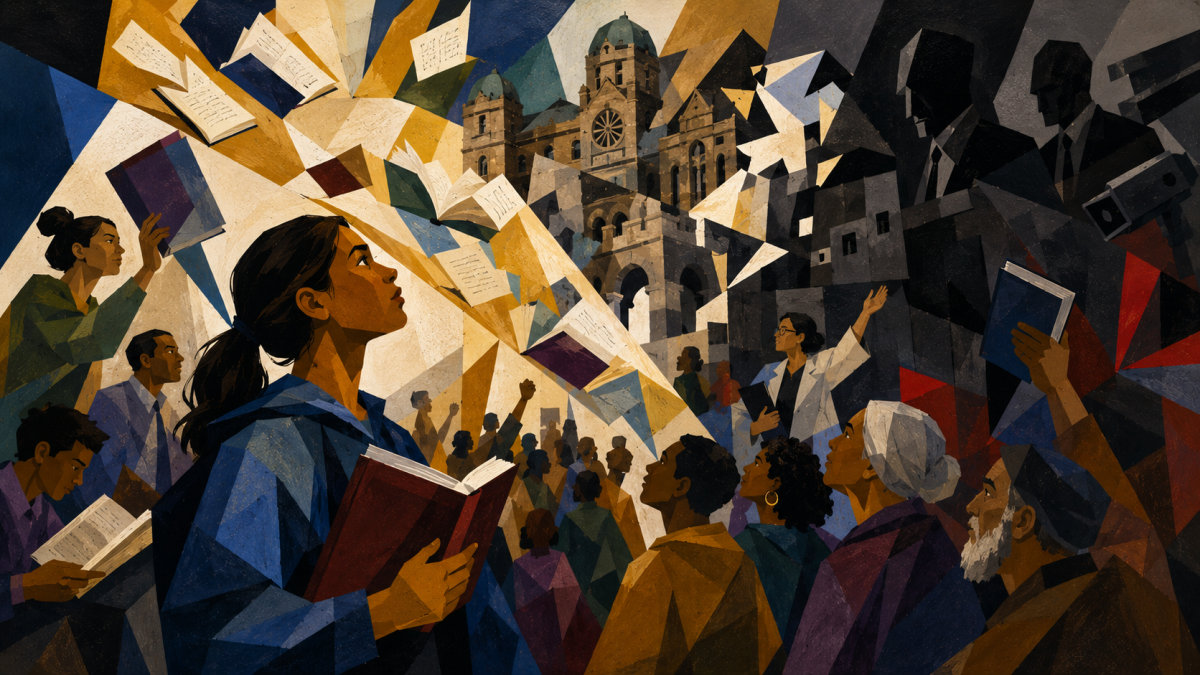
From book bans and school takeovers to censorship and political intimidation, the struggle over education has become a battle over who gets to shape the future of democratic society.
For autocracy to succeed, its fingers need to be everywhere, plugging the leaks that might, in the tiniest way, threaten its claim to dominance. Lines of power may not be crossed other than by those who have access to them. Autocracy smothers any possibility of criticism, kills the imagination and often does so under the false claim of improving educational policy, classroom teaching, and pedagogy.
Last June, at her commencement celebration Ottawa student Elizabeth Yao got up in front of friends and families gathered at Bell High School and talked about her years there; the waffle fundraiser and dozing off as she read Shakespeare. But then she crossed a line. Expressing that awareness gratefully acquired from her studies and teachers, she added after the Indigenous land acknowledgement: “As a commitment to truth and reconciliation, I must acknowledge colonial and genocidal atrocities today, including the massacre of more than 17,000 Palestinian children in Gaza.”
The audience cheered. The principal of Bell High School did not. He told her that she had caused harm, that she shouldn’t come back to school on Monday. But, with the clarity of a young person who recognizes horror and speaks against it, she said she planned to return anyway. Elizabeth Yao did the unforgivable: she refused to treat her mind as a commodity and refused to toe the line of conformity, accept official orthodoxies, embrace shallow and predigested ideas or remain silent in the face of urgent social issues. Her speech revealed what authoritarian governments fear most: young people capable of connecting education to moral responsibility, historical consciousness and democratic dissent.
If Paul Calandra’s Ministry of Education (MOE) wasn’t trying to make a political point, it would leave commencement ceremonies alone. But that’s not how MOE operates under the Progressive Conservative Party of Doug Ford. Students “should be in the classroom learning about reading, writing, spelling, arithmetic — the whole shebang.” But the “shebang doesn’t include culture, politics or anything else that Ford’s increasingly authoritarian government doesn’t want to offer students as it reshapes education in Ontario. The ‘shebang’ functions as a command for learned stupidity, the acceptance of low expectations, and the refusal to challenge dominant assumptions. Removed from education is the crucial pedagogical task of questioning inherited beliefs, interrogating power and nurturing critical thought. Instead, under such circumstances, education is reduced to an empty formalism, method, and dead zone of the imagination.
Related stories
What is lost in Calandra’s championing of the “shebang” is a notion of critical education in which students are given the opportunity to seek the truth, question authority, hold power accountable and embrace intellectual honesty and integrity as guiding principles. Pedagogy should always be a powerful moral and political force for giving students the opportunity to learn history, connect knowledge to the power of self-definition and critical agency and connect the search for truth to the search for justice.
After hearing of a memo sent out by the Hamilton Wentworth DSB to consider these ceremonies from “an anti-oppressive/antiracist/anticolonial lens,” that Calandra reminded educators across the province that there is a very large boot poised above their heads. Commencement ceremonies, he said, are to focus only on recognizing student achievement: Organizers must not “ express political views or promote personal or institutional positions, or engage in divisive or contentious issues of any kind.” Any deviations and “I will not hesitate to consider every tool in the Education Act to ensure that students are always put first.”
Such ideological micro-management never puts students first. If Paul Calandra and his Ford government colleagues wanted to do that they would have developed a reasonable funding model and ensured that students had the resources they need. Instead he brought in Bill 33, making it easier to take over more school boards, place police in schools and even decide what they will be named lest some liberal-minded board chooses a name that cuts against the Ford government’s neoliberal grain.
What is at stake here is not simply administrative overreach but a broader authoritarian attempt to depoliticize education itself. Fascist politics has always feared institutions capable of producing critical thought, historical memory, and civic courage. The language of “neutrality” and “keeping politics out of schools” functions as a form of ideological camouflage. It undermines critical inquiry, rejects the transformative possibilities of the imagination and advances a pedagogy lodged in the dead zone of consciousness, where dissent is muted, history is emptied of its lessons, and the capacity to imagine a more just and democratic future is steadily extinguished. It defines politics only as that which challenges power, while treating nationalism, colonialism, militarism, and market values as natural and unquestionable. In this discourse, dissent becomes dangerous because it threatens to expose how education is being reorganized around conformity, obedience, and civic illiteracy rather than democratic agency.
The threat is clear in Calandra’s memo to educators: stay away from issues he decides are political, that might reveal the camouflage. But what that means is vague enough to leave them wondering what they might say or do to trigger a painful response.
Education is always political because it is always bound up with questions of knowledge, values, identity, and power. The real issue is not whether schools are political, but which politics will shape them. Authoritarian governments seek to turn schools into pedagogical sites of adaptation rather than critical inquiry. Under the guise of neutrality, they wage war on any form of education that encourages students to question injustice, connect private troubles to public issues or imagine alternatives to the existing order.
The antidote to the threat of enquiry and troublesome questions is intimidation: Two popular teachers raising concerns about a teaching model are peremptorily fired and 8 others suspended at one Toronto school. A Diversity Equity Inclusion (DEI) supportive director of education at the Toronto DSB is let go after less than a year on the job, because it’s time for a “fresh start.”
Such tactics produce more than fear; they create a culture of manufactured silence. The goal is pedagogical. Teachers learn to self-censor, students learn that dissent carries punishment and schools increasingly function as training grounds for political conformity, if not outright ignorance and indoctrination. What emerges is a pedagogy of repression in which critical thinking is replaced by managerial obedience and civic engagement is recast as ideological contamination. The attack on critical education does not end with censorship and intimidation. It extends into the restructuring of governance itself.
Removing Oversight
Bill 101 Putting Student Achievement First Act, cements Ford’s and Calandra’s commitment to autocracy in education. Calandra had already placed eight school boards under the control of supervisors who run them by decree, unimpeded by nettlesome arguments from trustees who no longer have a role, pay or access to their constituents. These supervisors needn’t engage with the community or answer questions. They operate in darkness and will continue to do so until Calandra is satisfied that whatever they are paid up to $350,000 a year to do is done.
Bill 101 essentially eliminates one level of local government. There are still a handful of trustees left: 5 to 12 per board but the discrepancy in representation the legislation is bizarre. For example, the Rainy River DSB has 7 trustees to respond to the community needs of about 2500 students while Toronto DSB drops from 22 trustees to 12 to support families of 234,000 kids. Trustee pay has been cut to a maximum of $10,000 per year and Calandra, a loyal member of the “gravy plane” party promises to keep a sharp eye on their personal expenses.
In keeping with the Ford government’s corporatist principles, former directors of education are replaced by CEOs with business qualifications who will “provide confirmation” of trustees’ financial decisions and lead collective bargaining. There is little left for trustees to do other than be hapless advocates for more families facing desperate economic times with diminishing support.
Banning Literature
The legislation is also a tool for Calandra to mandate the use of “approved learning resources” to ward off “inappropriate content” used in classrooms. He wants to centralize control over learning resources: what is “appropriate,” what may be “flexible.” The judgement of local educators is replaced by that of the Ministry of Education (MOE).
This is how authoritarianism works in its contemporary form. It centralizes control over knowledge, narrows the boundaries of acceptable speech, and substitutes bureaucratic oversight for democratic judgment. The attack on books, curricula, and critical educators is never simply about “inappropriate content.” It is about controlling memory itself, deciding whose histories matter, whose suffering counts, and which futures can be imagined. As authoritarian movements throughout history have recognized, controlling culture is indispensable to controlling consciousness, and treating education as a site of indoctrination.
Alberta leads the way in book banning in Canada. After the Alberta government ordered school boards to remove what it described as “sexually explicit” material, some of them went overboard to comply, including lists of banned novels: The Handmaid’s Tale, 1984, Brave New World and the Colour Purple. Pen America reports that book banning is “rampant” in the U.S. – just part of school operations especially in places like Florida, Texas and Tennessee. As Timothy Messer-Kruse reports in Counterpunch, Missouri is threatening to halve the budget of any school district found to be teaching “prohibited concepts.” He adds that Ohio and New Hampshire have both passed legislation in honour of right-wing activist Charlie Kirk who was murdered last September. In New Hampshire, the CHARLIE act, prohibiting schools from introducing certain “critical theories” is an acronym for “Countering Hate And Revolution Leftist Indoctrination in Education Act”
Book banning and curricular policing are fundamental features of authoritarian politics because they attack the formative cultures that make democratic life possible. What is being erased is not only particular texts but the very capacity for historical consciousness, ethical judgment, and informed dissent. The ultimate goal is to produce citizens unable to recognize domination because the language and history necessary to name it have disappeared.
Given Ford’s antipathy for teachers who take their students to rallies supporting the Indigenous people of Grassy Narrows, Calandra looks to be following a dangerous but well-trod path in his effort to centralize decisions about learning resources. Truth is malleable with a government seeking more and more control over what is acceptable information.
Guarding the Grift
Naturally, rules and standards don’t apply to authoritarians themselves. After sitting for a grand total of 51 days during 2025, the Ford government took a very long break from December 2025 to March 23, 2026 – not much time to answer questions from a curious opposition. But it was busy the whole time ensuring its continued existence by planning to remove fixed election dates of every 4 years while increasing individual political donations by 50 percent to $5000.
It has also been fighting off claims that much of its $1.3 billion Skills Development Fund was being handed over to clients of lobbyists connected to the Ford government. This is nothing new for a government famous for scandals surrounding the building of Highway 413 and selling off Ontario’s Greenbelt. News reports about these and similar dodgy practices prompted Doug Ford to cut access, retroactively, to Freedom of Information (FOI) requests for records from the Premier’s office, cabinet ministers, parliamentary assistants or staff. Freedom of information is radioactive for this government.
Never a fan of democracy, Ford cut Toronto city council in half as soon as he came to office in 2018. He’s planning to appoint regional municipality chairs rather than let them be chosen by local mayors because, he says, they get in “the way of getting productivity done.” Bill 5, enabled Ford’s cabinet, without the bother of consulting the legislature, to declare Special Economic Zones and speed up development and infrastructure projects while suspending any laws that might intrude. Everything: health, energy, transportation, housing, education is controlled for the sake of centralized power, by a group of friends, party faithful and cronies.
What links these seemingly separate measures is a broader transformation in the meaning of governance itself. What emerges here is a form of neoliberal authoritarianism in which democratic institutions are hollowed out while power becomes increasingly concentrated in executive and corporate hands. Public institutions are stripped of their democratic function and reorganized according to the logic of command, efficiency, surveillance and ideological discipline. Schools become especially important in this project because they shape how young people learn to relate to authority, public life, and the possibility of collective action itself.
Ford gets away with it. There are plenty of protests by educators, environmentalists, labour, healthcare workers and others outraged that he is gutting the public good. But they’re fragmented, with no mass movement or common front that would present a strong and unified opposition to autocracy. The official Opposition Party, the Ontario New Democrats (NDP), is unable to organize effective public opposition. The Green Party has two elected members and the Liberal Party is searching for a leader.
Autocrat’s Escape Hatch
One of the most useful tools for autocrats is Canada’s bizarre “notwithstanding clause” or Section 33 of Canada’s Charter of Rights and Freedoms that allows governments to enact laws notwithstanding fundamental provisions like freedom of the press and right to strike. Ford has reached for it several times to limit election advertising and threaten to break a strike.
Provincial governments have used it often to put citizens without favour in their place. Alberta, under the right-wing leadership of Danielle Smith protected legislation breaking a teachers’ strike last fall. She used it again to squelch any hint of diversity, equity and inclusion by passing three bills to a. ban the use of puberty blockers and reassignment surgery for trans youth, b. mandate permission from parents for kids under 16 to choose their preferred pronouns and c. prohibit athletes not designated female at birth from taking part in women’s sports. Saskatchewan has followed suit, using Section 33 to shield back-to-work legislation and require permission from parents for youngsters to use preferred names or gender identities.
Quebec wins the prize. The “notwithstanding clause” helped Quebec’s Coalition Avenir Québec (CAQ) government to enact culture laws regarding secularism or laïcité. Its Bill 21 banned public sector workers like educators and childcare workers from wearing religious symbols on the job. The CAQ has gone further recently with the introduction of Bill 9 that limits praying in public parks and serving so-called religious food. Passing laws that needlessly restrict what people can wear and do has landed Bill 21 before the Supreme Court which may determine both the future of this legislation, but the “notwithstanding clause” itself.
That sheds a ray of hope. It raises the possibility that someone or some official body might draw a line through governments’ fixation on command and control. Still there was hope for some kind of response to Donald Trump’s MAGA intimidation when new Liberal Party leader Mark Carney, managed to eke out a minority government win in April 2025.
But this is a fraught undertaking in a world run by neoliberals with minimal interest in human rights.
Future Illusion
Carney is popular. He is beginning to reorient Canada’s trade relations in some of the 26 international trips since he came to power. In January he announced Chinese tariff reductions on food products in return for Canada’s massive tariff reduction on Chinese EVs. His World Economic Forum speech in Davos was widely praised for exposing the useful fiction of a “rules-based international order” and calling on intermediate powers like Canada to “build a new order that encompasses our values, such as respect for human rights, sustainable development, solidarity, sovereignty and territorial integrity of the various states.”
But his actions already belie his words. As economist Marc Lee writes, Carney has shifted government towards resource megaprojects while cutting federal regulations on climate and energy production. He rolled back the capital gains tax increase on wealthy Canadians and scrapped federal consumer carbon pricing framework, a key environmental policy. Fearing U.S. disfavour, he rescinded the Digital Service Tax, something that would draw billions in taxes from American megalopolies like Amazon, Google and Meta that sell goods and services online to Canadians. Federal spending on housing will be cut by 56 percent to $4.3 billion by 2028-29 and 40 000 civil service jobs will be gone. The Liberals have spent $63 billion over the past 10 months to bring Canada’s defence expenditures to 2 percent of GDP with a plan to increase its annual budget to $150 billion by 2035. Far from a line drawn against autocracy, increasing this budget is just appeasement to the transactional fascism of Donald Trump.
Carney’s line appears to be drawn to avoid economic confrontations with the Twilight Zone of Trump’s America. Canada has yet to declare the slaughter of 75 200 people in Gaza a genocide. As of November 2025, it was still selling artillery and explosives directly to Israel and F-35 aircraft parts there via the U.S. Its opposition to Trump’s threats to annex Greenland is equivocal. While condemning Nicolás Maduro’s “oppressive and criminal regime”, it had nothing to say about the fact that the U.S. invaded the country, arrested its leader and took control of its oil industry. Long a friend of Cuba, Canada has refused to condemn the U.S fuel blockade imposed upon the island nation and has offered a tiny $13.5 million in assistance to the 10 million people there suffering food, power and medical shortages. It offers no criticism for Trump’s return to gunboat diplomacy through his assertion of hegemony over the Americas – the “Donroe Doctrine.”
Like so many cautious liberal leaders, Carney won’t condemn the unprovoked war on Iran by the U.S. and Israel. His fine words in Davos about a new order are lost in his reluctance to push back against hegemony on the runaway train driven by the Mad King Don.
Where is the opposition?
Authoritarianism survives not only through repression from above but also through fragmentation and political paralysis below. Who will draw the line against autocracy? Certainly not officialdom in Canada. Strong action is taken to weaken democratic norms, not restore them. There is some hope in the recent election of New Democratic Party leader Avi Lewis, unafraid, like New York mayor, Zohran Mamdani, to call himself a socialist. But there’s a long road to travel before we’ll see any sign of what he is capable of doing. In the meantime, we need to develop a common front in this country, a well-coordinated opposition organized by people and groups determined to preserve the public good.
Resistance cannot be limited to elections, court challenges or policy reforms. Any viable struggle against authoritarianism must also be educational and cultural. Schools, universities, libraries, unions, independent media, and public institutions must be defended and reimagined as democratic public spheres where critical dialogue, historical memory and collective agency can flourish. Democracy survives only when people possess the knowledge, civic literacy, and moral courage necessary to hold power accountable.
You can see signs of such resistance in the relentless protests in the U.S. like the No Kings movement and resistance to ICE thugs. Organizer, Jeremy Brecher calls for mass non-cooperation in the form of Social Strikes. These take aim at not just particular employers “but a political regime or social structure.” Like the civil rights marches of the 1960s, they are non-violent, yet clearly non-compliant. Their tools might include a day of refusal to work, shop or go to school. Strikers boycott, picket and occupy organizations that feed the destruction of civil society. They march outside of politicians’ offices demanding more not less education.
And they work together. It’s not educators, healthcare workers, miners, environmentalists and so many others working in their small groups alone that will disrupt autocracy, but the combined forces of people who will not stand for the destruction of their norms and institutions and organize disruption.
At stake is more than educational policy. What is being contested is whether education will nurture critically engaged citizens capable of resistance or produce subjects trained for adaptation, silence, and obedience. Authoritarianism flourishes when pedagogies of conformity parade as neutral methodologies and when civic illiteracy replaces informed judgment. In this sense, the struggle over schools is inseparable from the struggle over democracy itself, because education remains a crucial site for creating critically informed, ethically responsible citizens capable of resisting authoritarianism.
Comments

Powered by RoundtableAn AI/DeFi-powered Enterprise Media Operating System. Learn more at Roundtable.io.© Roundtable 2026. By using this site you agree to the Terms of Use and Privacy Policy