


Jul 4, 2026 9:20 PM
Updated Jul 6, 2026 8:12 PM
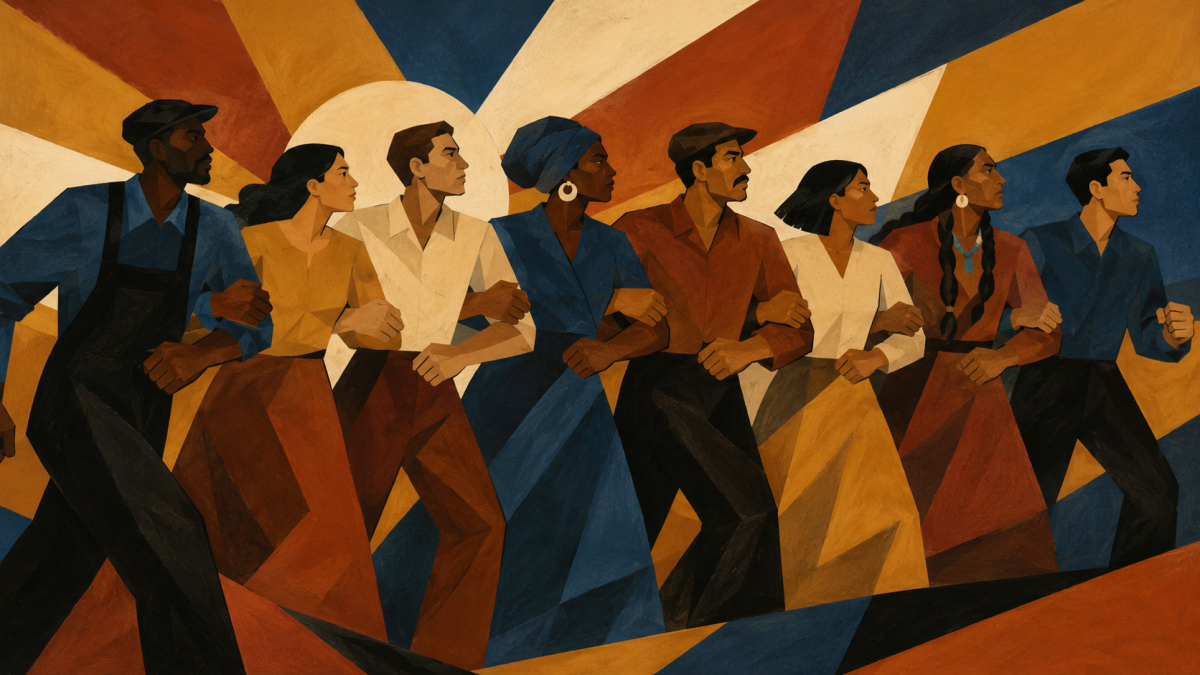
Zohran Mamdani’s rise has renewed interest in socialism, but without revolutionary love, racial solidarity, and a willingness to surrender white privilege, America’s left cannot deliver genuine liberation.
Many U.S. voters may have a newfound fascination with socialism because of Zohran Mamdani and the successful candidates he has inspired. But many of these same voters are cursed with a chronic social disability that afflicts those with white privilege, and which also tends to render stillborn any socialist embryo that might ultimately develop and emerge from this country’s political womb.
What is it that limits America’s potential for a genuine transformational socialist revolution? Che Guevara, the icon of guerrilla warfare, answered it this way: “At the risk of seeming ridiculous, let me say that the true revolutionary is guided by a great feeling of love. It is impossible to think of a genuine revolutionary lacking this quality.”
Guevara was not alone in his sentiments. Jesus himself proclaimed that second only to a love for God, love for fellow human beings is most important. “This is my commandment, that you love one another as I have loved you. Greater love has no one than this, that someone lay down his life for his friends.” This type of love is entirely selfless and sacrificial, and it is a type of love that is in short supply in this country.
To suggest that those who possess white privilege lack feelings of love is to invite challenge. There are predominantly white communities the length and breadth of the country where neighbors live peacefully and in thousands of ways exhibit kindness and thoughtfulness. They donate to charities, and many become politically active by not only voting, but also by engaging in “No Kings” street theater and protesting ICE crimes. But does that really demonstrate love?
Related stories
When Guevara speaks of a revolutionary’s love, he speaks of the kind of sacrificial love exhibited by Jesus himself. It is what John Coltrane called “a love supreme.” It is a love that is so intense that the revolutionary is not only willing, but enthusiastic about placing his or her life on the line so that the conditions and circumstances of the broad masses of people will be fundamentally transformed. Clearly Guevara had that kind of love, and it cost him his life. Likewise, the most famous movement martyrs like King, Malcolm, and Medgar had that love as well. But we have seen revolutionary love exhibited through the years by the most unlikely, anonymous individuals, many of whom never entertained a single political thought. They were simply human beings who were untainted by white privilege and who were blessed by basic decency and principles.
As just one example, when Kwame Ture (Stokely Carmichael) worked with the Student Non-Violent Coordinating Committee, he and other activists found themselves in the Hinds County, Mississippi jail. Because of then-recent events in Alabama, Mississippi officials felt constrained and unable to violently abuse their agitator prisoners with impunity. Instead, they approached a dozen or so of their most violent Black prisoners who were serving long-term and life sentences and offered to give them civilian clothes and secret conveyance to the bus station if they would beat the daylights out of the activists in custody. All but one prisoner rejected the offer, and those not willing to take the deal were punished severely. In his autobiography, Ture said: “When I heard that, I almost cried.”
Ture went on to explain: “…these brothers, these jailhouse desperadoes, knew exactly how totally at the mercy of the penal system they were. And they still had the courage and principle and clarity to say no, even if they mumbled. ‘Expects not, Cap’n. Nahsuh, sho don’t thank Ah kin do that suh.’…I’ve always thought those nameless, principled [hard men] to be heroes of the movement and shudder to think of the price they must certainly have paid… My people, my people.”
If we are honest, most people in this country who have had a rather pampered existence, and whose life experience has been enhanced by white privilege (which they never acknowledge because they are blissfully unaware that such exists) would not be willing to risk fatal consequences for anyone outside of their family and immediate circle of friends. There are exceptions of course. Many white students who participated in the freedom rides and sit-ins of the sixties were stripped of their white privilege by white southerners and were treated for all practical purposes as badly as their Black comrades. But for the most part, the capacity of this country’s privileged population to truly love is limited.
We are able to gauge the limitation of the capacity to love by measuring it against the emotional bonds with family. If a family member were to be locked away in a prison without cause, or if they were sexually abused at a boarding school, or if they were beaten by police, most people would not be content to respond by simply marching with a protest placard or by promising to vote for a Democrat with hopes that an elected official will address the problem. Instead, when a family member is wronged, most people will risk life and limb to achieve justice. In this country, what is lacking is the sense that oppressed people – particularly people of color, are part of the family deserving of the love effortlessly extended to relatives. They just honestly are not thought of in that way.
What then of Alex Pretti and Renee Good? They lost their lives in defense of the oppressed, but like many white activists, they had an intuitive if not conscious understanding that they could engage in militant confrontations with the state to a degree that people of color cannot. The killings of Pretti and Good were aberrations – a betrayal of white privilege, and it is possible that the fact that these two individuals were “niggerized” probably served to deter others who might otherwise have been inclined to follow their example. We in no way want to minimize the ultimate sacrifice made by Pretti and Good, but at the same time we want to highlight the actions of those whose revolutionary love drives them to make the same sacrifices without the promise of protection that white privilege provides.
Consider the Cuban soldiers who volunteered to be deployed to Angola in the 1970s and who were killed fighting South Africa’s apartheid regime. During the slavery era, First Nations communities in Florida not only gave refuge to Africans who escaped plantations, but they also took up arms and fought shoulder to shoulder with them against slave catchers and government troops. Conversely, in the early 1970s, when the American Indian Movement occupied the Bureau of Indian Affairs and the cops and federal marshals had them under siege, Kwame Ture and a delegation from the All-African People’s Revolutionary Party inserted themselves into the stand-off and declared: "For y'all to get to the Indians, you're going to have to go over us Africans!" When privileged progressives engage in self-reflection, can they honestly say they possess that type of sacrificial revolutionary love?
This country’s love deficit does not preclude the adoption of socialist policies, but socialism works only when, because of the people’s love for each other, they collectively pursue an economic strategy that ensures that the basic needs of all are satisfied, and everyone is able to pursue their fondest dreams. Socialism manifests in a different way when, as is the case in the U.S., many perceive it as a way to achieve personal, selfish objectives. Specifically, there is likely a belief by many that left-wing populism is the alternative to Trump’s betrayal of a right-wing populism that was intended to benefit select, middle and working class, white, non-immigrant communities. When the people’s motivation for pursuing socialism is selfish and racist, the society will become discriminatory regardless of whether socialist policies are in effect.
People cannot become good and loving by simply flipping a switch. This is especially true in a country where at its birth, territorial theft, genocide and slavery permanently imprinted on the national consciousness the notion that all men (and women) are not created equal. If changing that were as simple as declaring otherwise, the U.S. would long ago have been a very different place. But from the outset those responsible for establishing and leading the country saddled it with the burden of white privilege – a burden the country lacks the courage to unload.
It is certainly possible for the country to continue its movement toward socialism, but in doing so it cannot ignore that a system that presumes a commitment to love will succeed only if those who are privileged engage in the very hard work of spiritual transformation through honest assessment of who they are as human beings and whether they truly love others enough to surrender whatever privileges they have received from white supremacy and capitalism. Chokwe Lumumba, the late mayor of Jackson, Mississippi and a revolutionary lawyer spoke truth when he said: “If you don’t love the people, you will betray the people.”
Comments

Powered by RoundtableAn AI/DeFi-powered Enterprise Media Operating System. Learn more at Roundtable.io.© Roundtable 2026. By using this site you agree to the Terms of Use and Privacy Policy