


Jul 15, 2026 7:08 PM
How Trump’s tax cuts, market gains, and “One Big Beautiful Bill” enrich his family and the wealthy while cutting Medicaid, food assistance, and economic security for working Americans.
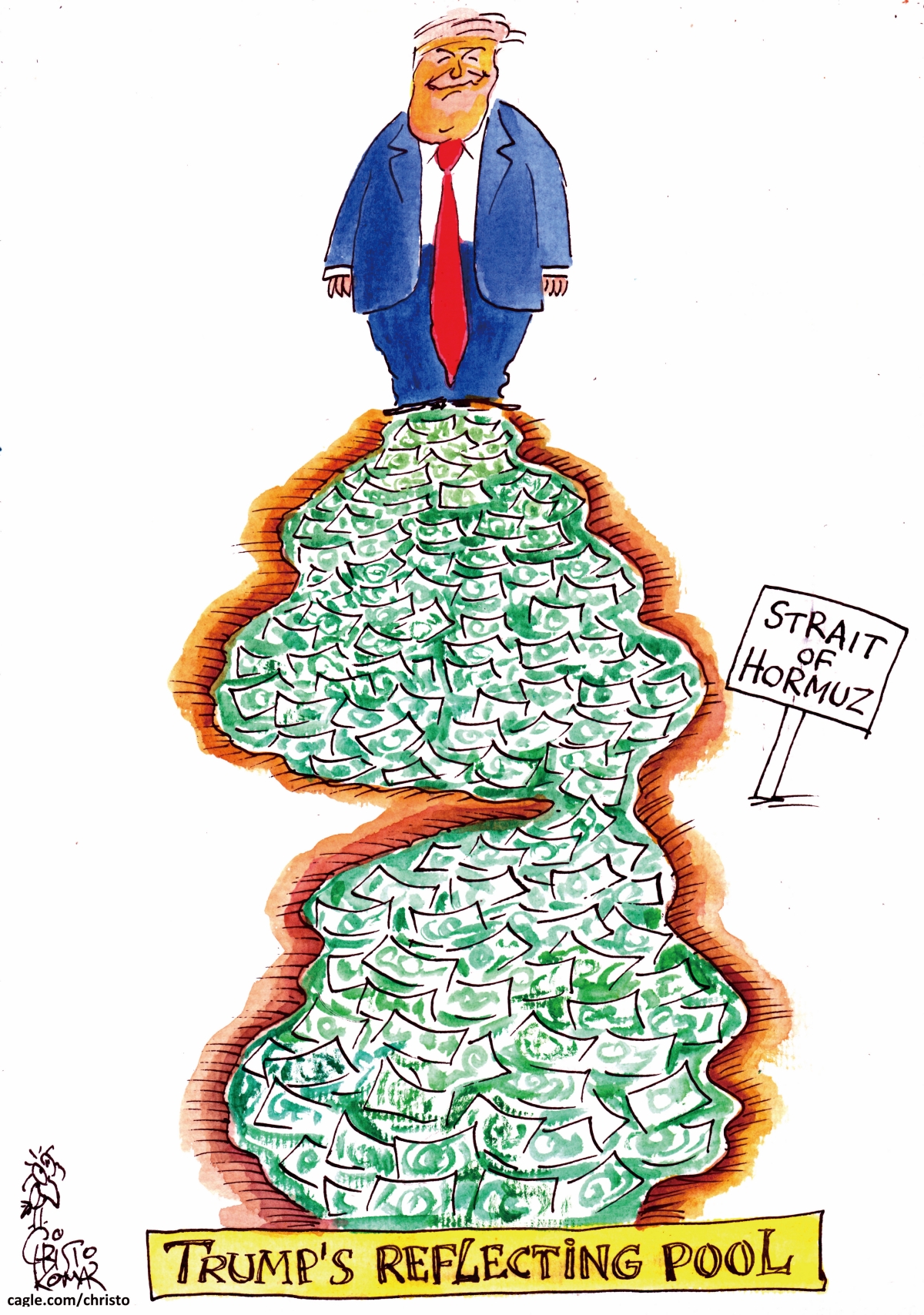
The answer to the first part of the above question is easy—Trump, his family, and the rich! So also is the response to the second part—the rest of us! Let’s examine our answers in order.
As John Peeler noted in this LA Progressive at the beginning of July: “During 2025, Trump and his family made at least $2.2 billion, of which half was in cryptocurrency, where they made a killing on Trump-denominated coins that rapidly lost their value.” As Eric Lipton of The New York Times stated, “there’s nothing like this in American history...nothing anything remotely like this from any [other] president.”
Besides Trump, his family, and rich friends, it is primarily the wealthy who have benefited most from his policies. Inflation and tariffs have increased the cost of living, but one segment of the economy that has held up pretty well has been the stock market. In fact, since Trump was elected for a second term in November 2024 the S&P 500’s total return “climbed nearly 30% as of June 24, 2026.” However, it is primarily higher earners who own stocks. In 2025, only 28 percent of households earning less than $50,000 a year owned them, compared to 84 percent of those earning $100,000 or more. And race is also a factor: 70 percent of White adults owned stocks, compared with 53 percent of Black adults and 38 percent of Hispanics.
For those who support Trump—and the number is dwindling—they, however, think they are also benefiting, either financially or in other ways. Perhaps they wait tables, and thanks to his “One Big Beautiful Bill” (OBBB, enacted mid-2025) they can deduct up to $25,000 of qualified tip income per tax return. Or for a less immediately direct financial reason, perhaps they approve of his backing of Israeli Prime Minister Netanyahu’s policies in Gaza or Lebanon, or the Trump administration’s treatment of immigrants and refugees.
Related stories
From another perspective, however, the title of the Democrats’ House Budget Committee mid-2025 response to Trump’s OBBB—“Trump's Big Ugly Law Steals from the Poor to Give to the Ultra-Rich”—sums up nicely their approach. Its first two paragraphs read as such:
President Trump’s Big Ugly Law kicks more than 15 million people off their health insurance, makes the largest cuts to nutrition assistance in history, and makes higher education less affordable. Why? To pay for tax cuts that overwhelmingly benefit the ultra-rich.
Non-partisan analysis from the Congressional Budget Office and Joint Committee on Taxation shows that the bill worsens inequality, gives the ultra-rich a historic tax break, and makes working people worse off. Adding insult to injury, when including the cost of debt service, CBO finds that this bill adds over $4 trillion to the national debt.
Further along their website elaborates:
Households in the lowest income decile, making $24,000 a year or less, lose about $1,200 every year, mostly due to deep cuts to Medicaid and food assistance...
The ultra-rich get a windfall. Families making over $700,000 a year will see a $13,600 boost, almost entirely from tax cuts. That figure does not even count the massive estate tax giveaways for the ultra-rich.
By mid-year 2026, there were many signs that those in the bottom half of income earners were hurting. One was the drop in President Trump’s approval ratings, primarily triggered by those who listed “affordability” as their number one issue. There were also those retirees who reentered the workforce because they could no longer afford to live without working. In mid-July 2026, for example, the PBS Newshour reported that “more than half of Americans say they can't afford medications and needed health care, a five-year low, even though Americans have been retiring later.”
By early July 2026, there were few indications that economic conditions were going to improve for most U.S. citizens. In fact, primarily because of our current involvement with Iran, most of us are likely to see more economic pain in the months ahead. The Christian Science Monitor has recently estimated that “direct U.S. military operations in Iran...are estimated at up to $42 billion, [but] that long-term economic and veteran expenses may push the cost higher.” The increased cost of gasoline resulting from the war has continued to spike inflation.
There is one cost, however, that many U. S. citizens have not factored in, and that is the eventual environmental cost of Trump’s policies. This is partly because no one can yet do so, but we do know it will be large—and will be paid, at least partly, by our children and grandchildren.
Comments

Powered by RoundtableAn AI/DeFi-powered Enterprise Media Operating System. Learn more at Roundtable.io.© Roundtable 2026. By using this site you agree to the Terms of Use and Privacy Policy