


Apr 13, 2026 4:07 PM
Updated Apr 25, 2026 6:17 AM
Why the Word “Socialist” Still Stops Americans from Thinking
Countless times over the years, I have asked people what they mean when they call someone a socialist. Almost always, a long silence follows, ending in an inarticulate response that reveals the speaker has never thought seriously about the term.
I understand why. As a child in the American South, I learned that one did not need to know what socialism meant. It was simply bad, even evil, bundled together with communism, the Iron Curtain, and duck-and-cover drills. The details were irrelevant. Emotion did all the work.
It’s Not Good vs. Evil—It’s Ownership vs. Control
The word “socialist” often shuts down thought before it begins. The reflex still shapes our politics. The difference between capitalism and socialism is not a battle between good and evil. It is a matter of ownership, control, and degree. Capitalism emphasizes private ownership.
Socialism emphasizes collective or public control. Every modern society blends the two. The real question is not which system is pure, but which mix produces the best outcomes for human beings.
Related stories
Straight up socialism can indeed be oppressive because like capitalism and maybe even more so because it is highly suspectable to authoritarianism with little ability to speak truth to power.
Democratic Socialism: A Balancing Act
But Democratic socialism on the other hand is an attempt to balance the power of capitalism with the need to keep the economic needs of the people in line with the integrity they are due.
This is precisely the political ethos that Bernie Sanders and Alexandra Ocasio-Cortez have been traveling around the country and advocating for years while critics refer to it as straight socialism, because that depiction has been rendered poison in the minds of millions.
It is deeply ironic that many of those extremely critical of AOC are the very people who would benefit most if they were successful in fully implementing democratic socialism.
Freedom Without Security Is Fragile
Democratic socialism is the belief that political democracy is not enough unless people have some economic security and real opportunity. Its goal is to make society fairer, not by abolishing freedom, but by making freedom more meaningful in everyday life. In my view, the 2028 Democratic Presidential campaign must include the demand for replacing the embattled ACA with universal healthcare.
The problem is not that socialism is beyond criticism. It is that capitalism is rarely judged by the same standard. The truth is simple. Both systems work. The issue is who they work for.
Who Does Capitalism Really Work For?
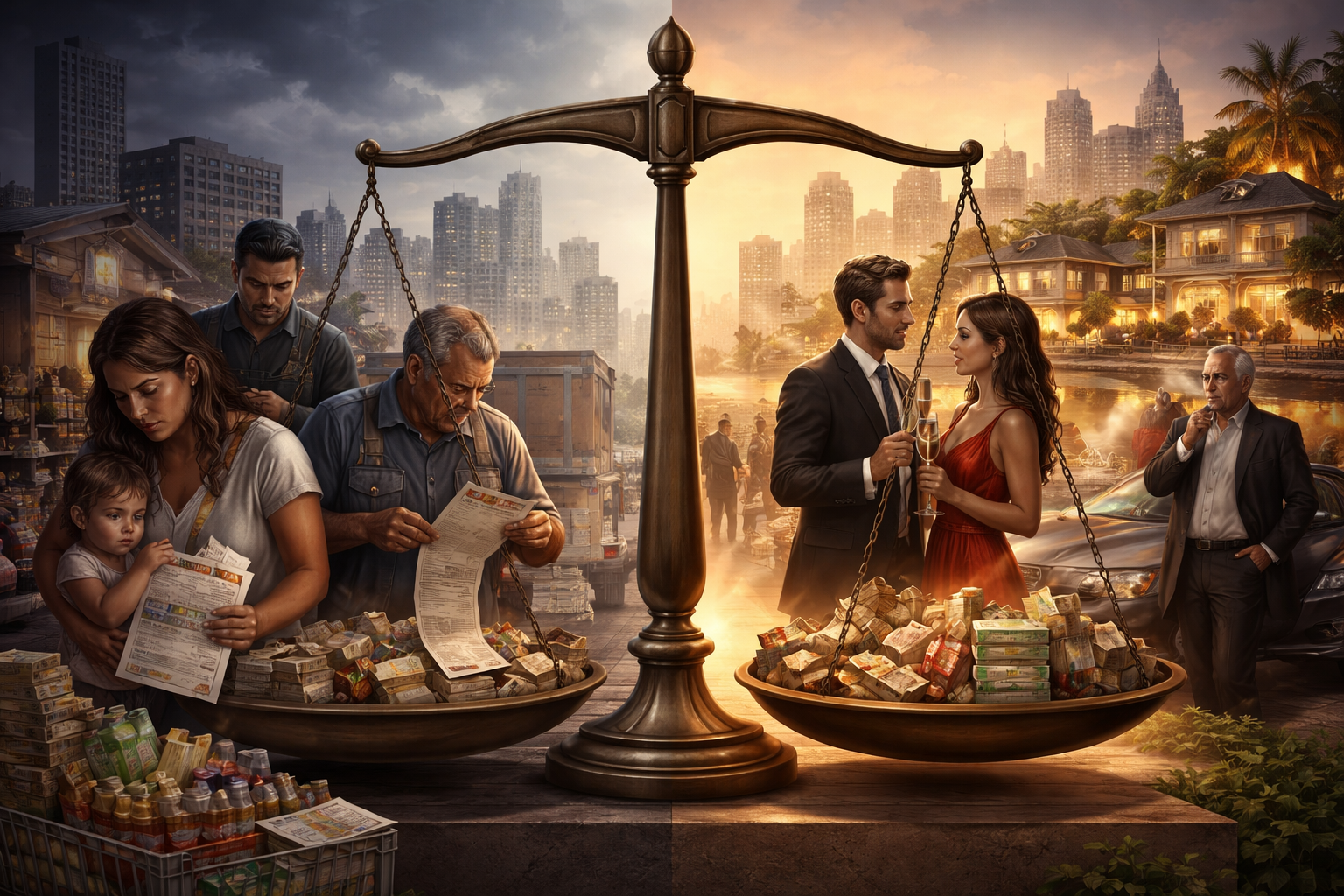
Capitalism works extremely well for those who own assets, control capital, or benefit from investment income. It rewards those whose money makes more money. But for millions of people, it produces a very different experience: rising costs, stagnant wages, medical vulnerability, and chronic insecurity.
Ask the person working long hours only to watch rent, groceries, and healthcare consume any hope of getting ahead. Ask the family one illness away from financial collapse. Ask the young adult who did everything “right” only to discover the rules were written by people who already owned the board.
If that system “works,” then the word has lost its meaning. To be clear, socialism is not a flawless alternative. History shows that it can become rigid, inefficient, and authoritarian. Concentrated power, whether public or private, always carries risk. Today economic inequality in America is grotesque.
The Systems We Already Depend On
Neither system deserves blind loyalty. Both are tools, and both can fail. What is almost never acknowledged is that Americans already depend heavily on what would, in any honest conversation, be called socialistic systems.
Public schools, roads, fire departments, Social Security, Medicare, and the military are all collective enterprises funded and managed through government. The same people who denounce “socialism” rely on these systems every day. What they reject is not the function, but the label.
This confusion has real consequences. It prevents serious discussion about how to improve the balance between public and private power. It turns policy into identity, and identity into tribal conflict.
Democratic Socialism Corrects Capitalism's Excess
At its most practical, democratic socialism is simply an attempt to correct capitalism’s excesses without abandoning its strengths. It accepts markets, innovation, and private enterprises, while recognizing that essential needs such as healthcare, education, and basic economic security should not depend entirely on luck or wealth.
It is not about eliminating freedom. It is about making freedom meaningful. Because freedom without security is fragile. A person constantly worried about survival is not meaningfully free, no matter what economic theory says.
This brings us to the central failure of the current debate. Capitalism is praised for its successes while its harm is treated as inevitable. Socialism is condemned for its failures while its contributions are ignored.
AI, Wealth, and the Coming Reckoning
Now, with artificial intelligence accelerating the displacement of labor, these pressures are likely to intensify. Entire categories of work may shrink or disappear. When that happens, the question of how wealth is distributed will no longer be theoretical.
It will be unavoidable. At that point, the debate over labels will look trivial. Whether we call it democratic socialism, regulated capitalism, or something else entirely, the underlying reality will be the same: a system that allows machines to generate immense wealth must find a way to share that wealth with the people whose labor is being replaced.
The Nordic Model: A Working Example
The Nordic countries of Denmark, Finland, Iceland, Norway, and Sweden use socialistic taxes to fund strong social programs, and they consistently rank higher than the United States in both standard of living and happiness. They provide universal healthcare, affordable education, generous family policies, and broad social support that reduces inequality and builds social trust.
They appear near the top of the World Happiness Report, while the United States ranks much lower. They also score higher on life expectancy, educational outcomes, and human development.
In simple terms, the Nordic model delivers a better life for the average citizen than the American system and this is why our incessant claims about America being the greatest nation on earth drive me crazy.
America’s Contradiction
America has become a global embarrassment among developed nations. We tolerate mass homelessness, including among veterans. Millions remain trapped by student debt in a country already drowning in ignorance.
Many go bankrupt from medical bills, while others die each year for lack of affordable care, even as politicians boast about the best healthcare system in the world. We also imprison a higher share of our population than any other developed nation and now we are busy building concentration camps. None of these facts seem capable of stopping the incessant bragging about our greatness.
The Illusion of Choice and Freedom
Advocates of unfettered private enterprises like to argue that their system maximizes freedom. In a narrow sense, this is true. People earning poverty wages at Walmart are free to quit and work at Target or McDonald’s. They are free to start their own Google. A billionaire is even free to sleep under a bridge if he chooses. These freedoms exist mostly on paper and in the nonsensical rhetoric of ideologues.
A country that guarantees living wages and universal healthcare is not a radical idea. What is extremist is the grotesque inequality we have come to accept as normal. We have a deficit near 40 trillion dollars because the superrich has bullied us into not taxing them commensurate with our debts.
Socialism has been portrayed as a national threat for as long as I can remember, but at 83, I believe it is time for Americans to wake the hell up and think clearly about building a fairer economy. If we do not, the consequences will not be abstract.
The Real Question Isn’t the Label
We are currently circling the drain and economic inequality is rising exponentially. The irony is that the solution is not radical. It is obvious. No economic system should be treated as more important than the people it is supposed to serve.
If the economy is not working for enough people, then it needs to be overhauled. Call it whatever you like. The label matters far less than the outcome.
Comments

Powered by RoundtableAn AI/DeFi-powered Enterprise Media Operating System. Learn more at Roundtable.io.© Roundtable 2026. By using this site you agree to the Terms of Use and Privacy Policy