


Apr 27, 2026 5:30 PM
Updated Apr 27, 2026 6:32 PM
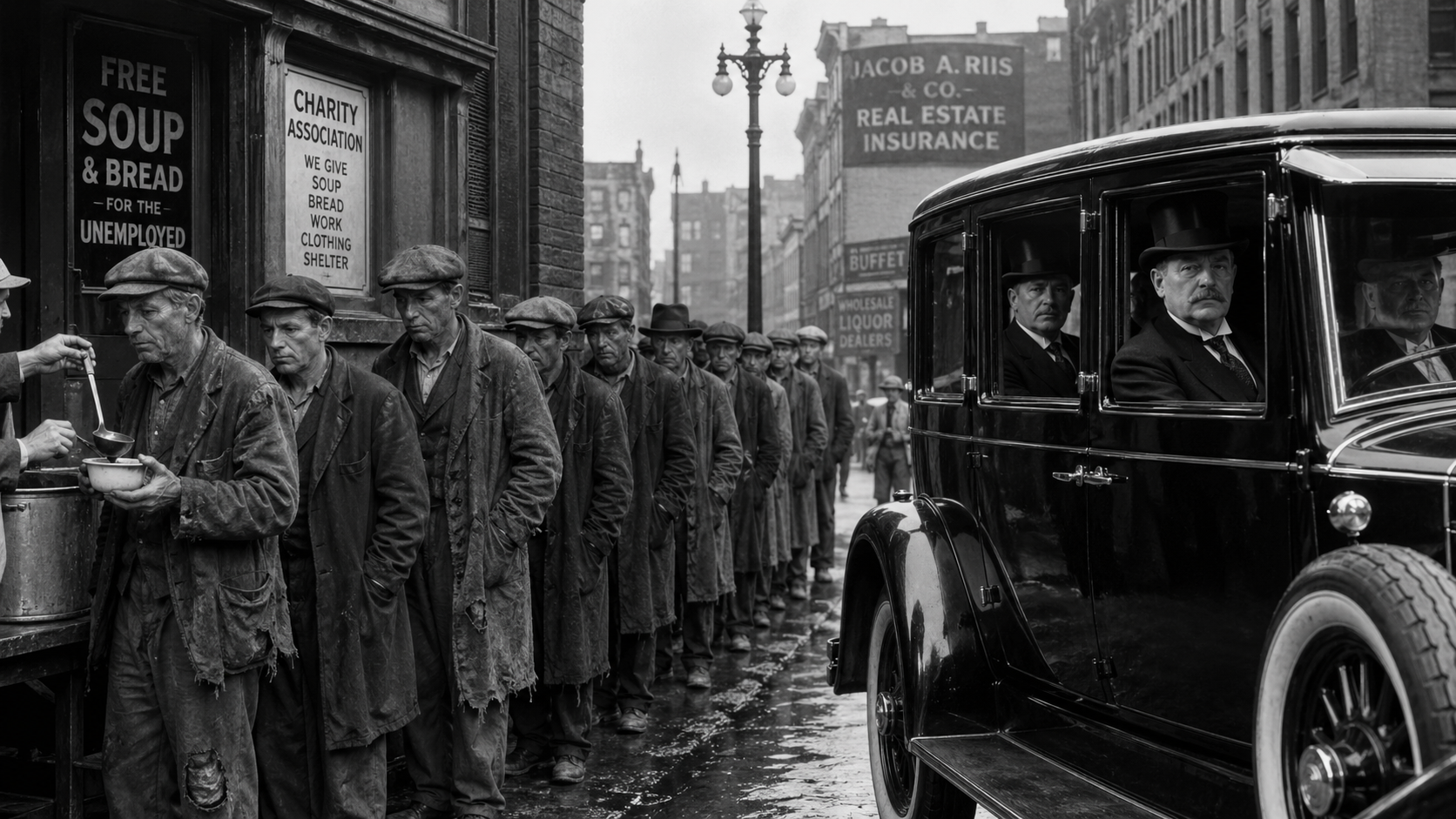
The unpaid price of a civilization worth living in drives accelerating inequality, infrastructure decay, and democratic instability.
The hardest and most necessary point to get across in any honest discussion of economic policy is this: high progressive tax rates are not a punishment for success; they are the foundation upon which a stable and prosperous middle class is built.
Not only did progressive taxation help create the American middle class, it remains essential to sustaining it. Strip that away, and what you are left with is not freedom or efficiency, but a slow drift toward oligarchy.
The 1950s Tax Model: What 90% Top Rates Actually Delivered
The United States has already run this experiment once, and the results are not theoretical. In the early 1950s, the top marginal tax rate exceeded 90 percent. To modern ears, that sounds confiscatory, even absurd. But that era did not produce economic stagnation or mass capital flight.
It produced the greatest period of broad-based prosperity in American history. It built the postwar economy. It financed the Interstate Highway System, expanded home ownership, fueled public education, and helped create conditions in which a single income could support a family. The middle class was not an accident. It was engineered, in large part, through progressive taxation.
Related stories
How Progressive Taxation Shapes Behavior and Drives Growth
What those high tax rates did was shape behavior. Wealthy individuals still lived extraordinarily well, but the structure of taxation discouraged hoarding and encouraged reinvestment.
Entrepreneurs expanded businesses, increased wages, hired more workers, and drove innovation because doing so was more advantageous than simply extracting profits. In other words, the tax system aligned private incentives with public good. Growth was not stifled, it was directed.
Contrast that with the present. We are now approaching a national debt of $40 trillion, while at the same time witnessing an unprecedented concentration of wealth at the very top. This is not a coincidence.
From Investment to Extraction: What Changed in the U.S. Economy
Over the past several decades, public government has been steadily hollowed out, not because the needs of the country diminished, but because concentrated wealth has successfully resisted contributing to the system that made that wealth possible in the first place. The result is a government that lacks the revenue to maintain the basic infrastructure of a modern civilization.
And the consequences are visible everywhere. Airports that feel outdated and underfunded. Bridges and highways in disrepair. Electrical grids that strain under increasing demand and environmental stress. These are not isolated failures. They are systemic symptoms of a nation that has chosen to underinvest.
The Myth of Low Taxes and Small Government
The idea that we can sustain a prosperous society with low taxes and small government is one of the most persistent and dangerous myths in modern political discourse. It promises something for nothing, a free lunch dressed up as economic philosophy.
But history offers no examples to support it. There has never been a country, anywhere on Earth, that has maintained a strong and durable middle class while simultaneously keeping taxes low and government weak. None. Zero.
Other developed nations understand this reality far better. Across Europe and in parts of Asia, societies have accepted a simple truth: civilization is expensive. Universal healthcare, quality education, reliable infrastructure, and social stability do not emerge spontaneously from markets alone. They require collective investment. They require tax systems that are robust, progressive, and capable of meeting the demands of modern life.
The United States, by contrast, has drifted in the opposite direction. We have allowed the idea of extreme wealth accumulation to become normalized, even celebrated, without fully acknowledging its consequences.
When Wealth Concentration Becomes a Democratic Threat
A civilization like ours cannot sustain itself while producing billionaires and, soon enough, trillionaires, without simultaneously generating widespread economic insecurity. The math simply does not work. When wealth concentrates at that level, it does not remain idle. It reshapes politics, distorts markets, and erodes democratic institutions.
To be clear, the issue is not wealth itself, but scale. Society can support millionaires without destabilizing its foundations. But when wealth reaches into the billions and beyond, it begins to operate outside the constraints of the system. It acquires the power to influence legislation, avoid taxation, and perpetuate itself across generations in ways that undermine the broader public interest.
If we are serious about restoring balance, then we must confront the uncomfortable but unavoidable conclusion: tax rates must become significantly more progressive. Not as a symbolic gesture, but as a structural correction.
This Isn’t About Wealth—It’s About Scale
The goal is not to eliminate wealth, but to limit its concentration to levels that remain compatible with a functioning democracy. In practical terms, that means creating a system in which billionaires become millionaires through taxation, and the emergence of trillionaires is prevented altogether.
This is not radical. It is a return to a model that has already proven effective. It is a recognition that the prosperity of the mid-20th century was not driven by low taxes and minimal government, but by a deliberate and sustained commitment to public investment.
Surely by now, as citizens, we have witnessed enough contrived economic inequality to recognize the familiar pattern of gaslighting that accompanies it, the same tired insistence that what is plainly engineered is somehow natural, inevitable, or even deserved.
The Cost of Denial: Inequality, Instability, and Scapegoating
The alternative is already unfolding before us. As we continue to fail in imposing tax rates commensurate with our obligations, the country is beginning to show strain. Infrastructure decays. Public services erode. Economic anxiety spreads. And with that anxiety comes political instability, as citizens search for explanations and, too often, scapegoats.
A healthy democracy cannot survive indefinitely under those conditions. The middle class, long considered the backbone of American stability, depends on more than individual effort. It depends on systems that create opportunity, mitigate risk, and ensure that the benefits of economic growth are broadly shared.
The Bottom Line: Civilization Requires Investment
That requires money. It requires policy. And above all, it requires the political will to acknowledge that there are no shortcuts.
We can continue to believe in the illusion that low taxes and small government will somehow deliver prosperity for all, despite all evidence to the contrary. Or we can accept the harder truth: that a civilization worth living in demands investment, and that investment must be paid for.
The question is not whether we can afford progressive taxation. It is whether we can afford to go without it. What I find most bewildering is that so many of the very people being impoverished by today’s engineered inequality cannot seem to throw off the indoctrination and recognize the scam for what it is. They have been taught to mistake exploitation for freedom, public responsibility for tyranny, and the concentrated theft of civic wealth for the natural order of things.
Comments

Powered by RoundtableAn AI/DeFi-powered Enterprise Media Operating System. Learn more at Roundtable.io.© Roundtable 2026. By using this site you agree to the Terms of Use and Privacy Policy