
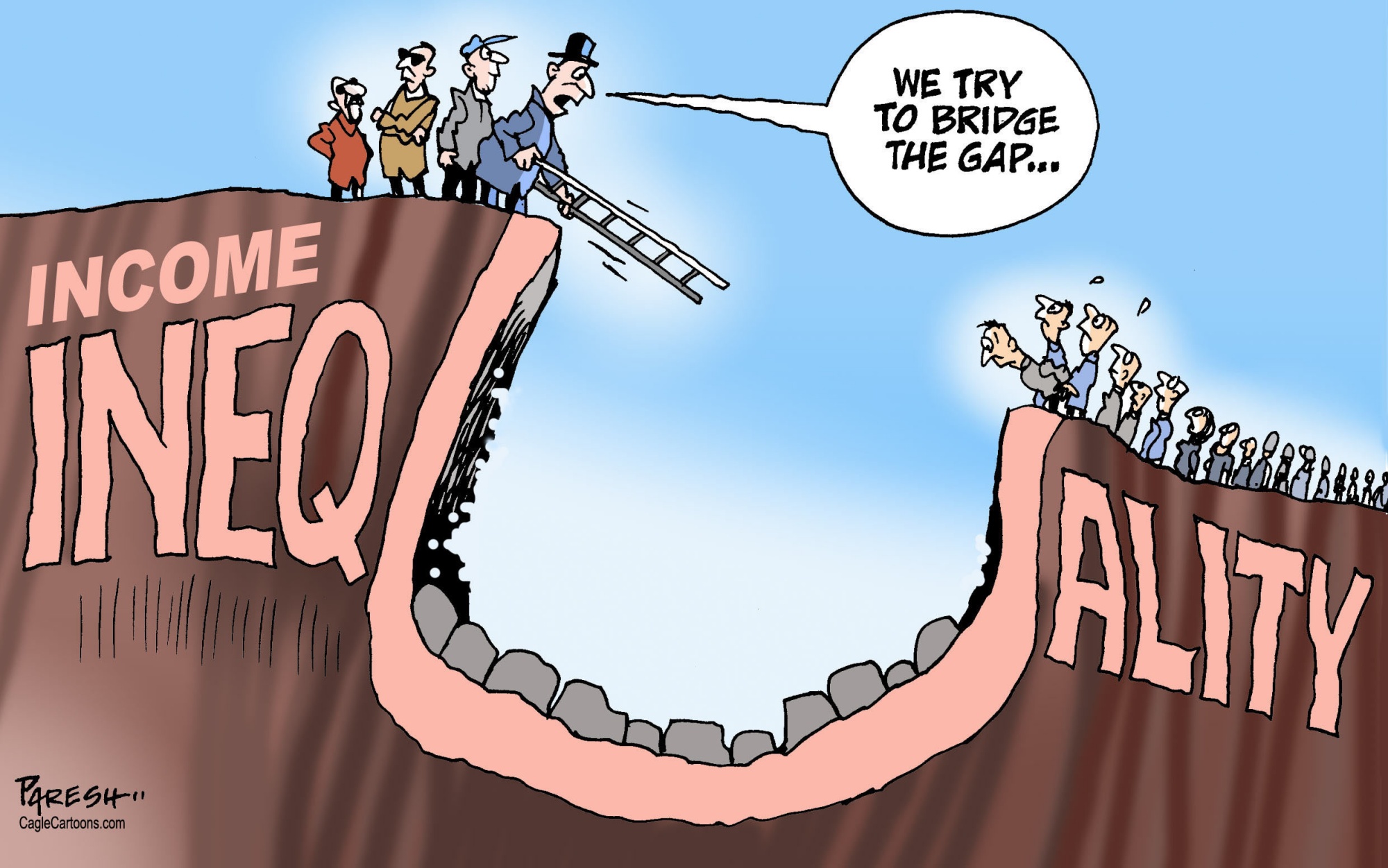
Illustration by Paresh Nath on Cagle Cartoons


Sep 15, 2023 1:00 PM
Ending poverty is not difficult. We know exactly how to do it. We did it. Then we undid it. the United States is working to impoverish millions of our children.
Friends,
Poverty is a policy choice. Congress has chosen to have a significant percentage of our population impoverished, including — especially — our nation’s children.
There is no law of nature or principle of economics or constitutional provision that dictates such a high number of people in poverty within the richest nation in the history of the world.
Census data released Tuesday provides clear evidence of the choice that’s been made. The number of people with incomes below the poverty line in 2022 rose by 15.3 million. The poverty rate for children more than doubled — from a historic low of 5.2 percent in 2021 to 12.4 percent in 2022.
Related stories
The United States has just experienced the largest spike in child poverty since the current models for measuring economic distress were developed in 2009. All of the record gains made against child poverty over the previous two years have been erased.
The reason for this extraordinary rise in poverty? Not the pandemic. Not a vicious recession. Not an economic depression. Not a huge increase in the numbers of people unemployed. In fact, employment is high.
The reason, according to the Census Bureau, is the refusal by Congress to renew the enhanced child tax credit that was developed during the Covid-19 pandemic. That expiration was a policy choice.
Poverty has shot upward because we as a nation (through our representatives in Congress) decided to eliminate a relatively modest bump in federal support — $250 to $300 per month for households with children.
In the previous year, that modest bump had the astounding effect of reducing the rate of child poverty by nearly half. When lawmakers expanded the child tax credit in 2021, fewer kids lived in poverty. When they failed to continue the expansion in 2022, child poverty more than doubled.
Ergo, two policy choices by Congress — one that dramatically cut child poverty, followed by a second that dramatically increased it.
Who exactly in Congress made this choice? Republicans and a handful of Democrats, such as West Virginia Senator Joe Manchin and Arizona Senator Kyrsten Sinema. They rejected efforts by the Biden administration and most congressional Democrats to maintain the enhanced child tax credits.
Although House Democrats backed the proposed extension of the credits, Senate Democrats needed all 50 members of their caucus to pass the legislation via the reconciliation process. Manchin refused to go along unless his colleagues accepted a scheme to penalize parents with work requirements and other restrictions.
Sinema also refused, as has been noted by the campaign of U.S. Representative Ruben Gallego, an Arizona Democrat who is running to replace Sinema in 2024. (Let’s do everything we can to make sure he does.)
Ending poverty is not difficult, especially for wealthy nations such as the United States. We know exactly how to do it. We did it. Then we undid it. In effect, the United States is now making a concerted effort to impoverish millions of our children.
As John Nichols of The Nation reminds us, the policy choice we made in 2021 to reduce poverty is similar to the choice America made in the 1930s, when President Franklin Delano Roosevelt responded to the Great Depression with the myriad job creation, rural development, and social safety net programs (including Social Security) that formed the New Deal.
When FDR took office in 1933, the unemployment rate in the U.S. was close to 25 percent. After eight years of federal interventions by the Roosevelt administration, it was down to around 10 percent when World War II began.
Similarly, just before Lyndon Johnson got Congress to enact Medicare and Medicaid in 1965, 22 percent of Americans were impoverished. When Johnson left office, it was around 13 percent. Why the drop? Because Medicare and Medicaid addressed a key driver of poverty among the elderly: medical costs. And other Great Society initiatives, such as expanded nutrition and housing programs, contributed to the decline.
This is not rocket science. The expanded Child Tax Credit cut child poverty nearly in half. Sinema, Manchin, and the GOP let it expire, and child poverty spiked.
This is not only a bad policy choice. It is an indefensible moral choice. In the richest country in the world, it is inexcusable that millions of our children are living in poverty. They don’t have to be.
Friends, expanding the Child Tax Credit should be the top tax policy priority both this year and during the 2025 tax debate. Period.
This article was produced by Robert Reich.
Comments

Powered by RoundtableAn AI/DeFi-powered Enterprise Media Operating System. Learn more at Roundtable.io.© Roundtable 2026. By using this site you agree to the Terms of Use and Privacy Policy