


Jul 7, 2026 3:49 PM
Updated Jul 7, 2026 3:54 PM
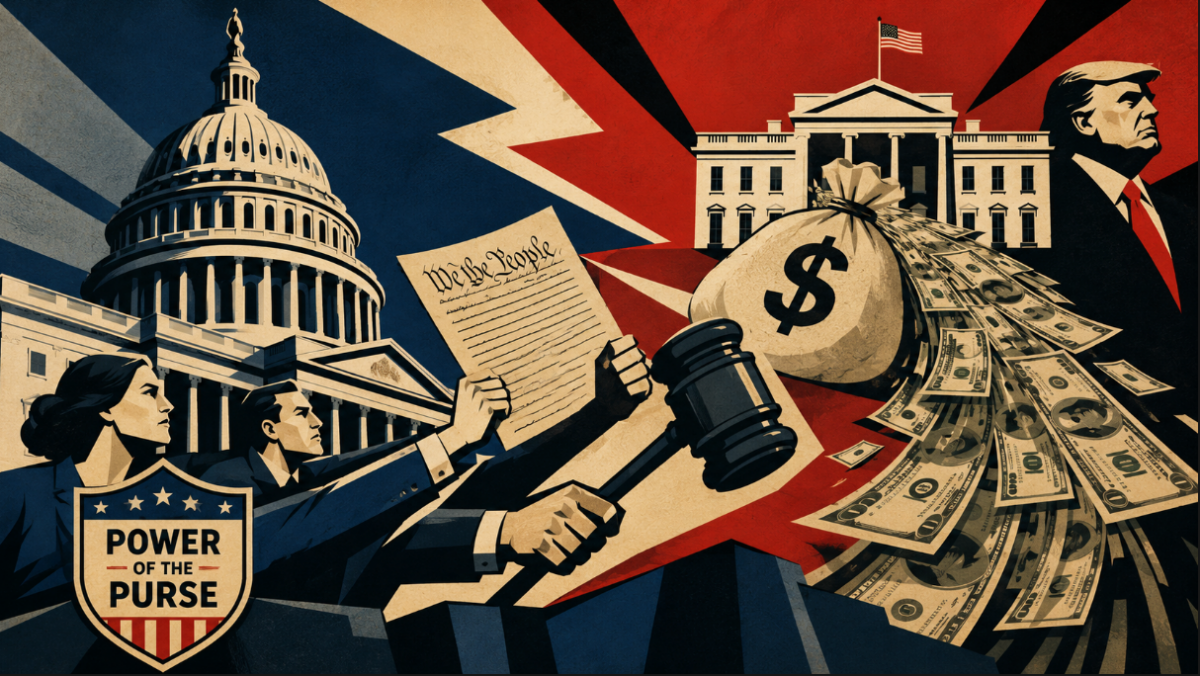
The legal battle over a proposed $1.8 billion White House fund tests Congress’s constitutional power of the purse and the future of presidential accountability.
One of the more troubling proposals now being discussed in Washington is the creation of what critics are calling a presidential "slush fund"—a pool of money that could be controlled by the White House with limited congressional oversight.
Whatever one's political party, this should give every American pause.
The framers of the Constitution understood that control over public money is one of the most important checks on executive power. They intentionally placed that authority in the hands of Congress, not the president.
The Constitution is remarkably clear.
Related stories
Article I, Section 9, Clause 7 states:
"No Money shall be drawn from the Treasury, but in Consequence of Appropriations made by Law; and a regular Statement and Account of the Receipts and Expenditures of all public Money shall be published from time to time."
This clause—known as the Appropriations Clause—means that federal money cannot simply be spent because a president wants to spend it. Congress must authorize both the purpose and the amount. Just as importantly, the public has the right to know where that money goes.
The constitutional questions are no longer merely academic. A coalition of former federal officials, public-interest organizations, and government watchdog groups challenged the fund in federal court, arguing that the executive branch cannot create and distribute nearly $1.8 billion in taxpayer money without proper congressional authorization. In response, U.S. District Judge Leonie Brinkema issued first a temporary restraining order and later a preliminary injunction blocking the administration from transferring money, processing claims, or making payments while the case proceeds. The injunction remains in effect, preserving the status quo until the courts determine whether the fund violates the Constitution's Appropriations Clause.
That does not necessarily mean the fund will ultimately be struck down. It does mean the courts believe the constitutional questions are serious enough that taxpayer dollars should not be distributed until those questions are resolved. In our constitutional system, that is precisely how the separation of powers is supposed to work.
Supporters of the proposal argue that the president needs greater flexibility to respond quickly to national priorities. Critics respond that flexibility is not the same as unchecked authority. They warn that allowing any president to control billions of dollars outside the normal appropriations process weakens one of the Constitution's most important safeguards.
Several legal challenges have already been filed, and federal courts are expected to determine whether parts of the proposal violate the Constitution. If Congress has not appropriated the funds or delegated spending authority through law, the courts may conclude that the executive branch has exceeded its constitutional authority.
The issue is larger than one administration or one political party.
Imagine if a future Democratic president claimed the same authority to spend billions without congressional approval. Many of today's supporters would likely object. Constitutional principles must apply equally regardless of who occupies the Oval Office.
The framers anticipated exactly this kind of conflict. Having fought a revolution against concentrated executive power, they deliberately divided authority among the three branches of government. Congress writes the laws and controls the nation's purse. The president executes those laws. The courts determine whether either branch has exceeded its constitutional limits.
That system of checks and balances has protected American democracy for nearly 250 years.
Citizens who are concerned can do more than simply watch events unfold. They can contact their senators and representatives, ask how they intend to protect Congress's constitutional power over federal spending, and follow the court cases that will determine whether these actions are lawful. Democracy depends not only on elections but also on an informed public willing to defend the constitutional guardrails that limit the power of every president.
The question before us is not whether we trust one particular president. It is whether we are willing to preserve the constitutional principle that no president should control the nation's treasury alone.
Comments

Powered by RoundtableAn AI/DeFi-powered Enterprise Media Operating System. Learn more at Roundtable.io.© Roundtable 2026. By using this site you agree to the Terms of Use and Privacy Policy