


Aug 5, 2023 1:00 PM
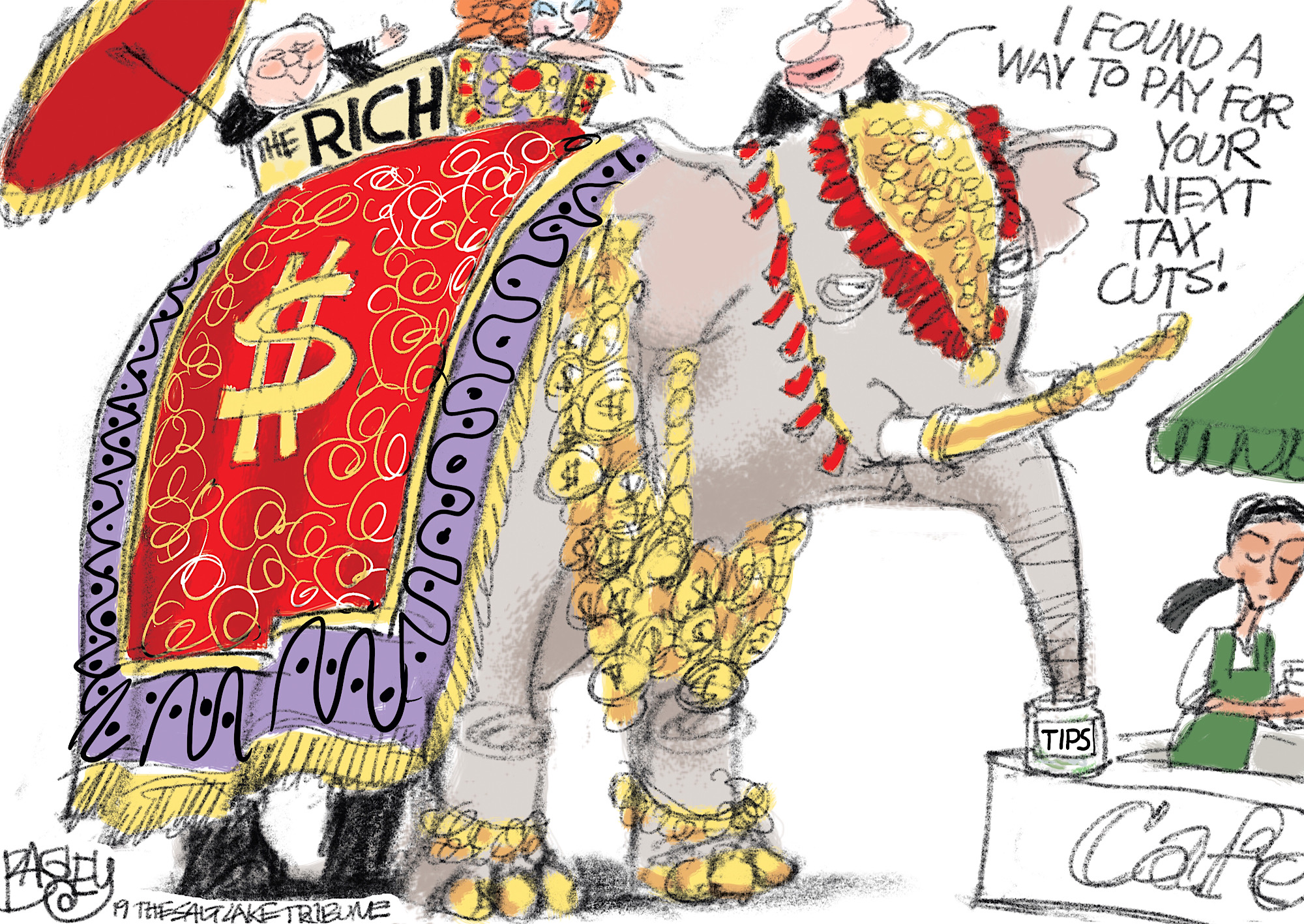
We must recognize we’ve been programmed—brainwashed—to accept that hoarding wealth is not only natural but good, because such a belief serves those who hoard.
We all know hoarders, those poor, afflicted souls who can’t stop themselves from buying and storing more things than they could ever use in a lifetime. Clothes and plates and trinkets and unopened boxes and any number of other items are piled everywhere in their home, a tiny path left for the hoarder to navigate from their chair to the kitchen to the bathroom and back. Sometimes, even their bed is covered with so many items it’s now unusable.
We feel pity for these people, perhaps repulsion. But we understand it’s a mental illness of some sort. They truly can’t help themselves. And, unless their home is a fire hazard right next door to ours, it’s mostly their personal problem.
But hoarding is different if there’s a famine. When there’s not enough food to go around and people are literally starving to death, it’s not just a personal matter if our neighbor’s home is crammed to the ceiling with canned goods and produce. They have more than they could ever eat in twenty years, and our family might very well die if our neighbor refuses to share.
Did our neighbor buy that food with his or her own money? Is it legally theirs? What claim do we have over someone else’s food?
Related stories
Well, laws change during a crisis. It becomes illegal to hoard, even if you’re using your own money.
In wartime, when food is scarce, the government issues ration cards. Everyone gets just so much. Perhaps people make counterfeit ration cards or sell real cards on the black market, but there’s some sense of community obligation. The only way to get through the crisis is to take on a shared burden. We all suffer a little so everyone has a chance to survive.
That’s the case in wartime. It’s the case during a famine.
And it needs to be the case during late-stage capitalism. With half a million unhoused people in the country, with millions more living in substandard, unsafe conditions, we have ultrarich hoarders with two, three, seven or more personal homes. We have hoarders who own hundreds or thousands of rental properties, gouging renters with ever higher rent.
We have the superrich who can afford the best healthcare in the world while tens of millions of their neighbors go without even minimal care.
Are the superrich using their own money to buy those homes and pay for their doctors? That’s debatable, given the exploitation necessary to accumulate vast wealth. But even if legally that money is theirs, we’re in a crisis, with people dying for lack of the basics, and hoarding wealth can no longer be tolerated.
The top 1% in the U.S. own 32% of the wealth, while the bottom 50% own a mere 2.6%.
We’ve been taught that those smart enough and strong enough to hoard power and wealth deserve their treasure. It’s human nature. It’s evolution itself. The survival of the fittest.
Why, it’s those with power and wealth.
What possible motivation could they have for teaching such a doctrine?
One person owns so much wealth he can afford to build a personal rocketship to take him into space, while another person working three jobs can’t even afford a car to get to work in.
Imagine extreme weather conditions—drought, hailstorms, flooding, derechos—destroy so many crops that next year we face a famine. Our neighbor is industrious and rich and planned ahead. He’s got lots of food, and he paid for it with his hard-earned money. He bought it before the famine even began.
Is it fair to now consider him a criminal simply for having foresight? For keeping what’s rightfully his?
We’re unhappy with the situation, but fair is fair, we think. That’s not our food.
As we begin to grow hungry, we learn that our neighbor has hoarded so many provisions he could eat six huge meals a day, every day for four hundred years, and still barely make a dent in his food supply.
Yet he keeps hoarding more food even as the famine worsens so that despite eating those six huge meals a day, his hoard keeps growing larger as his neighbors start to die off.
He’s got so much fresh produce it’s literally rotting before he can eat it all. But he insists on waiting until it rots and then throwing it away rather than share. He isn’t benefitting in any way from keeping that food, can’t use it, but still refuses to alleviate our hunger.
How do we feel about our neighbor now?
Does it matter if his actions are guided by mental illness? Addiction? Compulsive behavior? Selfishness?
It’s the impact that counts, not the reason behind it.
We ask our neighbor politely to share and he brushes us off.
We ask again, still politely. Then we demand.
But our neighbor has so much wealth and power hoarded along with his food that he can afford guards to protect him and his food storage. He can bribe politicians to create exemptions for him in the law code.
He’s not going to give away so much as one ounce of bread. Why, with scientific advances, he just might live four hundred years. He’s going to need all that food for himself. This famine might last a very long time.
At what point does our concept of fairness change?
Hoarding wealth is no different, when that money is needed by tens of millions of our neighbors for food, housing, medicine, and everything else that makes life both survivable and bearable.
In a drought, we criminalize watering lawns and washing cars. If a superrich neighbor with ten cars wants to wash all of them while watering his expansive lawn, and smugly tells us he can afford the water bill and the fines, is that okay? Even if we end up not having water to flush our toilets, wash our clothes, grow our food, or simply drink enough to stay alive?
We create the laws. We create the social contract. We decide how food and housing and wealth is distributed.
We need to change our mindset, recognize we’ve been programmed—brainwashed—to accept that hoarding wealth is not only natural but good, because such a belief serves those who hoard at our expense.
Once we realize this truth, we can start taking measures to ensure that all of us have a fighting chance to survive in a world increasingly full of war, famine, drought, and other climate disasters, many of which, of course, are caused by the hoarders themselves.
Comments

Powered by RoundtableAn AI/DeFi-powered Enterprise Media Operating System. Learn more at Roundtable.io.© Roundtable 2026. By using this site you agree to the Terms of Use and Privacy Policy