


Apr 17, 2026 4:58 PM
Updated Apr 17, 2026 5:00 PM
Allegations now travel instantly, amplified by social media and reinforced by news cycles that reward immediacy over verification.
In recent weeks, as accusations against public figures circulate rapidly and widely, I have found myself returning to a deceptively simple question: What happened to “innocent until proven guilty”? When this question is raised in conversation, the responses are revealing. Some insist the principle remains fundamental. Others dismiss it—especially when the accused holds public office. One response stands out: “That doesn’t apply if you’re in public service.”
That view is increasingly common, and it captures a deeper tension in American life: how to balance the urgent demand for accountability with the equally essential commitment to fairness. In a political and media environment defined by speed, outrage, and instant judgment, that balance is becoming harder to maintain—and easier to abandon.
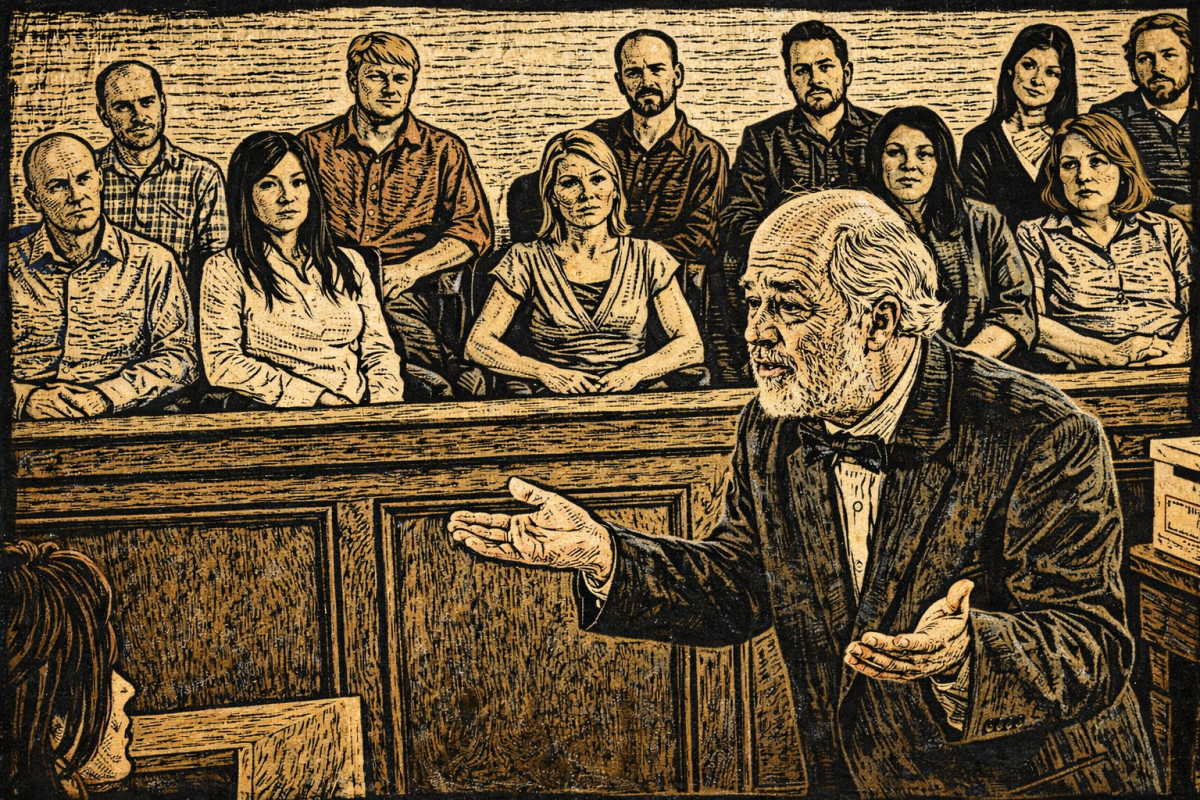
The idea of “innocent until proven guilty” did not originate in the United States. Its roots extend back to Roman law, which placed the burden of proof on the accuser rather than the accused. Over time, this principle was carried into medieval canon law and then into English common law, where it took on both legal and moral weight. The 18th-century English jurist William Blackstone gave the principle its most enduring expression: “It is better that ten guilty persons escape than that one innocent suffer.” This was not simply a legal guideline but a warning about the dangers of unchecked judgment. Blackstone understood that justice systems are imperfect—and that when they fail, the consequences for the innocent are profound. That insight traveled across the Atlantic and helped shape the structure of American law.
The phrase itself does not appear in the U.S. Constitution, yet the principle is deeply embedded in its protections. The Fifth Amendment guarantees due process, the Sixth Amendment ensures a fair trial, and the Fourteenth Amendment extends those protections to the states. The U.S. Supreme Court affirmed the presumption of innocence explicitly in Coffin v. United States (1895), recognizing it as a foundational principle of criminal law. In short, the American legal system depends on this idea: the burden of proof rests with the state, guilt must be established beyond a reasonable doubt, and the accused is not required to prove innocence. Legally, the principle remains intact. Culturally, however, it is under strain.
Related stories
Strictly speaking, “innocent until proven guilty” is a legal standard. It governs criminal proceedings, not public opinion, and it does not dictate what individuals may believe or how institutions should respond to allegations. And yet democratic societies have long extended this principle beyond the courtroom, treating it as a form of cultural restraint—a way of slowing judgment and resisting the human tendency to equate accusation with guilt. That restraint emerged from experience. The Salem Witch Trials remain one of the clearest examples of what happens when accusation alone is treated as proof. Lives were destroyed in a climate of fear where evidence was secondary and suspicion was enough. Similar patterns have appeared in other moments of American history, when public certainty outran available facts. The lesson has been consistent: when judgment accelerates beyond evidence, injustice becomes more likely, not less.
What has changed in the present moment is not the existence of accusation but its speed and reach. Allegations now travel instantly, amplified by social media and reinforced by news cycles that reward immediacy over verification. Public opinion forms quickly—often before evidence has been gathered, let alone tested. In this environment, the sequence that once structured judgment—accusation, investigation, evidence, conclusion—has been compressed or even inverted. The result is a parallel system of accountability in which legal judgment remains slow and evidence-based, while public judgment is immediate and often decisive. For public figures, the consequences of this second system can be swift and irreversible, regardless of what the first ultimately determines.
The claim that public officials are not entitled to the presumption of innocence rests on a compelling intuition: those who hold power should be held to higher standards. There is truth in this. Public trust matters, and ethical expectations for those in positions of authority often exceed what the law requires. Institutions have a responsibility to act when that trust is at risk. But a higher standard is not the same as a different standard of fairness. If accusation alone becomes sufficient for condemnation, the risks extend beyond any single case. Allegations can be weaponized, political incentives can shape narratives, and media amplification can solidify conclusions before facts are established. In such a climate, accountability can quickly blur into assumption—and assumption into judgment.
At the heart of this issue is a tension that democratic societies have always faced, but that feels particularly acute today. On one side is the demand for accountability: to listen seriously to those who come forward, to avoid dismissing allegations out of hand, and to confront abuses of power. On the other side is the commitment to fairness: to resist premature conclusions, to allow evidence to be examined, and to recognize the possibility of error. These commitments are not mutually exclusive, but they require patience, restraint, and a willingness to tolerate uncertainty—qualities that are increasingly scarce in a culture of immediacy.
If the presumption of innocence erodes in public life—even while remaining intact in law—the consequences extend beyond individual cases. A society that treats accusation as equivalent to guilt risks normalizing a form of judgment that is fast, certain, and often wrong. It encourages reaction over reflection, belief over inquiry. This has implications not only for politics but for education, media, and civic life more broadly. It shapes how individuals learn to evaluate claims, how disagreement is handled, and how truth itself is understood. History offers a clear warning: when the discipline of evidence is replaced by the urgency of judgment, the result is not greater justice but greater volatility.
“Innocent until proven guilty” has never been a comfortable principle. It asks us to suspend judgment when judgment feels most compelling. It requires us to accept that some guilty individuals may go unpunished in order to protect the innocent from wrongful harm. In moments of public anger or moral certainty, that restraint can feel frustrating—even unjust. But it is precisely in such moments that the principle matters most. A democratic society does not require silence in the face of accusation, nor indifference to harm. It does, however, require a commitment to something more difficult: the willingness to distinguish between allegation and proof, between suspicion and conclusion. That distinction is not a technicality. It is a safeguard—not because it guarantees justice, but because without it, injustice becomes far more likely.
Comments

Powered by RoundtableAn AI/DeFi-powered Enterprise Media Operating System. Learn more at Roundtable.io.© Roundtable 2026. By using this site you agree to the Terms of Use and Privacy Policy