
TED • Attribution-NonCommercial (CC BY-NC 2.0) • Flickr


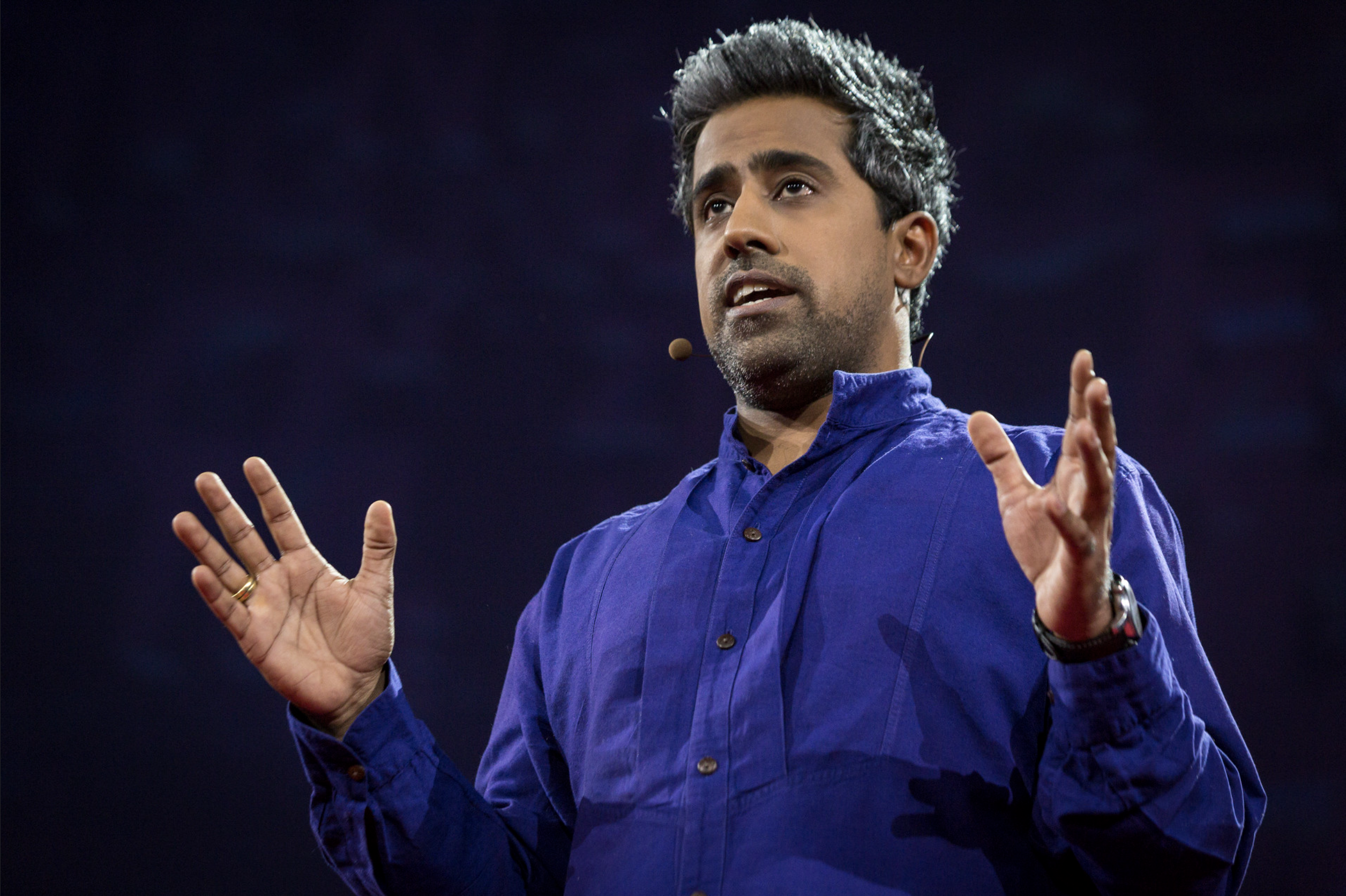
Anand Giridharadas
Sep 27, 2024 5:26 PM
Updated Sep 28, 2024 4:56 PM
America’s history is replete with larger-than-life moguls who “gave back to the community” but also worked diligently to keep the system that serves their needs unchanged.
The dictionary defines incisiveness as “intelligently analytical and clear-thinking.” These days, incisiveness is more elusive than pervasive in political discourse. That is one reason (among many) why we need analysts who can cut through partisan hype to render robust and unfiltered positions.
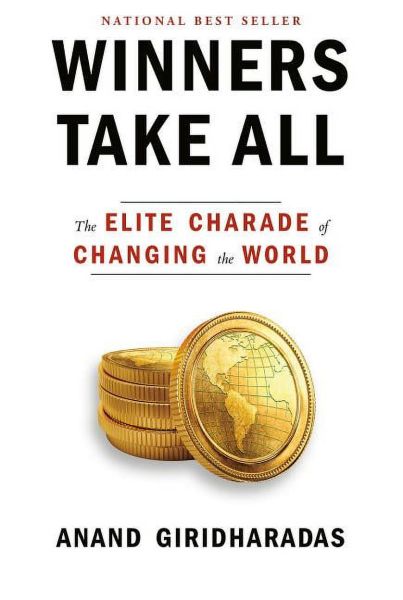
Anand Giridharadas is a prime example. The back cover description of his 2018 book Winners Take All: The Elite Charade of Changing the World (Vintage Books)—a tome on big-time philanthropy and what drives major gift-giving—screams incisiveness.
(He) takes us into the inner sanctums of a “New Gilded Age,” where the rich and powerful fight for equality and justice any way they can—except in ways that threaten the social order and their position atop it. (italics added)
Giridharadas says…. Hey public! Stop applauding, being in awe, and viewing major philanthropy as a from-the-heart, transaction-free, unpolitical act of generosity. Don’t you realize that strings are attached, markers will be called in, and seats at the table will be secured? Admire them? Question them instead. Ask why?
Related stories
America’s history is replete with larger-than-life moguls who “gave back to the community” but also worked diligently to keep the system that serves their needs unchanged. One example is the media magnate William Randolph Hearst, whose late 19th through early 20th-century newspaper network extended from coast to coast. He built that network—and his national reputation—by being a reformer/progressive, calling out political bigwigs and corporate tycoons whenever they transgressed. He even took on New York City’s Tammany Hall.
That said, you gained an outsized adversary if you dared do anything that affected his business or political preferences. The newsies (i.e., youngsters who hawked newspapers on street corners) found that when they unionized and called a strike to protest a price increase for the newspapers they had to buy before reselling. Hearst, “the reformer,” set out to break the union and succeeded. Before Franklin Delano Roosevelt advanced his Depression-relief proposition, Hearst went public with a proposal that author David Nasaw described as “outdoing the New Deal.” So, to no surprise, Hearst was a full-throated Roosevelt supporter … until the president included newspaper regulation in the National Recovery Act (NRA). Then, Hearst turned on his former political ally, mocking the legislation nationally in his newspapers as the “No Recovery Act,” referring to the president as Franklin “Stalin-o” Roosevelt, and traveling to Germany to meet with Adolf Hitler.
Giridharadas has it right: it is a charade, “changing the world” on their terms and ensuring that change does not affect their privileged place in the social order. That approach profoundly differs from the democracy efforts he wrote about in his most recent book, The Persuaders: At the Front Lines of the Fight for Hearts, Minds, and Democracy (Knopf, 2022). The New York Times Jennifer Szalai characterizes it this way: it is “Giridharadas talking to activists and organizers whose work, at the most basic level, entails ‘attracting more people to a cause today than believed in it yesterday.’” (italics added)
For Giridharadas, the road to incisiveness included educational stops at the University of Michigan, Oxford University, and Harvard University. Then, as a journalist, Giridharadas served The New York Times for years as a columnist and foreign correspondent. He has also written for other national publications, including Time, The Atlantic, and The New Yorker.
Today, Giridharadas is the publisher of The.Ink, a self-described newsletter “on politics and culture, money and power.” In that role, Giridharadas appeared on the September 12, 2024, edition of MSNBC’s Morning Joe, a decidedly left-leaning political commentary and news program, and an interview that provoked me to write this commentary.
“Incisive” best describes how Giridharadas interprets why so many Americans—he estimates about eighty million—support Donald Trump. Watch this 2-minute 35-second excerpt, which I posted on the YouTube channel of a nonprofit activist organization with which I am affiliated. It is cataloged as “What Keeps Us Up at Night.”
For me, there are three key takeaways from his appearance. Here are two, and I’ll reference the third at the end of this commentary.
“About half of America stares openly at an anti-democratic movement, flirts with fascism, and talks about dictatorship. Half of America says, “Yeah, THAT!”
“Eighty million people have had eight or nine years of exposure to the authoritarian offerings of Donald Trump. This is not a new thing; they’ve seen the ups, they’ve seen the downs, and they’ve seen him as President. They’ve kicked the tires and gone for a very long test drive. At the END of those nine years, we are a country where (about) eighty million people want authoritarianism. And winning an election (by Harris-Walz) will not resolve that; it will keep it at bay.”
Giridharadas is spot on. So, why is the subtitle of this commentary, Giridharadas, almost got it right? Authoritarianism, which has always existed in America, is an “it,” an academic term, a system-describer, and an abstraction. It does not go far enough to get at the core of what is happening to—and what is wrong with—America today. For that task, we need to focus on the real-time threat—a threat from people who do not simply support/prefer authoritarianism and Trump but who are (upper case and bold type, please) AUTHORITARIANS.
I am talking about millions of living, breathing people right here, right now … not an “it,” a “they.”
The dictionary informs us that Authoritarians are those “favoring or enforcing strict obedience to authority, especially that of the government, at the expense of personal freedom.” Hardly out of sight, or folks over there not here, Authoritarians are family members, neighbors, work colleagues, institutional managers and leaders, and more. They use easy-on-the-ears words and phrases to describe themselves, “Moms for Liberty,” “Constitutional Conservatives,” “National Policy Institute,” and “Oath Keepers,” to name just a few.
To magnify the enormity of the situation, authoritarians are a diverse lot. They include White Supremacists, Christian Nationalists, Misogynists, Xenophobes, and Homophobes, and that is just the beginning of a longer list. They are organized, too. The Southern Policy Law Center is tracking nearly 1500 organized efforts nationally, including people who are anti-Muslim, antisemitic, anti-LBGTQ, and more.
These people and groups have been legitimized and energized by Donald Trump—what he stands for and says—and they are delighted, encouraged, and emboldened by the prospect of him retaking the reins of government. Furthermore, Trump is not positioned on the political margins, as have other pre-Trump authoritarians (e.g., George Wallace). Trump is the choice of a mainstream political party to run for the presidency.
How far and hard politics has fallen in our country for THIS to happen.
What are the ties that bind these people and initiatives? They want to take charge and control, to dictate that we live by their preferred tenets and rules. Reproductive choice? No! Diversity/Equity/Inclusion offices/programs in public institutions? No! Access to a range of literature? No! Gender-affirming care? No. WOKE? It’s a joke. Critical Race Theory? That’s a left-wing myth. You get the picture.
Democracy? Commonwealth? Diversity? They all get in the way of “Making America Great Again.” Instead, America needs law, order, structure, prescriptions, and citizens willing to follow preordained and dictated ways of thinking and living. “Freedom,” the word they use frequently with enthusiasm, means regulating others’ rights, including what you can and can’t do. Choice? That is inherently problematic. Instead, there is one way, their way.
That leads me to the third point Giridharadas made during his 9/12/24 Morning Joe appearance.
You have to invite citizens into a vision more compelling than what they are being attracted to (currently), and we have to win them back. There is no long-term strategy in this country other than winning them back. There need to be people who are willing to invest in what will be a multi-decade effort to win them back.
…Just as the Republicans invested in the 40-year effort—starting with the Reagan years, if not before—to get that party (and America) to where it is today.
Anand Giridharadas gets it. Will we?
Comments

Powered by RoundtableAn AI/DeFi-powered Enterprise Media Operating System. Learn more at Roundtable.io.© Roundtable 2026. By using this site you agree to the Terms of Use and Privacy Policy