


Feb 10, 2026 6:46 PM
Updated Feb 13, 2026 9:06 PM
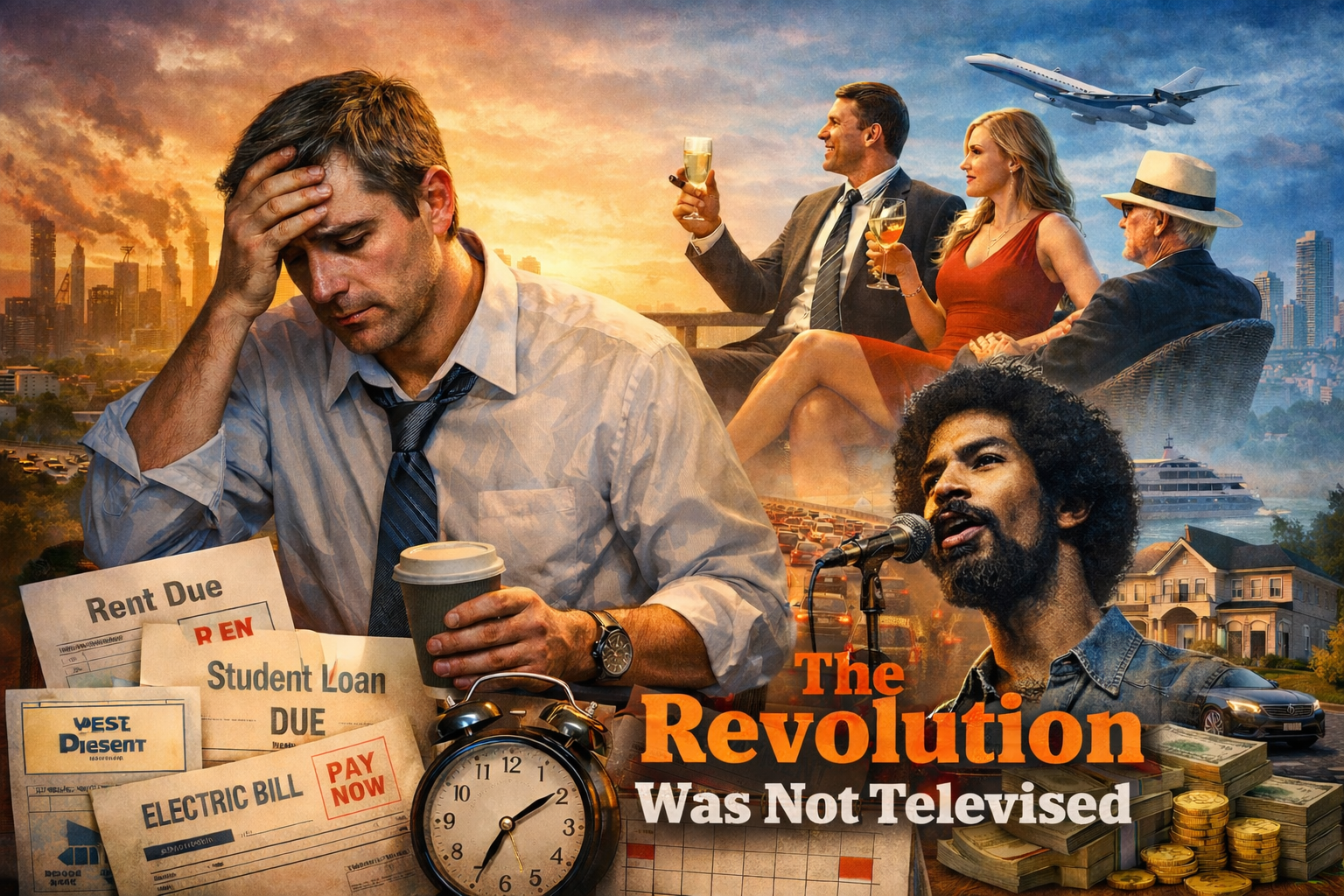
Debt, work, and media narratives have redefined freedom in America—shifting it from a universal promise to a privilege reserved for the wealthy.
Monday begins in a typical American life.
Back to work.
Rent is due. Student loan payment, due. Car payment soon. Electric bill due. Unexpected money for the child’s field trip.
Monday Morning in America
The alarm goes off. Shower. Coffee. Prepare breakfast while thinking about the week ahead. Out the door by 7:15. Traffic. Arrive at work by 8:00. An hour for lunch. Leave at 5:00pm. More traffic.
Related stories
Prepare dinner. Supervise homework. Dishes.
A glance at the calendar. Three months until a week of earned vacation.
Repeat as necessary. (Repetition is necessary).
You know the person in the apartment across the hall is a teacher. After their regular workday they have a second job, delivering groceries for one of the online app companies. You wonder if that will allow them to retire sooner than you.
This is the American Dream. This is freedom, right?
Yet, what kind of freedom is measured in our remaining vacation days, holidays, and the time from one paycheck to another?
Many political actors rely on narratives that are emotionally potent but internally inconsistent.
Immigrants and refugees are described simultaneously as job thieves and as people who refuse to work. Government programs are portrayed as both massive giveaways and evidence of incompetence. Foreign aid, vital in projecting America’s benevolence and strength, is depicted as lavish spending, even when it represents a tiny fraction of the federal budget.
The Great Intentional Divide
These claims are not carefully designed to withstand critical analysis. They are designed to redirect anger. When people face deprivation due to rising housing costs, healthcare bills, and stagnant wage growth, multigenerational anger, frustration, and despair need a target. And major media platforms and their owners are all too happy to provide that target.
When we watch news broadcasts across different major networks of now consolidated media platforms there are leading stories about crime, violence, and caravans of immigrants pouring through America’s open borders. Despite the choice of networks, the news and information remain consistent among the platforms. This represents the illusion of choice.
The Illusion of Choice
- Freedom of choices in fashion for work -red tie or blue tie. Grey suit or blue suit (not a tan suit, not ever!)
- The 8am to 5pm shift or the 9am to 6pm shift?
- Take the car or walk to the bus for work?
- Pack a lunch or eat at the cafe?
Outside of work there’s the freedom to shop for groceries at a Kroger or Albertson’s owned store chain. You might choose to shop at Costco or Wal*Mart. You might choose to go to a park, spend time in nature, or take in a movie.
Choices are limited by what people can afford. Most of us are unlikely to jet over to the U.K. for the weekend to jam with Mick and Keith.
Who Actually Has Freedom in America?
A small fraction of the U.S. Population enjoy a very different type of freedom.
- Roughly one million Americans hold $10 million or more in wealth.
- Fewer than 300,000 hold $20 million or more.
- Around 10,000 hold $100 million or more.
Political freedom promises equal rights under law. Economic freedom determines who can exercise them. A citizen may be free in theory, yet constrained in practice by debt, healthcare dependency, or the necessity of uninterrupted wages. Accumulated wealth alters that equation.
Wealth does not merely purchase comfort; it purchases insulation from economic stress. It purchases time. It purchases leverage. It allows some Americans to operate outside the constraints that define ordinary working life. Their freedom is expansive.
Earned Wealth vs Extractive Wealth
I am not anti-wealth. There is a critical distinction that often goes unexamined: wealth earned versus wealth that is accumulated through extraction and transfer.
Wealth earned through effort, innovation, vision, and risk can expand an economy. When entrepreneurs create innovative products and/or new services, sometimes entire industries are born, and their success can be additive to national prosperity.
Wealth transferred or extracted through political favoritism, regulatory capture, concentrated market power, tax engineering, the shifting of obligations onto workers, or the externalization of social costs is something different. That form of accumulation does not expand the economic pie. It rearranges it. It concentrates wealth into the hands of a few while dispersing costs to all of us.
One builds. The other extracts.
Why You Are Not Supposed to Learn This
You know who isn’t going to help you understand the difference between earned wealth and extractive wealth?
The wealth extractors and the elected officials they have bought and paid for.
Whether you are a registered Democrat, Republican, Independent, or non-affiliated voter, most of us can agree that freedom, liberty, and justice are important values we embrace and should aspire toward as a nation. These words are not branding exercises. They are civic commitments. Yet too often they are reduced to slogans, repeated without definition.
Too many of us have allowed these vital concepts to be defined for us by Rupert Murdoch, Elon Musk, Larry Ellison, Mark Zuckerberg, and Jeff Bezos. When Gil Scott-Heron wrote “The Revolution Won’t Be Televised” it was prophetic. You will not learn about economic growth versus extraction on any of their platforms.
If freedom is conditional and depends on your gender, the color of your skin, on your religious beliefs, on who you love, on uninterrupted wages -if an illness means ruin, if healthcare is conditional and retirement is uncertain, is that freedom?
When the Roberts Court expanded the political power of concentrated wealth while weakening institutional guardrails, freedom did not disappear. It stratified. It became less universal and more conditional. It migrated upward, where it is reinforced by the alignment of extreme wealth and political influence.
For those insulated by vast resources, freedom is tangible. It is the freedom to say no. To relocate when it benefits you. To influence policy through donations and access. To absorb financial losses without losing your home, your healthcare, or your future. That freedom is real.
Freedom that only the wealthy can afford is not freedom. It is privilege.
Comments

Powered by RoundtableAn AI/DeFi-powered Enterprise Media Operating System. Learn more at Roundtable.io.© Roundtable 2026. By using this site you agree to the Terms of Use and Privacy Policy