


Dec 30, 2025 4:25 AM
Updated Dec 30, 2025 4:37 AM
How Franklin Roosevelt—and Martin Luther King Jr.—warned that democracy fails when rights exist on paper but not in people’s lives -- the Economic Bill of Rights
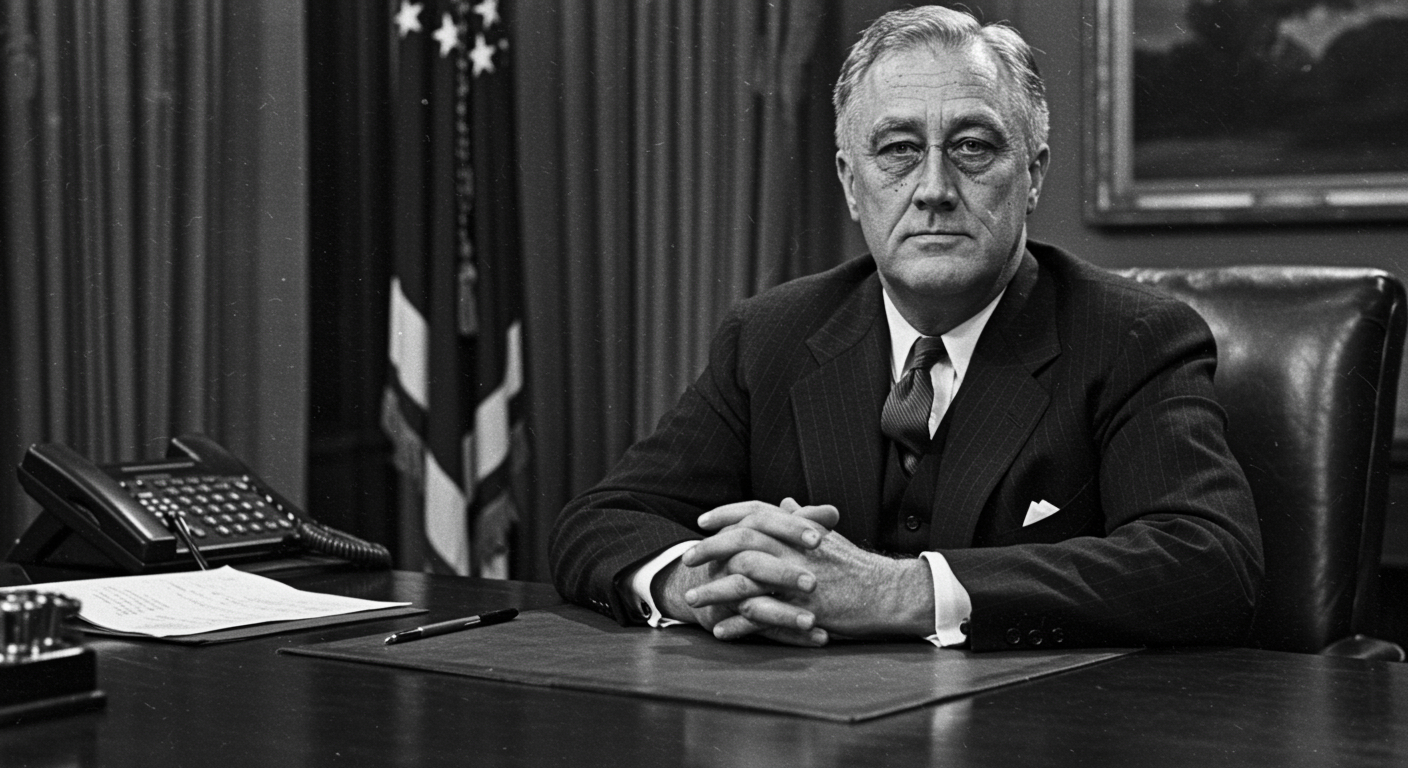
In his January 11, 1944 State of the Union Address, Franklin D. Roosevelt told the country something many leaders still refuse to say plainly:
Political rights are meaningless without economic security.
What followed was his proposed Second Bill of Rights—an Economic Bill of Rights—designed to finish the unfinished business of American democracy.
This was not radical rhetoric. It was a sober assessment from a wartime president who understood that freedom without material stability is a fraud -- or, to quote Dr. Martin Luther King, Jr. “What good is having the right to sit at a lunch counter if you can’t afford to buy a hamburger?” Both understood that freedom that stops at the ballot box is incomplete. Without economic security, rights exist on paper while life remains constrained.
Related stories
The Rights FDR Declared Essential
FDR argued that every American should have:
1. The Right to a Useful and Remunerative Job
Not charity. Not gig scraps. A job that pays enough to live with dignity.
2. The Right to Earn Enough for Adequate Food, Clothing, and Recreation
A direct rejection of poverty wages and economic humiliation.
3. The Right of Farmers to a Fair Income
So they could live decently, not be crushed by markets rigged against them.
4. The Right of Business Owners to Trade Free from Monopolies
A warning against corporate concentration long before “too big to fail” became doctrine.
5. The Right to a Decent Home
Housing as a right, not a speculative commodity.
6. The Right to Adequate Medical Care and Good Health
Healthcare as a public obligation—not a perk tied to employment.
7. The Right to Economic Security
Protection against:
- Old age
- Sickness
- Accidents
- Unemployment
In other words: life happens, and society must plan for it.
8. The Right to a Good Education
Education as the foundation of democratic participation—not a privilege rationed by zip code.
Why The Second Bill of Rights Was Buried
Franklin Roosevelt made it clear - :
“Necessitous men are not free men.”
That sentence alone explains why the Second Bill of Rights was never adopted. As I have written in the past, oligarchs build more wealth and power when precarity is normalized -- when the masses accept their lot in life. Economic security, the goal of the Second Bill of Rights, is the opposite of planned precarity, the goal of the oligarchy.
FDR put the most expansive democratic vision of economic freedom ever articulated by a U.S. president on the table—and barely lived long enough for the ink to dry before the political counteroffensive began. He died 15 months after delivering the speech. His death didn’t just end a presidency; it removed the one figure with the authority and momentum to force the question of economic rights into law.
So after FDR died here's what happened -
- Corporate power reasserted itself
- Labor was weakened
- Social guarantees were reframed as “entitlements”
- Economic insecurity was quietly repurposed as a tool of discipline
What FDR proposed would have ended precarity as a governing strategy.
- The Second Bill of Rights was a democratic firewall against oligarchy.
- It recognized that markets do not produce justice on their own.
- It treated economic security as infrastructure, not morality.
Had it been enacted, much of today’s inequality, medical debt, housing instability, and political nihilism would not exist in their current form.
This wasn’t utopianism.
It was democracy.
Comments

Powered by RoundtableAn AI/DeFi-powered Enterprise Media Operating System. Learn more at Roundtable.io.© Roundtable 2026. By using this site you agree to the Terms of Use and Privacy Policy