


Oct 7, 2015 7:16 AM
Updated Feb 10, 2022 10:53 PM
Rosemary Jenkins: When you plan to travel, check ahead to determine if the hotel of choice is a fair-wage hotel. When you or your organization is planning a conference or similar meeting, ascertain if such sites treat their workers equitably.
We can take pride knowing that Los Angeles has been playing a significant role in the living-wage movement. To quote from our Council, “Income equality is one of the most pressing economic, social, and civil rights issues facing Los Angeles,” and, therefore, it is incumbent upon us to take action addressing this pressing issue as soon as is reasonably possible.
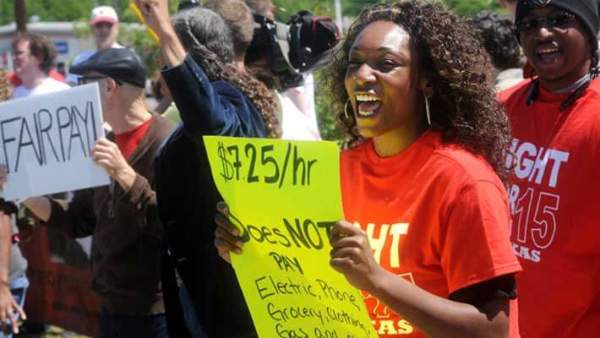
Gratefully, just this year, LA City Council passed an ordinance to phase-in a minimum-wage increase to $15 an hour by 2021 (with cost-of-living to be indexed by 2022), followed by a similar ruling by the County.
As I and others have stated earlier, the next 7 years will remain difficult for the thousands of affected workers until the new regulations fully take effect. To quote one observer, “We’re the largest major city with the deepest poverty [higher than New York and Chicago]. In non-unionised jobs, it’s impossible for people to sustain themselves. To work full time and be in poverty flies in the face of the American dream”—and this comes from an analyst from across the Pond. In fact, more than 27% of our Los Angeles families live in poverty right now.
The City of Los Angeles has already passed an ordinance that affects the salaries of many hotel workers but that action does not get the rest of us off the hook for addressing the needs of all hotel workers in our city and across the country. The national organization, Unite Here (in partnership with numerous other groups), is attempting (with much success) to do just that.
Related stories
When the Los Angeles City Council passed the latest hotel ordinance in 2014, compromises were made (sometimes we simply must get our foot in the door so that better gains can be made later). Naturally, it would have been far better if workers at all hotels would have been impacted by this new law, but that was not the case. As it stands, the Council was wise in its refinement of this law--exemptions (a good thing here) have been made for the very small and struggling hotels so that they can remain viable.
The current ordinance was implemented this last July for workers at hotels with 300 or more rooms. For hospitality staff at hotels with 150 or more rooms but less than 300, the law will go into effect in July of 2016. The new minimum wage will be set at $15.37 (not including gratuities, service charge distributions, or bonuses)—overall City and County workers will not benefit from the $15 minimum until much later.
We must not, however, let up until those hotel staffers who are employed at hotels with fewer than 150 rooms are paid a fair wage equal to those paid at the larger facilities. At the same time, we must discourage developers from deliberately building hotels with 149 or fewer rooms as a way to skirt the new laws.
At the same time, we must also insist that many of our age-old labor issues be addressed once and for all. For example, one Unite Here staffer shared her story with me: When she was working for a large hotel chain and receiving excellent reviews, she was humiliated by the hotel manager more than once. When seeking a promotion after having proven herself as an invaluable employee in her then-current position, she was told that she would never be placed in a better job because, essentially, she is Black!
Thought those days were behind us? Think again! Whether it be sexism, gender bias, racism—such attitudes can no longer be tolerated and, thus, all new laws or amendments to older ones must stipulate that such conditions will be severely and meaningfully penalized.
Critics of the hotel plan like to cry wolf but research has shown that, on balance, most jobs lost will be offset by jobs gained. Hotel owners are obviously not going to relocate their hotels outside of the City nor will most developers shift their plans from Los Angeles-based developments to locales elsewhere--when doing business in Los Angeles can prove much more lucrative in the long run.
Follow the money—if hotels in LA can anticipate profitability, developers are not going to hurt themselves on “principle” by withdrawing from established plans that are meant to build bigger and more luxurious hotels in one of the largest cities in the nation—a place with an international airport (and more than one smaller airport), one of the biggest recreation centers in the world that draws tourists year-round, two major ports, and a significant business district.
You might ask, Why was the plight of hotel workers addressed before that of all LA workers in general? Not only is tourism a major source of income for the greater Los Angeles area, but, in general, hotels themselves recovered more quickly from the recent recession (earlier than many other industries), filling up their rooms and becoming more valuable for their stockholders. Thus, they were in a place that could and can afford the increased wages.
Furthermore, many hotel workers had been making a mere $18,000 a year for full-time work (a starvation wage), thereby necessitating public assistance to sustain their lives. Hotel workers at that time represented among the lowest-paid workers and, thus, needed the most attention to rectify the disparity. Once a reasonable, logical, practical minimum wage is fully implemented, more of our taxes can be freed to apply to other segments of society where other pressing needs will still be found.
Workers, who now work two jobs and still earn below the poverty level, might be able to work just one and be able to spend more time with their families—a big difference for children who rely on parental guidance and supervision during their formative years. The current situation disproportionately affects women (and especially mothers) who make up the largest segment of hotel employees.
“In Compton, Sandra Diaz wakes up at 4:30 a.m. daily to get to her job busing tables at a hotel near LAX. In the afternoon, she heads to a second job at another hotel, where she works as a banquet server, sometimes leaving work as late as midnight. Sleep is scarce and her rent keeps climbing, she said. She and her husband, who works as a hotel cook, support her aging parents and their baby son.”
Currently, housekeepers make $9 an hour; cooks, around $10 an hour; clerks, $11; and bellhops, $12. It is only at $15 an hour that an individual can earn enough to stay above the poverty line in this high-cost city in which we live. The change to a reasonable and higher salary can make all the difference in these workers’ lives and those of their families.
Rachelle Laurent stated, “The difference I saw when I started working at a union hotel were life-changing. My daughter and I used to rent a room and share a twin bed. Now I own my own home, and for the first time in her life, my daughter has her own bedroom.”
Unions in America were the strongest a hundred years ago when businesses widely abused their workers with unsafe conditions, low wages, no sick leave or workmen’s compensation, physical and retaliatory abuse, arbitrary lay-offs and/or firings. Though I am a staunch union supporter (and member), I believe that if employers treated their workers as they should, union oversight would not be necessary. Unfortunately (and for those who are vociferously anti-union), the reality is that too many companies still mistreat their workers and if it were not for the labor movement, far fewer advances would have been made. In reality, much work still needs to be done to bring about parity for all employees.
This said, I dare anyone to claim that our workers are lazy, shiftless, unreliable, and unaccountable! These are hard-working, industrious people who are doing all they can to improve the standard of living and potential for themselves and their families. They want what the rest of us want and what all of us deserve.
What can we, as hotel patrons, do to ameliorate some of the inequities?
When you plan to travel, check ahead to determine if the hotel of choice is a fair-wage hotel. When you or your organization is planning a conference or similar meeting, ascertain if such sites treat their workers equitably. Be aware that individual hotels within some larger hotel chains (such as the Hyatt) are not the same. Some are franchises with different policies. Some hotels may be union while others under the same name may not be. For instance, the Hyatt Regency in San Diego is union but some other Hyatts are not.
You can go to the hotelguide app on your cell phone or go online to fairhotel.org to obtain the information you seek. Let us not knowingly patronize any hotel establishment that does not provide a living wage for its workers.
You can also call 202-661-3680 or go online to [email protected] to acquire the fair labor forecast for the hotel you are considering. What is its current labor status? Are there labor actions planned for the time you are planning your stay? Make certain you sign a contract that will allow a full refund of any reservation costs should a work action be taking place at the time of your event or stay (imex.org can help you with that).
We need to support organizations such as Unite Here, LAANE, CLUE, the Los Angeles Black Worker Center, the AFL-CIO (the County Federation of Labor) and its affiliates, and so many others through our volunteer time, donations, and/or other kinds of contributions. These groups and alliances are working diligently to promote higher wages, paid sick leave, healthcare, safe work conditions, and a decent retirement pension—all of which will promote the sustainability of families and their communities.
We can indeed “vote with our wallets”! Remember, money talks when all else fails.

The bottom line. . . To paraphrase what Dan Marino once said, “We should take care of the hands that take care of us!”
Rosemary Jenkins
Comments

Powered by RoundtableAn AI/DeFi-powered Enterprise Media Operating System. Learn more at Roundtable.io.© Roundtable 2026. By using this site you agree to the Terms of Use and Privacy Policy