


Apr 29, 2026 10:25 PM
Updated Apr 30, 2026 3:49 PM
From campaign dominance to policy control, the concentration of wealth among billionaires is transforming participatory democracy into a system of elite rule.
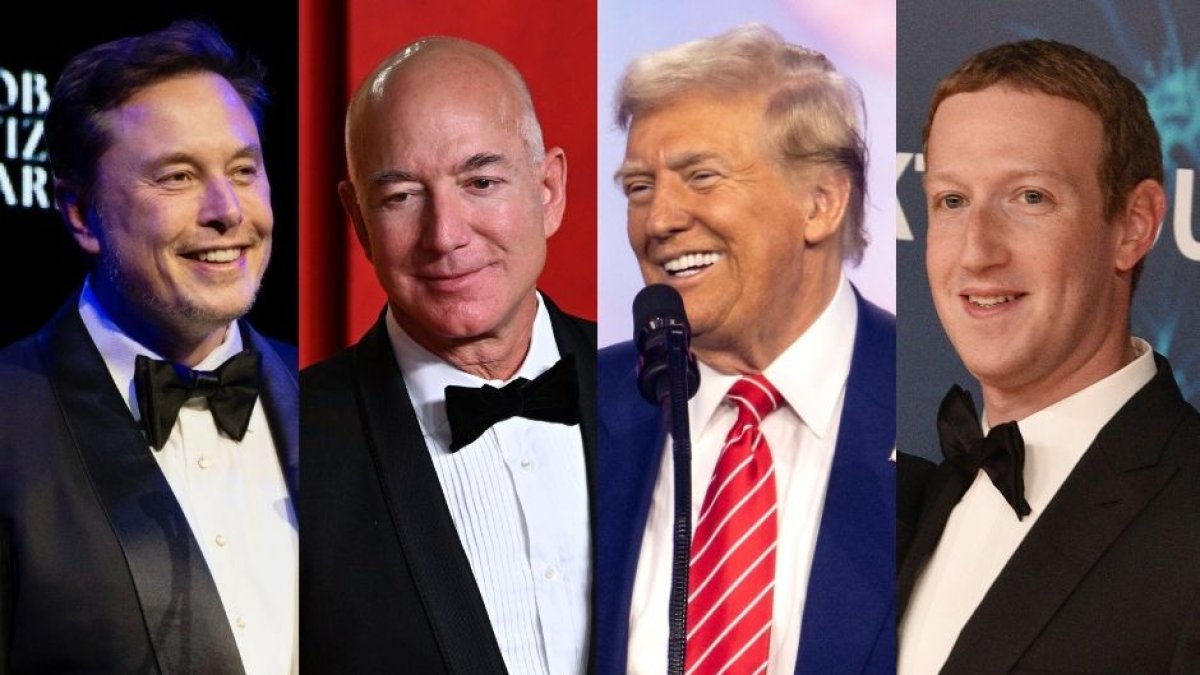
When Donald Trump returned to office in 2025, billionaire—soon to be trillionaire—Elon Musk took on an advisory role tied to the administration’s government-reduction efforts, often referred to as “DOGE.” Even though Musk was not an elected official or a Senate-confirmed agency head, his influence coincided with the rapid downsizing of the federal workforce—shrinking it by roughly 10–12 percent, with an estimated 260,000 to 300,000 employees exiting through layoffs, buyouts, and attrition under policies advanced by the Trump administration.
There is substantial evidence that billionaires have long exercised outsized influence in American politics—but that influence became unusually visible during the Trump era. It was on full display during his inauguration and regularly shows up in the shaping of economic and regulatory policy, in frequent direct communication with the president, and in influence over staffing and agency priorities. In Musk’s case, that influence appeared tied not only to government downsizing efforts but also to the regulatory posture toward technology and industry. Even without formal titles, the access granted to the ultra wealthy matters.
What makes this moment especially revealing is that it is not an anomaly—it is a pattern. The Gilens–Page Study, conducted by political scientists Martin Gilens and Benjamin Page, examined nearly two decades of policy decisions and found that economic elites and organized business interests have substantial independent influence on U.S. government policy, while the preferences of average citizens have little to no independent effect. In plain terms: when the wealthy want something, it is far more likely that they'll get it—regardless of what the majority of Americans think.
Seen through that lens, the role of billionaire influence is not surprising. It is structural.
Related stories
What this tells us is that a system that enables individuals to accumulate extreme wealth—and then convert that wealth into political influence—is not functioning as a true democracy. It is functioning as something else. A system that cradles self-dealing while muting the voices of ordinary people cannot reasonably be described as democratic.
One of the most persistent untruths in American political life is that extreme wealth and democracy can comfortably coexist. Whether intentional or not, we have built and sustained a system that suggests one does not threaten the other. But scale changes everything. Wealth at the level of billions—and soon trillions—is not simply money. It is power. And power, when concentrated, does not share space easily.
This is not a moral argument about whether wealthy individuals are good or bad people. It is a structural argument about how power operates in the absence of guardrails because that kind of wealth is the equivalent of operating without the normal bounds.
For most of us, the difference between one million, one billion and one trillion is almost impossible to visualize. But for those of us trying, its important to understand that the difference is more than just adding zeros. To make it easier to wrap your head around, think of it this way. If measured in inches:
- 1 million inches is approximately 15.8 miles or a drive across town in Los Angeles
- 1 billion inches is approximately 15,800 miles or a flight from L.A. to Hong Kong and back
- 1 trillion inches is approximately 15.8 million miles or 60 trips to the Moon
Why Billionaires and Democracy Are Structurally Incompatible
A participatory democracy depends on broadly distributed power—political, economic, and social. But when a society produces billionaires—and soon, potentially trillionaires—it is signaling something very different - that it is okay with relinquenching
When power concentrates, democracy weakens. Let’s be honest, who among us can finance our own political campaign or has the cache that would grant us access to walk into an administration and fire thousands of federal workers. That level of influence—the ability to independently run a campaign, shape policy, determine outcomes, and direct the future—is not broadly distributed.
It is purchased.
Participatory Democracy vs. Plutocracy: What’s at Stake
To shape our society in ways that benefit all Americans, we need to civically engage broad swaths of Americans in more than just voting. Participatory governance and participatory democracy is an essential ingredient in the recipe that molds society into the shape that serves most of us.
It requires:
- meaningful influence over public decisions
- shared exposure to the consequences of those decisions
- systems that prevent any individual or group from dominating the rest
- proximity between decision-making and lived experience
Democracy depends on proximity—on people shaping systems they must also live within. As Jared Diamond has argued in Collapse, societies falter when those in power are shielded from the consequences of their decisions. Extreme wealth concentration produces that very condition.
A system in which people can accumulate vast wealth without having to participate in the labor that sustains it will inevitably produce leaders who are structurally disconnected from the realities they govern. This is the road to plutocracy. Think “Let them eat cake”.
Wealth vs Work - They Are Not the Same System
Understanding that wealth is not generated the same way that labor earns income is pivotal.
One of the most important distinctions we don't discuss enough is the difference between earning a living through labor and accumulating vast wealth through ownership.
Labor income is tied to:
- time
- effort
- participation
- community
It places people inside the system.
They experience:
- wages rising or falling
- healthcare costs increasing
- public systems working—or failing
They cannot opt out of those realities.
Wealth at scale operates differently.
It is tied to:
- ownership
- capital
- leverage
- systems that generate returns independent of direct effort
Once wealth reaches a certain level, money makes money. And participation becomes optional.
That shift creates distance.
Donald Trump did not need to be a financial genius to accumulate extreme wealth. He started with enormous advantages—capital, connections, and insulation from failure—that made wealth accumulation far more likely. Even modest investment strategies over decades would have preserved and grown that wealth.
What is often presented as exceptional financial brilliance is, in reality, the predictable outcome of starting far ahead in a system that rewards existing wealth. With the amount of wealth Trump started with, doing almost nothing, his wealth would grow over time.
When you start with hundreds of millions, becoming a billionaire is not evidence of genius—it is often the statistical expectation. The real story isn’t how skillfully the money was managed, but how much money there was to begin with—and how the system protects and multiplies it.
Distance From Work, Distance From Consequences
As wealth grows, so does separation from the lives of average people and the conditions that define most people’s lives.
- Workers experience the workplace
- Investors experience balance sheets
- Communities experience policy
- Wealth holders experience outcomes abstractly
This is not about personal virtue. It is about structure.
When your income is derived from your labor, you are usually embedded in a community -- a workplace, a neighborhood. This was more true before Covid but increasingly, since the Covid era, more people have returned to the day to day grind.
But when your income depends on capital, you can operate outside of community. You can even own a private island and avoid contact with community all together.
Labor ties people to community. Extreme wealth allows people to exit community.
That separation weakens accountability and alters decision-making.
When Distance Becomes Governance
At extreme levels of wealth, distance doesn’t just exist—it is a factor in governing.
Decisions about:
- housing
- healthcare
- education
- incarceration
are increasingly shaped by people whose relationship to those systems is indirect, removed.
That creates a dangerous imbalance:
Those most affected by policy have the least influence over it,
while those least affected have the most.
That is not democracy.
That is hierarchy.
The Illusion of the “Nice Billionaire”
It is tempting to believe that a well-intentioned billionaire can solve this problem.
They cannot.
A “nice billionaire” still:
- possesses outsized political influence
- can self-fund campaigns at levels others cannot
- can dominate media and public attention
Their presence normalizes the idea that extreme wealth is compatible with democratic leadership.
It shifts the conversation from structure to personality.
But democracy does not depend on the goodwill of the powerful.
It depends on limiting how much power any one person can accumulate.
What Elections Reveal: Wealth Is Already Political Power
When billionaires enter political races, they do more than compete.
They:
- inflate the cost of campaigns
- crowd out candidates without access to wealth
- reshape what “viable” looks like
- and they often dominate
This dynamic disproportionately impacts candidates from communities that have been historically excluded from wealth.
The result is not just economic inequality.
It is political inequality.
The Most Dangerous Expression: Profit From Social Harm
Nowhere is this contradiction clearer than in the privatization of prisons.
Companies like CoreCivic and GEO Group generate profit from incarceration.
That creates a direct financial incentive to:
- keep prison populations high
- expand detention capacity
- influence policies that increase incarceration
No democratic system should allow anyone to benefit from the growth of human confinement.
Because once incarceration becomes an investment:
- people become revenue streams
- social failure becomes economic opportunity
And when those who can shape legislation also profit from that growth, the system is no longer managing crime.
It is monetizing it.
The Throughline: Incentives Define Outcomes
This is the connecting thread:
- Extreme wealth accumulates through ownership, not labor
- Ownership creates distance from lived reality
- Distance reshapes decision-making. It disconnects the wealthy from regular life.
- Concentrated wealth converts into political influence
- Political influence protects and expands that concentration
That cycle does not produce democracy.
It produces entrenchment.
The Bottom Line: Democracy Requires Limits
A participatory democracy cannot sustain itself while allowing unlimited wealth accumulation.
Not because wealth is inherently wrong.
But because scale transforms wealth into power.
And power, when left unconstrained, will always seek to preserve itself.
The Line That Cannot Be Avoided
If we are serious about democracy, then we must be equally serious about this:
- No one should be allowed to accumulate enough wealth to dominate the political system—because concentrated wealth is concentrated power, and that is incompatible with democracy.
- No one should be able to translate economic power into governing authority—because when money governs, the will of the people is displaced.
- No one should profit from systems that depend on social harm—because when suffering becomes a revenue stream, there is an incentive to sustain and expand it.
Because democracy is not just about having a voice.
It is also about ensuring that no one has a voice so amplified that it drowns out everyone else.
Looking for more reading? Check this out https://en.wikipedia.org/wiki/Universal_basic_services
Comments

Powered by RoundtableAn AI/DeFi-powered Enterprise Media Operating System. Learn more at Roundtable.io.© Roundtable 2026. By using this site you agree to the Terms of Use and Privacy Policy