


Nov 28, 2025 2:48 AM
Updated Nov 28, 2025 7:38 PM
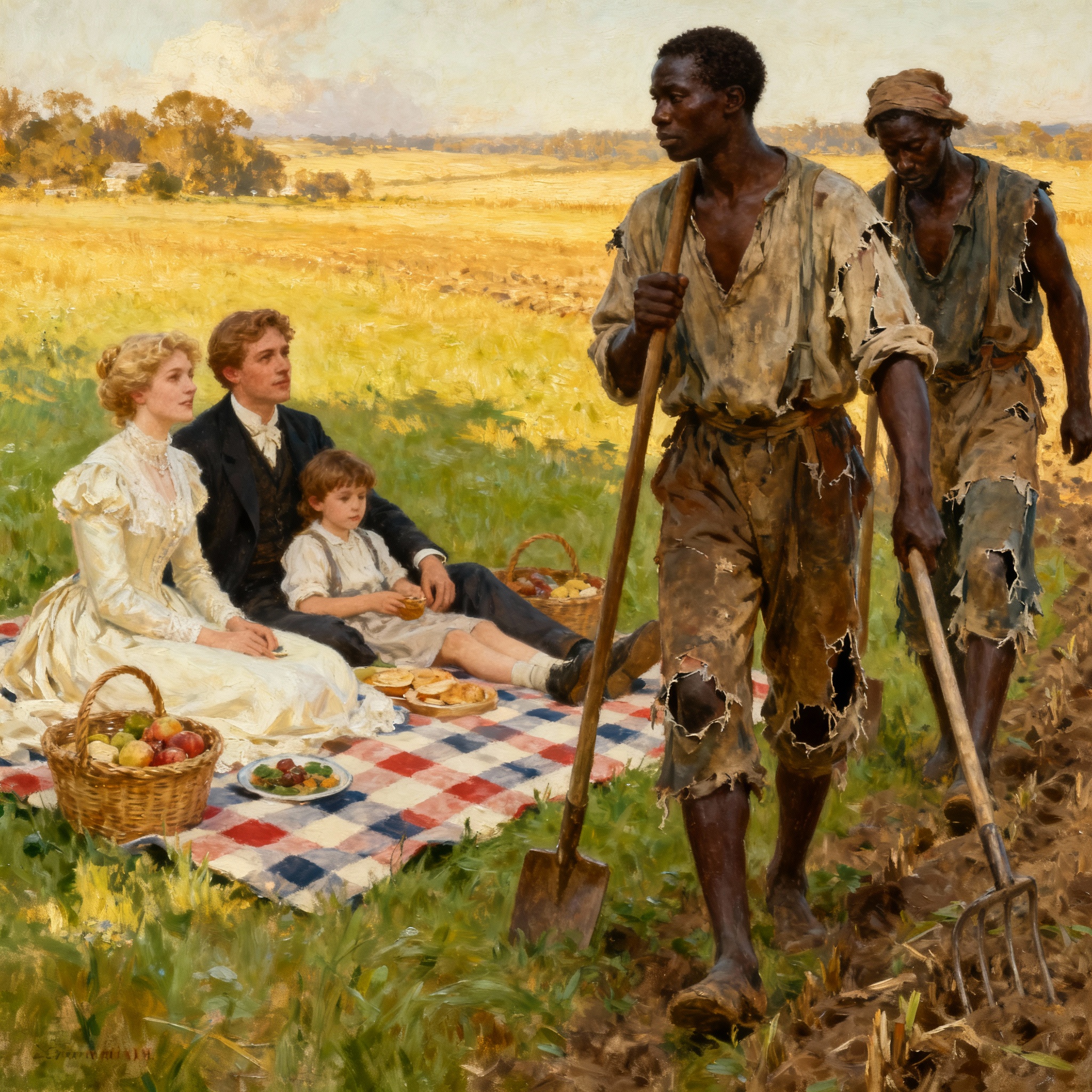
How Word Choice Has Been Used to Divide, Mislead, and Erase the Truth
Being the history addict I am, I recently fell in love with Britain’s Most Historic Towns on Prime Video. The show first aired in 2018, so I’m late to it, but the content is evergreen and I happily watched nearly 18 of its 19 episodes.
And then I had to stop.
During one of the Scotland episodes, a commentator discussed the country’s involvement in the slave trade. That wasn’t what bothered me — history is history. We can’t change the past. What stopped me cold was how the commentator described a young African girl being taken into slavery. She said the girl had been “captured.”
My reaction was almost visceral.
Related stories
It wasn’t simply because she was talking about slavery, although that certainly mattered. What disturbed me most was that a modern, educated person in 2018 could casually describe the violent seizing of another human being, a child really, as being “captured” — a verb we reserve for fugitives, enemy soldiers, or wild animals. That word didn’t “slip out” because the commentator lacked knowledge. It flowed because centuries of ideology have trained us to hear the kidnapping of African people as something other than a moral crime -- as something that doesn't deserve empathy and certainly doesn't require recompense.
She would never describe the Lindbergh baby as having been “captured.”
She would never say a kidnapped white child was “captured.”
The word would sound monstrous in that context.
But applied to Africans? It rolled off her tongue without hesitation.
That was what made my stomach turn — not the historical content, but the fact that someone today, in the 21st century, still echos the worldview of enslavers without even stuttering. That one word, and truth be told, so many others, exposes how deeply the old hierarchy still lives in our language, our minds, and our unexamined assumptions.
After that moment, I couldn’t continue the episode. I turned off the show and went back to research I was doing on the Somerset v. Stewart (1772) case before I started watching the show. If you’re unfamiliar, George Washington and nearly every major enslaver in the colonies followed the Somerset v. Stewart case with alarm. They discussed their concern openly because this case threatened to upend the legal foundation of slavery in the colonies.
As I scrolled through Wikipedia, I clicked on the name of the plaintiff “James Somerset.” The first paragraph of his bio begins: “Somerset was born in West Africa around 1741. He was captured when he was about 8 years old and sold to European slave traders.”
And there it was again! In Wikipedia! The Wikipedia writer, surely not someone living in the 17th or 18th century, sees no problem with claiming that an African child was captured as if they were speaking of a wild animail. But then again, doesn't language reveal our deeper thoughts.
Language doesn’t just describe reality.
It manufactures it.
It hides it.
It manipulates it.
And sometimes, it launders brutality into something the public can swallow without choking.
I’ve spent a considerable amount of time examining how certain words — especially those used in history, media, and political discourse — carry an ideology hidden beneath the surface. What I found is not subtle. It’s not neutral. It’s not accidental. Our vocabulary has been engineered—carefully, deliberately—to protect perpetrators, obscure systems of power, and burden marginalized communities with the emotional residue of historical crimes they did not commit.
And nowhere is this clearer than in the language used to describe the kidnapping of African people during the transatlantic slave trade.
How “Africans Were Captured” Became One of History’s Most Dangerous Lies
Open a textbook. Watch a documentary. Walk through a museum exhibit on the Middle Passage. You’ll hear the same phrase:
“Africans were captured and sold into slavery.”
It sounds neutral. Simple. Factual.
But the sentence is missing something essential:
a perpetrator — a human being who did the taking.
“Africans were captured” is a passive construction that reduces one of the largest crimes in history to something that simply… happened. Like a weather event.
But that’s not how it happened.
Europeans kidnapped Africans.
Sometimes they carried out the raids themselves — storming communities, burning homes, dragging screaming children from their families, shackling people by the thousands, and marching them to the coast. And in other cases, they purchased African people from local rulers or warlords who were pulled into, pressured by, or profited from the expanding slave trade. But the outcome was the same: European demand, European financing, European ships, European ports, and European profit turned human beings into cargo. Europeans packed them into floating prisons and sold them across the Atlantic.
Yet the language erases the criminal and leaves behind only the wound.
This is not a linguistic accident.
It is narrative engineering.
Reason #1: Language Was Engineered to Protect the Enslavers From Public Outrage
This insight is the key that unlocks everything else.
If 18th- or 19th-century Europeans had been told plainly that free African men, women, and children were being kidnapped in violent raids, dragged from their homes, raped, tortured, and sold, public outrage might have destabilized the system.
So enslavers needed softer words — terms that wouldn’t activate the public’s conscience, terms that turned a crime into a “process.”
Thus the euphemisms:
• capture
• procure
• acquire
• take
• trade in captives
The purpose was simple:
Make kidnapping sound administrative.
Make brutality sound procedural.
Make the victims sound less innocent.
Make the perpetrators fade from view.
This is not descriptive language.
This is propaganda.
Reason #2: Denying African Sovereignty Made “Kidnap” Impossible
There was another strategic layer. Enslavers avoided the word kidnap because kidnapping is a crime committed against a person.
To avoid admitting that enslaved Africans were persons with rights, European traders and governments declared that Africans had no sovereignty, no legal personhood, no freedom worth recognizing. If African people were not legally “free,” then — by their logic — they could not be “kidnapped.”
This was ideological fiction and linguistic violence.
Africans were free.
They lived under their own governments, laws, and social orders. But European legal systems rejected that freedom as a matter of convenience — and the vocabulary followed suit.
Reason #3: “Capture” Cast Innocent People as Legitimate Spoils of War
The word capture evokes fugitives, enemies, or animals — never innocent civilians.
Yet the people taken from Africa were:
farmers, parents, children, traders, spiritual leaders—living ordinary lives.
To use the word capture is to recast these free human beings as prey. It transforms innocence into implied guilt.
Capture implies legitimacy.
Kidnap exposes criminality.
I believe that is why enslavers chose it.
Reason #4: Colonial Records Standardized the Euphemism
The surviving records of the era — shipping logs, journals, “slave inventories,” mercantile documents — were written by enslavers themselves. Their euphemisms became the default vocabulary of the archive.
Historians, constrained by those documents, repeated the language of the perpetrators. Eventually that vocabulary seeped into the academy, the textbooks, the museum plaques, and yes — even Wikipedia.
Today, if you scan Wikipedia across 50 major pages on slavery, “capture” appears roughly three times more often than “kidnap” — even when the meaning is kidnapping.
Words carry forward the worldview of those who wrote them.
Reason #5: Wikipedia Repeats the Inherited Language Without Question
There’s a revealing pattern.
When African Americans in the U.S. were abducted — Solomon Northup of Twelve Years a Slave, for example — Wikipedia uses the word kidnapped.
But when African people living freely in Africa were abducted, Wikipedia overwhelmingly uses the word captured to describe the taking.
What does that signal?
To the historical record, African freedom was not treated as freedom.
Their abduction was downgraded from crime to capture.
This is the language of white supremacy, reproduced through Wikipedia, a platform millions trust.
This Isn’t Just a Word Choice. It’s an Ideology.
We do not say Jaycee Dugard — the young child abducted in California and held for nearly two decades — was “captured.”
Why not?
Because:
• capture implies legitimacy
• capture implies deserved seizure
• capture implies threat
• capture implies property
• capture implies warfare
You don’t “capture” a child walking home from school.
You “kidnap” them.
So why is “capture” acceptable when describing African people who were living their lives and doing nothing wrong?
The answer is chilling:
Because the word preserves the enslavers’ worldview.
It repeats their belief that African people were rightful spoils.
It keeps the colonizer’s grammar in control of the story.
But This Pattern Isn’t Confined to Slavery
Once you notice it, the pattern becomes impossible to ignore. Language hides power everywhere.
Three weeks ago, I listened to a podcast recorded at a café in Brussels. In it, I listened to ordinary citizens discuss:
• precarity
• austerity
• the commons
• commodification
These are everyday terms in Europe.
But in the United States?
You can watch hours of cable news and never hear them.
Why?
Because these words reveal systems.
They expose who benefits from inequality.
They connect private struggle to public policy.
They give people the language to resist.
Silence them, and you weaken the public’s ability to understand — let alone challenge — what is happening to them.
This isn’t a vocabulary gap.
It’s a civic strategy.
What we can’t say, we can’t see.
What we can’t see, we can’t fight.
Language Reveals Power — Even When It Pretends Not To
Critical discourse analysis teaches that:
• passive voice hides perpetrators
• euphemisms protect institutions
• missing words create political blindness
• framing shapes what people accept as normal
This pattern isn’t limited to the language of slavery. Modern institutions use the same linguistic tricks to soften violence, erase perpetrators, and protect themselves from scrutiny.
Corporations say “right-sizing” instead of saying "layoffs" to make mass firings sound like strategic efficiency rather than the human devastation that they are.
Police do the same thing with the phrase “officer-involved shooting.”
This term is engineered with precision:
1. It removes the officer as the agent of the action.
Instead of saying, “A police officer shot someone,” the wording turns a deliberate act into an event — something that simply “occurred,” with no clear actor. The shooter becomes a bystander.
2. It muddies the facts on purpose.
“Officer-involved shooting” could mean anything:
- the officer shot someone,
- someone shot the officer,
- a gun misfired,
- or a shot was fired near an officer.
The ambiguity is the point — if the public cannot immediately tell who did what, the instinct for outrage or accountability is delayed.
3. It protects the legitimacy of the institution.
Plain language — “A police officer shot an unarmed man today” — would undermine public trust and invite scrutiny. Euphemism shields the institution from backlash.
Just as “capture” sanitizes the kidnapping of Africans, and “right-sizing” softens mass firings, “officer-involved shooting” is designed to dull the moral impact of state violence.
It is not just a phrase.
It is a strategy.
And the same linguistic system that made “Africans were captured” seem acceptable is the same one that makes “Americans are struggling” sound natural and unavoidable— instead of the truth:
“Americans are being made precarious by policy choices that benefit the wealthy.”
The Cost of Euphemisms: Who Carries the Burden?
When perpetrators disappear from the sentence, victims inherit the weight of the narrative.
Black identity in America is still narrated through trauma —
but white identity is rarely narrated through responsibility.
Black American children grow up learning they are “descendants of the enslaved.” White children, however, are almost never taught that they are descendants of — or beneficiaries of — the society that enslaved.
Most white Americans in 1864 did not personally own slaves, but nearly all of them lived inside and benefited from a racial caste system built on slavery:
• they lived in an economy shaped by slave labor,
• in a legal system designed to protect slavery,
• in a nation whose wealth, infrastructure, and political power depended on it,
• and in a social hierarchy that elevated them precisely because Black people were held at the bottom.
So the distinction matters.
The point is that almost no white child is taught how deeply their society, their opportunities, and their inherited advantages grew from a system that inflicted generational trauma on Black people.
Black children inherit the story of suffering.
White children inherit the benefits — but rarely the education that explains this.
That imbalance isn’t accidental.
It’s the direct result of how the story is told.
We Can Fix This — But Only if We Tell the Truth
We must stop repeating the language handed down by the perpetrators of injustice.
We must say:
Europeans kidnapped Africans.
The U.S. government incarcerated Japanese Americans.
Corporations extract wealth from the public.
Policy choices create precarity.
Austerity is a political strategy, not a necessity.
The commons existed — and can be rebuilt.
Language is not just what we use to describe the world.
It is what we use to build it.
If we want a more just world,
we must reclaim the vocabulary that lets us see injustice clearly.
Only then can we dismantle it.
*(note: Wikipedia is frequently updated. This direct quote was captured on November 27, 2025 and is subject to change.)
Comments

Powered by RoundtableAn AI/DeFi-powered Enterprise Media Operating System. Learn more at Roundtable.io.© Roundtable 2026. By using this site you agree to the Terms of Use and Privacy Policy