


Dec 28, 2025 1:45 AM
Updated Dec 28, 2025 2:16 AM
From speculative bubbles and political capture to AI, climate risk, and authoritarian governance
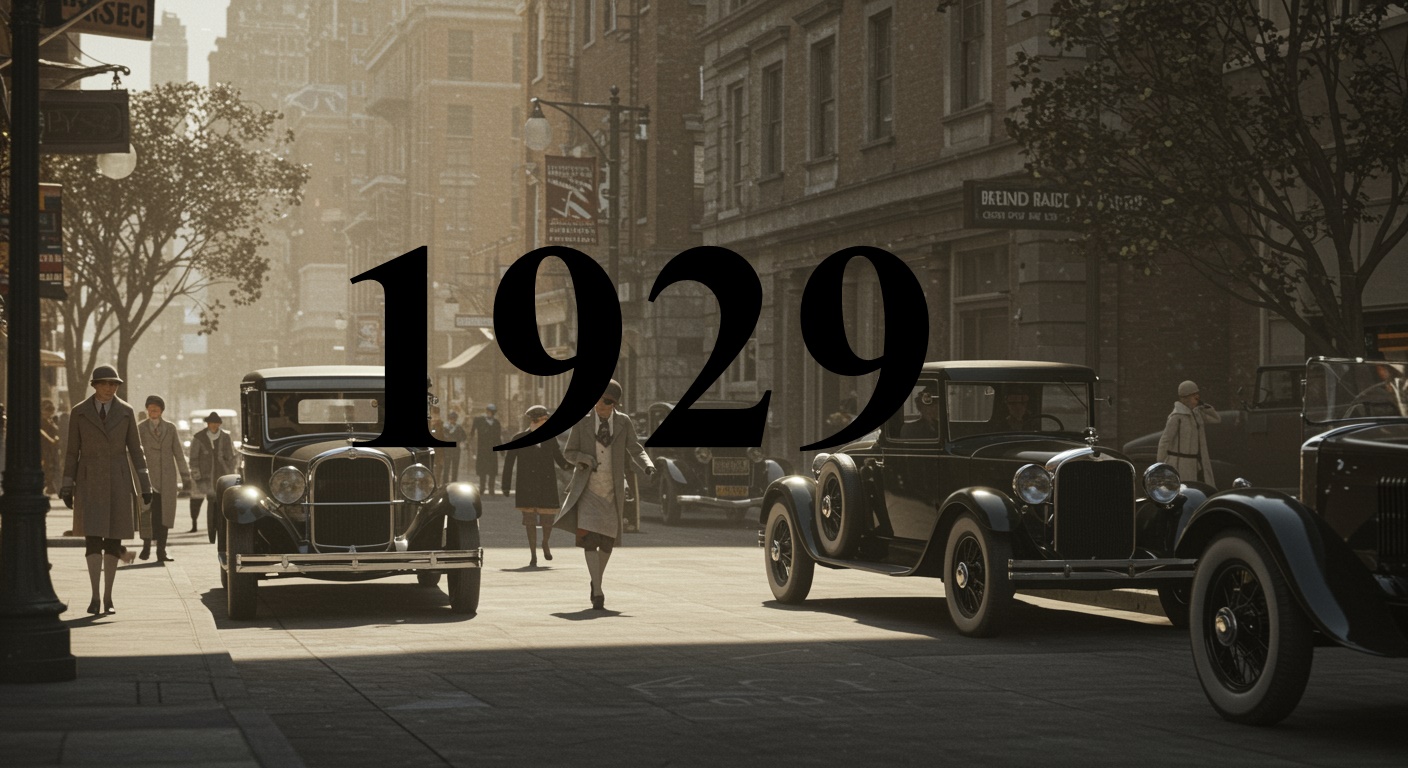
1929 was a turning point in American and world history. The stock market crash was the beginning of the Great Depression. Unemployment in the US went from 3.2% in 1929 to a high of 24.9% in 1933 and was still 14.6% in 1940 and only fell to 4.7% after the US entered WWII and tripled military spending in 1942.
There are many similarities in the conditions in the United States today and the run up to the crash of 1929. There are also significant differences. This article reviews both as a way to think about the future.
Similarities Between 1929 and Today
David Champion, a senior editor of the Harvard Business Review, wrote an article in HBR’s November/December 2025 issue, entitled Lessons from Market Crashes Past HRB Audio. In the article he compares conditions in 1929 with conditions today. He writes “Once you start looking for similarities, you see them everywhere.” He identifies three underlying conditions that existed in 1929 and today.
First, in the 2020s we are experiencing a wave of rightwing protectionism (tariffs) just as intense as the one that swept the globe 100 years ago.
Related stories
Second, today’s nationalist sentiment is on the rise as developed countries seek to stem a tide of economic migrants. That was also true in the 1920s when the United States reversed its open-door policies.
Third, before the 1929 crash emerging technologies were threatening traditional livelihoods. Back then the culprits were industrial agriculture and manufacturing. Today the threat is coming from artificial intelligence.
Champion adds that two decades before the 1929 crash, there had been the Panic of 1907, an almost equally dramatic crash. A little less than two decades before today, in 2008, the US experienced the Great Recession, catalyzed by Lehman Brothers bankruptcy. One of the causes of the crash in 2008 many economists argue, is that President Clinton, in his deregulation gift to financial titans, eliminated the Glass-Steagall legislation. That act was originally implemented in 1933 to separate investment and commercial banking to prevent another stock market crash.
A journalist for the New York Times, Andrew Ross Sorkin recently published a book, 1929, about the greed, financial manipulations and government’s subservience to business that created the stock market crash of 1929. Sorkin’s book identifies practices in the run up to 1929 that are reminiscent of today. Three factors stand out among many. (Numbers in parentheses refer to page citations in Sorkin’s book.)
The first is credit. Buying merchandise on credit began only a decade before the stock market crash. In 1919 General Motors was the first major company to introduce credit, in GM’s case for buying cars (11). The use of credit then spread through the economy and into the stock market. In the mid-1920s, buying stocks on credit—called buying on margin—became widespread and sharply accelerated between 1927 and 1929. People could put up only 10% of the price of a stock and purchase it. When things unraveled and debt came due, people did not have the money to pay their debts. Margin loans had grown from $1billion to $6 billion. These purchases on credit inflated the market into what many feared was a bubble (43).
Patricia Cohen in an article in Market Volatility Underscores Epic Buildup of Global Risk, in the New York Times Nov. 25, 2025 [NYT Cohen], refers with fear to “the titanic levels of debt that the United States and other governments have built up.” Government debt in the United States is now 120% of GDP. Though controversial, some economists argue that debt shouldn’t be greater than 90% of GDP [Reinhart and Rogoff].
A second factor that contributed to the stock market crash was the volatility of the market. In January 1929, the stock market looked rosy, having risen 68% from a year earlier. Then the market began to bounce up and down and eventually crashed.
Today, Andrew Carusone from Media Matters reports “Trump lives in a boom and bust cycle.” Patricia Cohen writes “The stock market bounces in recent weeks are just one indicator of the profound uncertainty and heightened risks running through the global economy and financial system…It’s not simply that the hundreds of billions of dollars flooding into artificial intelligence investments might turn out to be a bubble. Or that the use of cryptocurrencies in mainstream banking is spreading even as their values have plunged after soaring to record highs. Or the billion dollar bankruptcies related to a mad rush of lending by shadow banks (and regular banks, too [NYT Cohen].”
And third, and perhaps most important, in 1929 as today under Trump, government is run by and for business and finance. Andrew Mellon, who owned or helped finance major American companies including Alcoa, Westinghouse Electric, Union Steel and several large financial institutions, was Secretary of the Treasury from 1921 to 1932, serving business under presidents Harding, Coolidge and Hoover. He had to resign from directorships of 51 corporations to head the Treasury (67). Not only Republican corporate interests dominated government. The chairman of the Democratic National Committee was John Jacob Raskob, an executive of DuPont and General Motors (xv).
It wasn’t just financial titans in government who ran government. Financial leaders outside of government directly shaped government policy. Thomas Lamont, at the House of Morgan negotiated the terms of financial reparations that Germany would pay after WWI (138-46). This is not dissimilar from Trump’s son-in-law negotiating peace settlements in Gaza, Ukraine or financial deals with Saudi princes.
Today business and finance leaders dominate the Trump administration, promoting not only what is good for business and finance above the interests of the country; they promote what’s good for their own financial and business interests. It is not just the billionaire Secretary of the Treasury Scott Bessent, an owner of hedge funds, or David Sacks, the administration’s special advisor for A.I. and crypto whose businesses benefit from their policies [NYT Sacks]. Trump and his family do everything imaginable to promote Trump’s business interests, from making billion dollar business deals with Saudi princes to advertising Trump watches on Fox News.
Differences Between 1929 and Today
The differences in the world today and the world of 1929 are enormous. It is not clear if these factors might mitigate or contribute to a panic or crash. In 1929 the economy was heavily industrial; today the U.S. economy is service and knowledge based. In 1929 financial regulation and transparency were minimal; today stock markets, though not cryptocurrency markets, are heavily regulated and many regulatory guardrails have been eliminated by Trump as well as by Democrats before him. In 1929 the global economy was not so interconnected; today globalization has created a highly interconnected world supply chain and market. In 1929 the US was a democracy dominated by finance and business; today we have a competitive authoritarian regime dominated by finance and business. In 1929 radio was the dominant mass media; today we live in a digital world with instant global communication. In 1929 there was little if any government intervention to stem the consequences of the stock market crash; today the Federal Reserve and other government entities have some capacity to intervene quickly.
One other difference may play a significantly harmful role in today’s economy--climate change. Insurance is becoming increasingly costly and large geographic areas and business sectors are becoming uninsurable.
Conclusion
Analogy is a weak form of logic. Nevertheless, the conditions and practices before the crash of 1929 have haunting similarities to the conditions in the U.S. economy and the business and financial practices of the Trump regime. Whether the similarities will cause a catastrophe to the U.S. economy, is unknown. Nevertheless, the Nobel laureate in economics and former New York Times columnist Paul Krugman thinks that Trump’s tariffs are ”bad for business,” that the U.S. economy is “skating on thin ice” and that there is a greater than 50% chance of a recession [Krugman].
You can subscribe to my Substack at: https://davidtobis.substack.com/p/1929-and-today?r=asys3
Comments

Powered by RoundtableAn AI/DeFi-powered Enterprise Media Operating System. Learn more at Roundtable.io.© Roundtable 2026. By using this site you agree to the Terms of Use and Privacy Policy