
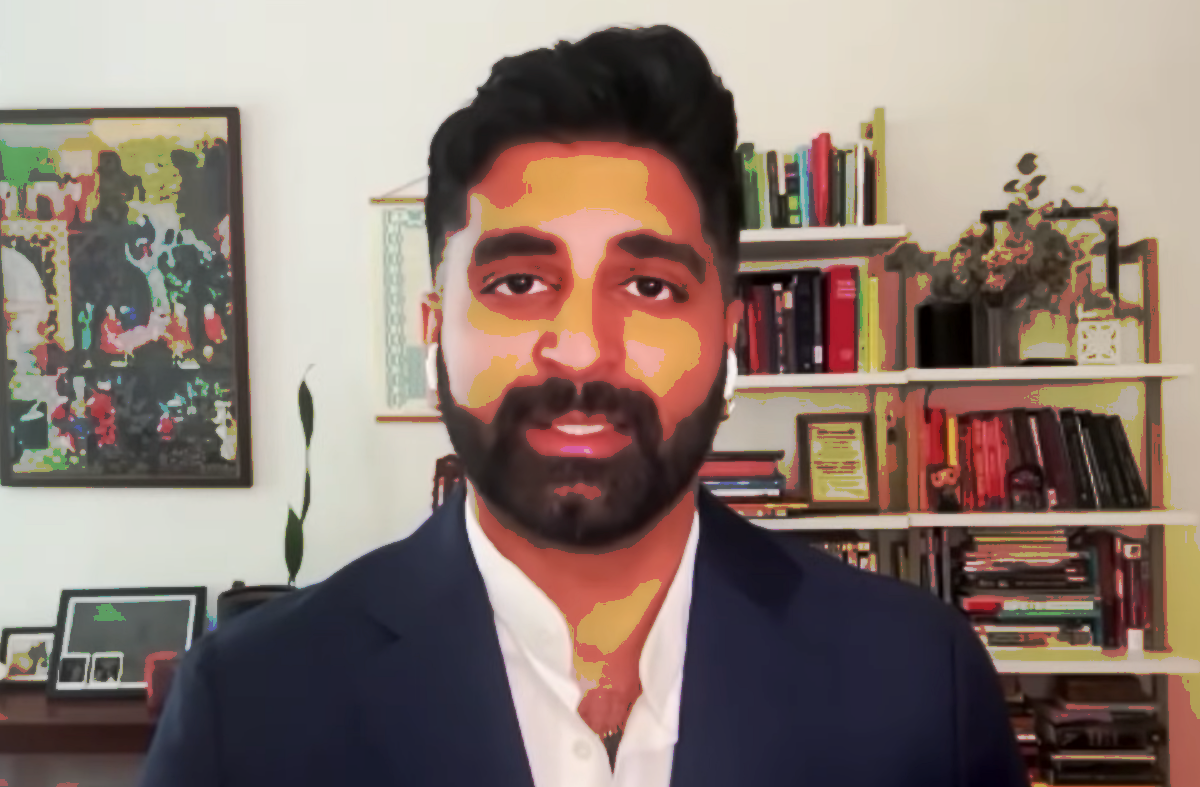


Waleed Shahid
Sep 13, 2024 5:17 PM
Shahid’s communication style is the first major stumbling block. He embodies the sort of highbrow, performative activist intellectualism that leaves one bored or baffled.
As election season heats up, few figures have managed to irk both the right and left as consistently as Waleed Shahid, the very senior strategist behind Uncommitted. In a political ecosystem saturated with larger-than-life personalities, Shahid’s brand of progressive activism somehow rises above the noise—but not in the ways one might hope.
At first glance, Shahid fits the mold of a progressive power broker: a Haverford-educated, policy-heavy strategist who has been instrumental in shaping the progressive movement. He worked with groups like Justice Democrats, laying the groundwork for the rise of left-wing superstars like Alexandria Ocasio-Cortez and Jamaal Bowman. He’s a frequent guest on cable news, opining on all things progressive with a fervor that is difficult to ignore. Yet, as this election cycle wears on, it’s hard not to find every aspect of his presence—his rhetoric, his strategy, his uncanny ability to dilute genuine progressive causes—irritating, to say the least.
Shahid’s communication style is the first major stumbling block. He embodies the sort of highbrow, performative activist intellectualism that leaves one bored or baffled. Whether he's tweeting about Medicare for All or engaging in debates on MSNBC, Shahid seems more invested in showcasing his strategy prowess than in actually engaging with the electorate. His tweets—often dripping with sarcasm and elite superiority—are a perfect storm of condescension and self-righteousness. Such tactics might work among political elites, but in the wider arena of American politics, it comes across as disconnected, even smug.
Shahid's habit of positioning himself and his brand of progressive politics as the “real” alternative to everything else is profoundly frustrating. His relentless criticism of establishment Democrats, while important, often veers into a black hole, because no one who has any position or authority cares what he has to say. Shahid and Uncommitted have become tools of placation—offering loud critiques but achieving little of substance. He self-proclaimed his efforts at the DNC as a success when they were, in fact, a giant media ploy.
Related stories
Nowhere is this disconnect more evident than in his failure to achieve meaningful results for Gaza. Shahid’s willingness to settle for a few minutes at the microphone, rather than pushing for real change, is nauseating. Instead of raising the stakes and pressing for substantive action, he’s too busy building bridges within a “big tent” party that wobbles under the weight of its contradictions—all while framing himself as the victim of centrist obstructionism.
But what makes Waleed Shahid truly frustrating this election cycle is the gap between his rhetoric and his strategy. For someone who talks so much about empowering the grassroots and the working class, Shahid seems more concerned with catering to the progressive elite.
Shahid may present himself as a modern-day David battling the corporate Goliaths of the Democratic Party, but he is increasingly emblematic of a troubling trend among progressives who prioritize branding over tangible impact. His strategies, characterized by performative outrage and a rigid adherence to ideological purity, may earn him accolades on social media, but they do little to effect the monumental changes needed to address U.S. militarism, which lies far beyond his insulated vision of progressivism.
Enter Uncommitted, the political organization Shahid leads. In theory, Uncommitted aims to challenge the complacency of the Democratic establishment and disrupt the status quo. However, in practice, it often comes across as an insular echo chamber where progressives congratulate rather than actualize significant policy victories. By fixating on internal squabbles and maintaining an exclusive ideological agenda, Shahid and Uncommitted risk alienating potential collaborators instead of forging the alliances necessary to advance their ambitious aspirations.
This disconnect is painfully clear in Shahid’s handling of the Palestinian issue, a situation that demands both sensitivity and decisive action. Faced with the Israeli occupation and the plight of the Palestinian people, Shahid had a pivotal chance to unite progressives and amplify calls for meaningful solidarity within the Democratic Party, particularly amidst rising demands to halt U.S. military aid to Israel. Unfortunately, his approach has been tepid at best and counterproductive at worst, undermining the urgency of the cause. Instead of fostering a robust movement for Palestinian rights, Shahid's dilute the very activism that is so desperately needed.
Rather than using his platform to push for real change, Shahid seemed more interested in walking a careful tightrope, trying to avoid alienating moderate Democrats while maintaining some semblance of progressive credibility. His rhetoric on Palestine, though occasionally passionate, lacked the conviction necessary to make a difference. When confronted with the real consequences of U.S. foreign policy in Israel and Palestine, Shahid’s approach was tepid — a series of safe, calculated statements that did little to shake the status quo. And, in an election cycle when Palestinians needed strong, bolder advocacy, Shahid’s failure to deliver was nothing short of a betrayal.
Shahid’s inability to make substantial progress on the issue of Palestine is especially frustrating because the uncommitted movement he helped lead took off claiming it would shake the Democratic apparatus. Yet, the end result has little to show beyond media headlines. Struggling to hold back tears, Shahid has spoken passionately about his commitment to justice, but when faced with the realities of power, he sought to coddle the establishment, instead of challenging it. Humiliated by the very party he hoped to reform, he now settles for incremental changes, even as Gazans continue to die. While the progressive movement as a whole has failed to hold Democrats accountable, Shahid’s reluctance to take bold, decisive action during such a critical moment raises serious doubts about his ability to prioritize real justice over political survival and fleeting media attention.
As the shadows of genocide loom larger, we find ourselves at a critical juncture where inaction could seal the fate of countless innocent lives. The ongoing crisis demands our immediate attention and unwavering resolve; we cannot afford to be distracted by political posturing that prioritizes self-serving agendas over the urgent pursuit of peace and humanity. In this urgent moment, we must scrutinize those who wield influence, such as Waleed Shahid. While he may present ideas like Medicare for All and a Green New Deal, which resonate with the desires of many, his approach is marred by an unsettling arrogance that alienates those who seek genuine leadership and unity. We need champions, not critics; advocates who empower rather than divide.
As we approach the general election, Shahid's propensity for grandstanding on social media and deriding those who fall short of his ideals could be seen as mere theatrics—an indulgent display with grave consequences. Rather than galvanizing a coalition for change, his actions risk becoming a stumbling block for the very Desi voters who initially looked to him for inspiration and solidarity. It is imperative that we demand accountability from those who claim to represent us; if they are not aligning their platforms with the urgent action required to address the humanitarian crises, they are failing in their duty to serve.
Nadia Ahmad: Growing discontent has fueled a surge in support for third-party candidates, threatening to upend the traditional two-party dynamic and potentially tilt the balance in key swing states.More Videos
This election cycle should not be about tolerating ineffective rhetoric or dismissive attitudes; it should be a clarion call for urgency, for a clear and actionable plan to help those who need it most. The time for mere words is over—now is the time for decisive action. The stakes are impossibly high, and we cannot afford to let the nuances of political discourse overshadow the urgency of the moment. Let us rise above complacency and demand genuine leadership that prioritizes human life and dignity over political gamesmanship. The future of countless lives hangs in the balance. We must act, and we must act now.
Comments

Powered by RoundtableAn AI/DeFi-powered Enterprise Media Operating System. Learn more at Roundtable.io.© Roundtable 2026. By using this site you agree to the Terms of Use and Privacy Policy