


Mar 1, 2026 9:23 PM
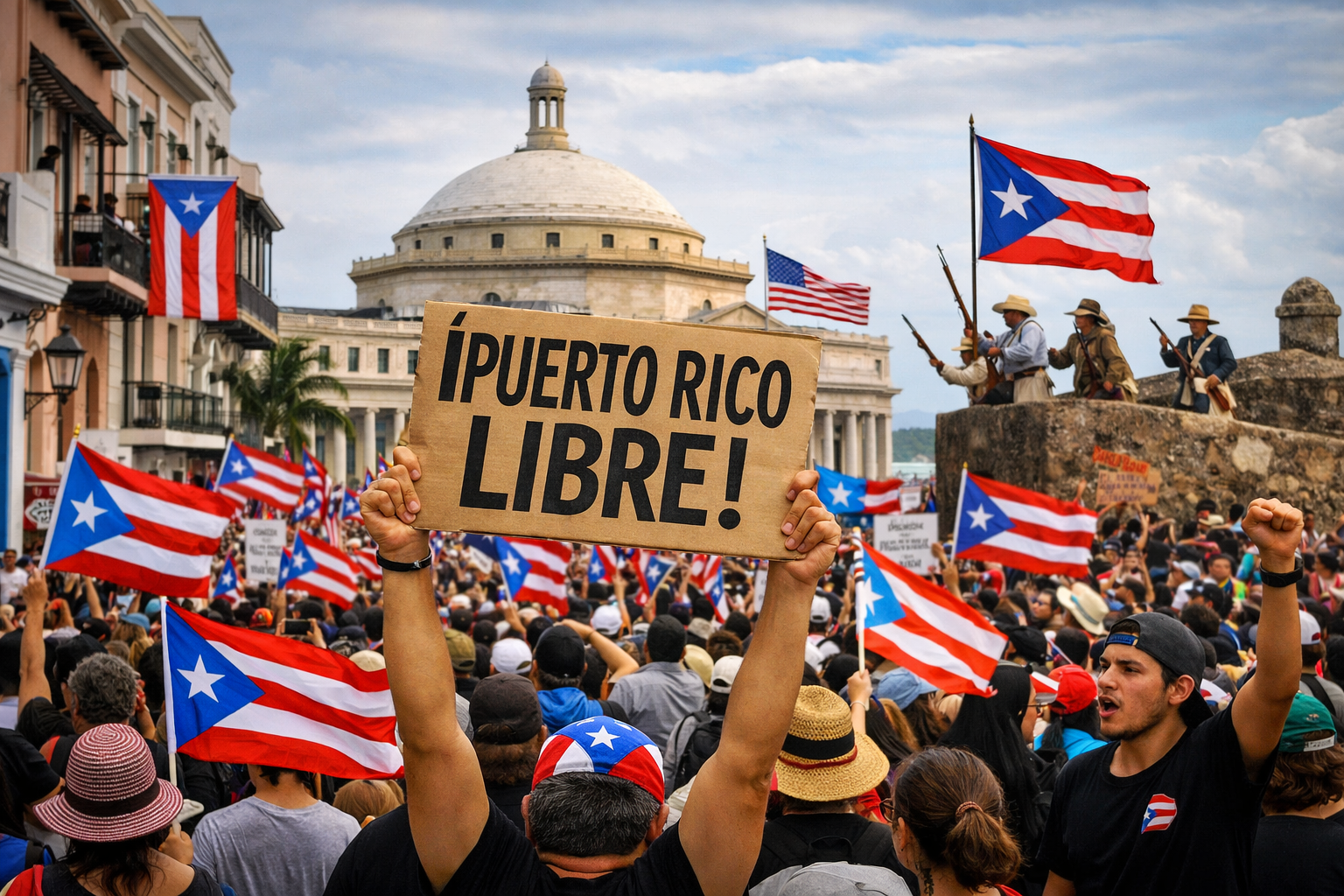
More than a century after 1898, the island’s unresolved political status continues to fuel a struggle over sovereignty, democracy, and economic self-determination.
For more than a century, Puerto Rico has occupied a political space the United States prefers not to examine too closely. It is neither state nor nation. Its residents are U.S. citizens but cannot vote for president from the island. Its congressional delegate can speak but not cast a final vote. Congress retains ultimate authority.
That ambiguity is not accidental. It is structural. And it is the soil from which the Puerto Rico independence movement grows.
A Colonial Inheritance
Puerto Rico became a U.S. possession in 1898 after the Spanish–American War. Since then, it has been classified as an unincorporated territory — meaning the Constitution applies only partially, and Congress holds plenary power under the Territorial Clause.
It appears in Article IV, Section 3, Clause 2. It states:
Related stories
“The Congress shall have Power to dispose of and make all needful Rules and Regulations respecting the Territory or other Property belonging to the United States…”
That single sentence is the constitutional basis for Congress’s authority over U.S. territories — including Puerto Rico.
In 1917, Congress granted U.S. citizenship to Puerto Ricans. Supporters framed it as inclusion. Critics saw conscription and control. The deeper issue remained unresolved: Who governs Puerto Rico?
The modern independence movement emerged in the early 20th century, most prominently through the Puerto Rican Nationalist Party led by Pedro Albizu Campos. In the 1930s and 1950s, clashes between nationalists and U.S.-backed authorities escalated, including the 1937 Ponce Massacre and the 1950 Jayuya Uprising. In 1954, nationalist activists opened fire in the U.S. House of Representatives to dramatize Puerto Rico’s status.
The federal response was swift and severe. Leaders were imprisoned. Surveillance was widespread. Armed struggle faded, but the political demand for sovereignty did not.
Since 1946, the electoral face of independence has been the Puerto Rican Independence Party (PIP). For decades, the party drew only single-digit support. Yet the question of sovereignty never disappeared.
What Drives the Movement Today
Independence today is less about armed revolt and more about democratic legitimacy and economic self-determination.
First, there is the simple matter of political equality. Territorial status means Congress can override local decisions. The most vivid recent example is PROMESA, the 2016 federal law that created a fiscal control board to manage Puerto Rico’s debt. The board — unelected by Puerto Ricans — has the authority to supersede the island’s elected officials.
For independence advocates, that was confirmation: Puerto Rico does not exercise final authority over its own budget. Democracy without sovereignty is conditional.
Second, there is economic frustration. Puerto Rico’s debt crisis triggered austerity measures that included school closures, pension cuts, and reductions in university funding. Many independence supporters argue that the island’s economic structure is constrained by federal law — from shipping regulations under the Jones Act to limits on trade policy and tax autonomy.
They contend that territorial status fosters dependency rather than development. Whether or not one accepts that thesis, the lived experience of austerity has deepened skepticism about the status quo.
Third, Hurricane Maria in 2017 became a political turning point. The federal response was widely criticized as slow and inadequate. Thousands died in the storm’s aftermath. For many Puerto Ricans, Maria exposed the vulnerability of being a territory: dependent on distant decision-makers during a life-or-death crisis.
Finally, identity matters. Puerto Rico fields its own Olympic team. Spanish is the dominant language. Its literature, music, and political culture reflect a distinct national character. Independence supporters argue that Puerto Rico is a nation without a state.
Who Opposes Independence
Opposition comes from two primary camps.
The first favors statehood. Statehood advocates argue that full political equality requires becoming the 51st state. Rather than sovereignty, they seek full integration — voting rights in presidential elections, equal congressional representation, and parity in federal funding programs.
Statehood has won pluralities in recent plebiscites, though turnout and ballot structure have been contested. Statehood supporters warn that independence could bring economic instability, currency challenges, and loss of federal support.
The second camp prefers some form of enhanced commonwealth or free association — greater autonomy without full separation. Free association would make Puerto Rico sovereign while negotiating specific economic and defense agreements with the United States, similar to arrangements with Pacific island nations.
Both camps question whether independence can command majority support.
The Generational Shift
What has changed in recent years is tone and intensity. Younger Puerto Ricans, shaped by the debt crisis, austerity, corruption scandals, and climate vulnerability, are less attached to traditional party structures. Many view the territorial arrangement as a permanent limbo.
The Puerto Rican diaspora — nearly as large as the island’s population — also influences the debate. Migration raises uncomfortable questions: Why are so many leaving? What does citizenship mean if opportunity requires departure?
Independence, once seen as marginal, now sits inside a broader conversation about decolonization, economic justice, and democratic integrity.
What Are Its Chances?
Here is the unvarnished truth: independence does not currently command majority support. Statehood typically polls higher. Federal inertia remains strong. Congress has shown little urgency in resolving the status question.
But history rarely moves in straight lines.
Independence movements gain traction when structural contradictions intensify. Economic crisis. Climate disaster. Political humiliation. Generational impatience. Puerto Rico has experienced all four.
Success depends on three factors:
- Whether independence can build a broad coalition beyond its traditional base.
- Whether statehood stalls in Congress, leaving voters disillusioned.
- Whether economic conditions worsen under territorial constraints.
The independence movement endures not because it is dominant, but because the status question remains unresolved. Puerto Rico’s political condition — citizenship without full representation, autonomy without sovereignty — is inherently unstable.
At some point, the United States will have to answer a question it has deferred since 1898: Is Puerto Rico a permanent territory, a future state, or a nation entitled to govern itself?
Until that question is resolved honestly, the independence movement will persist — not as nostalgia, but as an indictment
Comments

Powered by RoundtableAn AI/DeFi-powered Enterprise Media Operating System. Learn more at Roundtable.io.© Roundtable 2026. By using this site you agree to the Terms of Use and Privacy Policy