


Apr 30, 2026 9:06 PM
Updated May 1, 2026 11:06 PM
When extreme wealth, race, and lived experience diverge, residency rules fail to ensure true representation. Why geography alone can’t define community in American Democracy
Representation Without Reality: Why Geography Alone Can’t Define Community in American Democracy
One of the most deeply embedded assumptions in American democracy is that representation flows naturally from geography. If a candidate lives in the district, the logic goes, they understand the people who live there. If they understand the people, they can represent them. It’s a clean, intuitive idea—but geography alone is no longer sufficient.
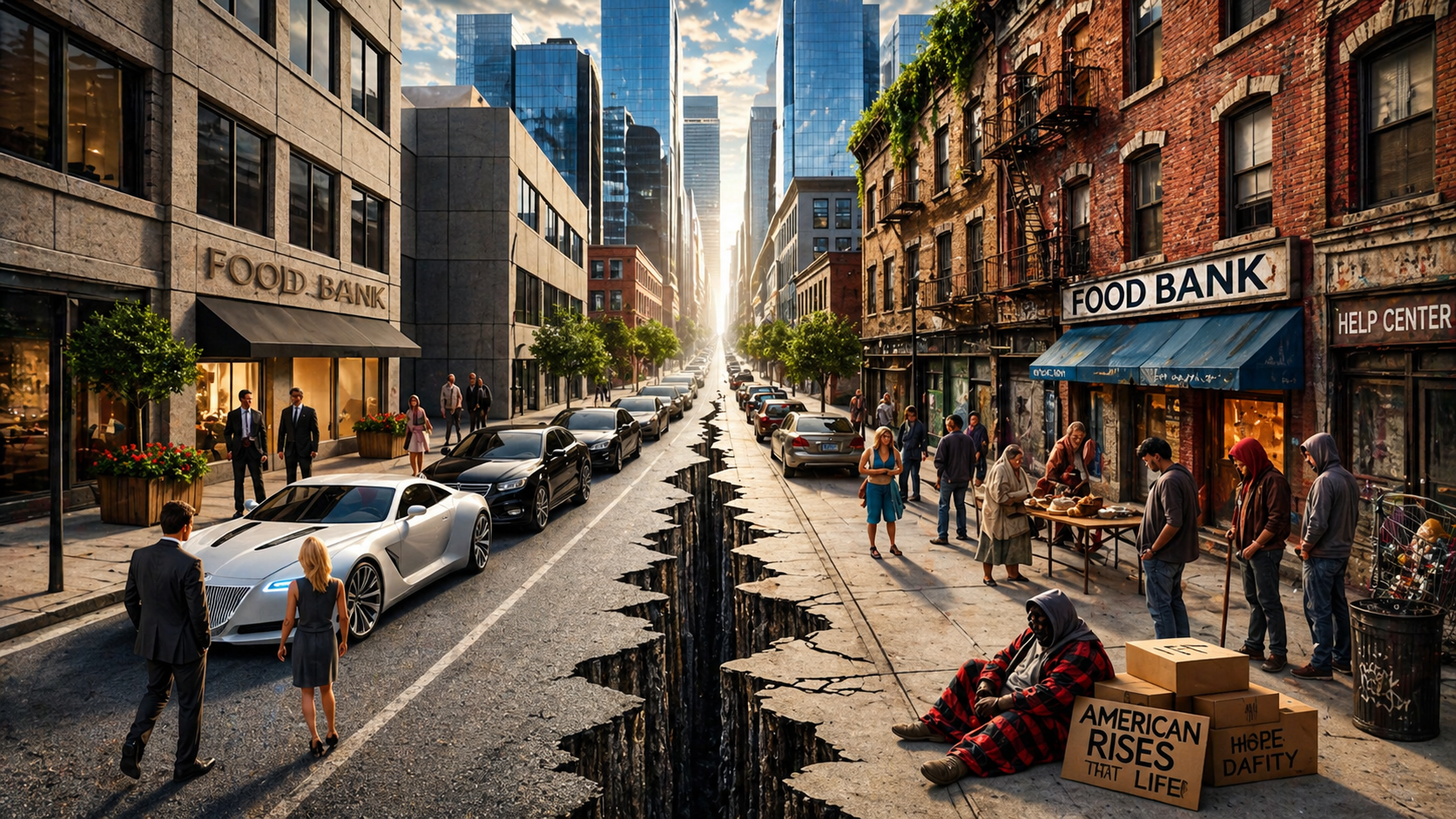
In a country defined by extreme inequality, geographic proximity has become a weak stand-in for shared experience. A billionaire and a working-class renter can share a state, a city, even a neighborhood, and yet inhabit entirely different worlds. When that happens, the idea that residency alone ensures meaningful representation collapses.
To understand why, we need to go back to the original logic of geographic representation—and then confront how dramatically the conditions underlying that logic have changed.
Related stories
The Founding Logic Behind Geographic Representation
The architects of American democracy were reacting to a very specific problem: rule by distant power. Under British colonial governance, decisions affecting the colonies were made by officials who lived an ocean away and had little understanding of local conditions. That distance produced policies that were often exploitative, indifferent, or both.
The response, embedded in the U.S. Constitution, was straightforward: those who govern should live among the governed. Members of Congress would be tied to states and districts. Representation would be anchored in place.
This wasn’t a minor design decision—it was intentional. It functioned as a safeguard against disconnection. The logic was straightforward: when people live among those they govern, proximity fosters familiarity, and familiarity creates accountability.
I’ve seen what that kind of accountability looks like up close. As a child, my husband spent time in Mt. Pleasant, Iowa, where a wealthy family owned a factory that employed much of the town. They were clearly more affluent than most, but they were still part of the community—not separate from it. They knew the people who worked for them. They saw the impact of their decisions in real time.
That kind of connection changes how decisions get made. It’s one thing to shut down a factory on paper; it’s another to do it when you know the families whose livelihoods depend on it. When people are not insulated from the consequences of their choices, accountability becomes real, not theoretical.
For a time, that assumption held more weight. Economic differences existed, but they were not as vast or as systemically entrenched as they are today. Living in the same place often meant sharing similar institutions, risks, and constraints.
That is no longer the case.
When Proximity Stops Meaning Understanding
In modern America, geography no longer guarantees shared experience. Instead, society is stratified along lines that cut across physical space—most notably extreme wealth.
Two people can live in the same city and have radically different relationships to:
- Education
- Healthcare
- Housing
- Transportation
- Employment stability
- Exposure to policing and state power
A wealthy resident may rely on private schools, concierge medicine, and secure, insulated environments. A working-class resident may depend entirely on public systems that are underfunded, overburdened, and often unstable.
These are not minor differences. They shape how individuals understand problems and what solutions they find acceptable.
The assumption that proximity equals understanding begins to break down under these conditions. Living “near” someone does not mean living like them.
Wealth as a Separate Political Reality
At extreme levels, wealth doesn’t just provide comfort—it creates a fundamentally different environment. It insulates individuals from the constraints that define most people’s lives.
For the vast majority of Americans, daily life is shaped by limits:
- The need to earn wages
- The pressure of rent or mortgage payments
- Dependence on public infrastructure
- Vulnerability to economic shocks
For those at the top of the wealth spectrum, many of these constraints simply do not apply. Private alternatives exist for nearly every public system. Risk can be absorbed, avoided, or outsourced.
In effect, wealth creates a form of parallel existence—what might be called an economic geography. It is not defined by physical borders but by access, insulation, and autonomy.
This matters politically because people tend to govern in alignment with their lived conditions. A person who has never depended on public schools is less likely to prioritize them. A person who has never relied on public healthcare may underestimate its importance. A person insulated from economic instability may fail to grasp its urgency.
So when a billionaire resides in California, they may technically meet the geographic requirement for representation. But their lived reality is so distinct from that of most Californians that the connection becomes tenuous at best.
The Breakdown of Shared Stakes
At the heart of democratic representation is the idea of shared stakes. A representative should not only understand the community—they should be affected by the outcomes of the policies they support.
This creates accountability. If policies fail, the consequences are not abstract. They are personal.
But extreme wealth disrupts this relationship.
A wealthy representative:
- Does not rely on public systems
- Can opt out of failing institutions
- Can absorb policy failures without significant personal impact
This breaks the feedback loop that democracy depends on. The representative is no longer governed by the same risks as their constituents.
Without shared stakes, representation becomes less about mutual interest and more about perspective—and perspective, shaped by insulation, can diverge dramatically from the needs of the majority.
The Illusion of Representation
This is where the problem becomes more than theoretical.
Geographic residency can create the appearance of representation without delivering its substance. The candidate lives in the district. The formal requirement is satisfied. The system appears to function as intended.
But beneath the surface, alignment may be missing.
Research like the Gilens–Page study has shown that policy outcomes in the United States tend to reflect the preferences of economic elites far more than those of average citizens.
This suggests that representation is already being shaped by forces that extend beyond geography. Wealth, influence, and access to power networks can outweigh local ties.
In this context, residency rules can become a kind of democratic theater—visible markers of legitimacy that obscure deeper misalignments.
Redefining Community for a Functional Democracy
If geography alone is no longer sufficient, the question becomes: what should define community?
A more meaningful definition would include the conditions that shape lived experience:
- Economic position (income, wealth, job security)
- Access to essential systems (education, healthcare, housing)
- Exposure to structural inequalities, including race
- Vulnerability to state power and institutional decisions
These factors determine how people experience policy. They influence priorities, perceptions, and the stakes involved in governance.
To ignore them is to allow a small, highly resourced segment of the population to claim representation over a majority whose lives are fundamentally different.
This does not mean abandoning geographic representation entirely. Place still matters. Local knowledge still matters. But it does mean recognizing that geography is only one dimension of community—and an increasingly incomplete one.
The Real Distance in American Democracy
The original design of American representation was built to address geographic distance. It sought to prevent rule by those who were physically removed from the people.
Today, the more consequential distance is not measured in miles. It is measured in lived experience.
It is the distance between:
- Those who rely on public systems and those who can bypass them
- Those who face economic precarity and those who are insulated from it
- Those who are subject to systemic inequality and those who benefit from it
This is the distance that shapes modern governance. And it is the distance that current definitions of community often fail to capture.
Conclusion: Representation Must Be Real to Be Democratic
The idea that candidates should come from the communities they represent remains sound. It grows out of the same logic that rejected “taxation without representation” or the saying “nothing about us without us” —the insistence that those who govern must be connected to the people they govern. This is why the meaning of “community” cannot remain frozen in the era in which the Constitution was written. It must evolve to reflect present-day realities.
Today, that reality includes a stark economic divide. The average American is not a millionaire—yet more than half of the members of Congress are. That alone should give us pause. It suggests that even when representatives meet the geographic requirements of office, they may not share the lived conditions of the people they represent.
In a society marked by deep economic and structural inequality, geography alone cannot carry the weight of representation. It can be satisfied without delivering real connection. It can signal belonging without ensuring understanding. Living in the same place no longer guarantees shared experience, shared risk, or shared stakes.
If democracy is to function as intended, representation must be grounded not just in where people live, but in how they live. It must account for whether those in power depend on the same systems, face the same constraints, and experience the same vulnerabilities as the people they serve.
Because when representatives share space but not experience, the result is a system that looks democratic on paper but fails in practice.
Comments

Powered by RoundtableAn AI/DeFi-powered Enterprise Media Operating System. Learn more at Roundtable.io.© Roundtable 2026. By using this site you agree to the Terms of Use and Privacy Policy