


Jul 4, 2024 1:26 AM
As a child, I thought the 4th of July was the day everyone celebrated my mother's birthday.
My mother was born on July 4, 1924. The second daughter of a civil engineer who had served as a Captain in the U.S, Army engineers in WW-I, the War to End All Wars. The month she was born, one century ago, the Olympics Games were held in Paris.
1924 was a year of stock market and personal optimism. The USA was on a roll. We had beaten “The Hun.” Louis Armstrong was popularizing Jazz, a new kind of uniquely American music. Women had gained the vote in 1920. Flappers confirmed that showing an ankle didn’t destroy morality.
When I was a child, I was always amazed that the whole town turned out for my mother’s July 4 birthday. They held parades and cookouts and played and sang. In the evening, everyone in town would sit on the slope beside the school, overlooking the playgrounds and athletic fields and watch a fireworks display. All in my mother’s honor, I thought. She must be really special among mothers.
1924 was also a time of Ku Klux Klan ascendancy in both northern and southern states. Like today’s “Christian” nationalists, the Klan promoted a narrow definition of what Christianity and America should be, including Jim Crow laws, and legalized violence against non-White Americans.
Related stories
My mother passed her fourth birthday the year that Herbert Hoover beat Al Smith in the 1928 presidential race. Smith’s landslide defeat resulted from the Republican Party’s and candidate’s attacks on Smith’s Catholic religion. Hoover wrote, “There are many people of intense Protestant faith to whom Catholicism is a grievous sin.” Ninety-six years later, a mostly Catholic, Republican Supreme Court tells us that giving women freedom is as un-American as giving Black people the vote.
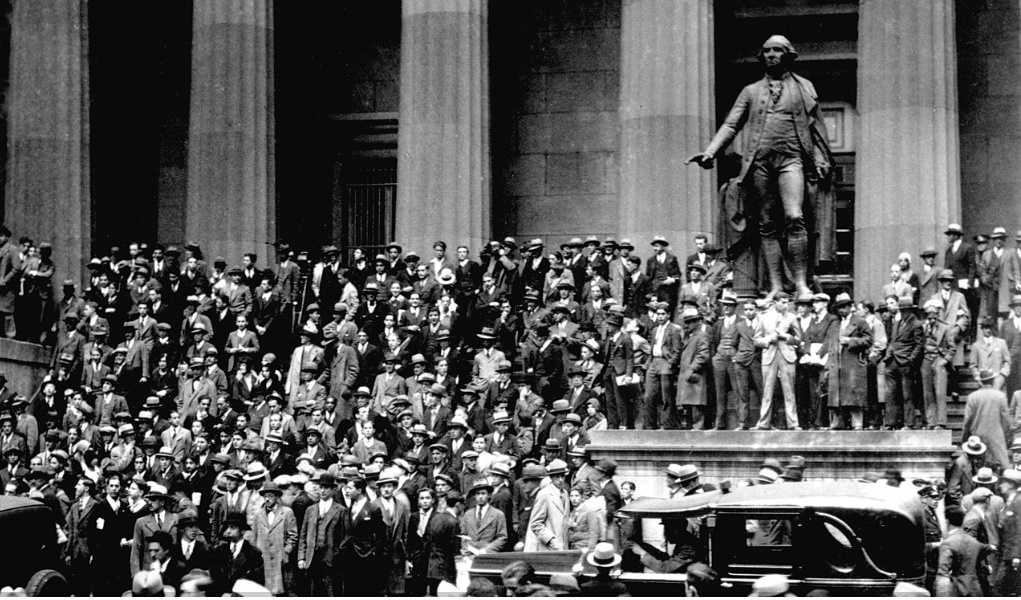
When my mother was five, Black Thursday brought an end to the Republican “prosperity” of the Roaring 20s, revealing the sand of unfettered capitalism on which a false economy had been built. New Yorkers had elected Franklin Roosevelt governor as their previous governor, Al Smith, went down to defeat in 1928.
While Hoover fiddled and lamented the plight of Wall St. millionaires, Roosevelt set about developing plans to rescue New York’s people from Hoover’s depression. By 1930, two years before the 1932 election, REPUBLICANS had decided that Governor Roosevelt was the most probable Democratic candidate.
Roosevelt had been crippled in 1921 by Polio. Before cell ‘phones, cable “news” pundits, and corporate-funded bloggers, the Republican Party started, in 1930, to highlight Roosevelt’s disabilities. Denying that Roosevelt’s problem was from Polio, the Republicans sought to spread rumors and stories that Roosevelt had a degenerative disease that would also affect his brain and make him unfit to be president. Sound familiar?
My mother, age 11, was able to see seven-year-old Shirley Temple dance with Bill Robinson in three 1935 films, the same year Mary McLeod Bethune founded the National Council of Nego Women as part of a growing movement for civil rights in Roosevelt’s New Deal administration and legislation. (The easy friendship of a White child and a Black dancer in a time of increasing demands for civil rights earned Shirley Temple the accusation in 1938 that she, as a 10-year-old, was a “communist.”)
My mother wasn’t old enough to vote for or against Roosevelt in the 1940 election. But she was old enough to understand that her male high school classmates would be at risk if the already vicious war in Europe involved America. She was old enough to have heard white supremacy Texas congressmen Martin Dies opposing the New Deal, and in 1937, putting into the Congressional Record the statement, “you cannot prescribe the same wages for the black man as for the white man." Eighty-six years before the Donald, on national TV, proclaimed that some jobs were “Black Jobs,” unfit even for Hispanic immigrants.
By the time of the 1944 presidential election, my mother was twenty, old enough to vote, and removed from her southern Illinois roots to a dormitory at Wellesley College outside Boston. As with many of her college classmates, she was weighing finishing school against dropping out to marry and start a family. Family won out. My older sister arrived in July of 1946. It would be two decades before my mother completed her college degree and went on to a Master’s.
From her childhood in the depression, Mom became a suburban housewife, raising children and building a suburban home in the most prosperous, sole superpower nation after World War II. Her Harvard professor husband took her on summer speaking tours and medical conferences in Europe, and they returned from each with European cars with higher build quality and lower maintenance costs that the rest of America would discover with the VW and Japanese invasions of the 1960s.
When my mother was born in 1924, most Americans lacked running water and indoor plumbing. Electricity was a new miracle, still seen as terribly dangerous. By the end of the New Deal and WW-II, projects like the Tennesse Valley Authority were bringing both power and clean water to urban and rural homes in a way that private capitalism was unable to.
In 1954, six months before Mom’s thirtieth birthday, widescale testing began on Jonas Salk’s injectable vaccine against Polio, the disease that had crippled Franklin Roosevelt thirty-three years earlier. The vaccine was developed in Pittsburg, as Mom’s husband worked at Harvard on searching for cancer cures, and Watson, Crick and Rosalind Franklin at Cambridge University deciphered the structure of DNA. It was a time when people believed in science and believed that science could and would solve all of the world’s problems.
The development of new vaccines and the biological and medical knowledge that underlay them were aided by the huge, slow and expensive computers that had been developed for military ballistics use during WW-II. Then, as now, computers could organize and process data more quickly than humans. Then, as now, the more computers processed, the more progress they made possible for human thought.
Also on May 17, 1954, less than two months before Mom’s thirtieth birthday, as her eldest child was eight years old and in public school, the United States Supreme Court also looked at scientific data and historical records and concluded that “[T]he plaintiffs and others similarly situated for whom the actions have been brought are, by reason of the segregation complained of, deprived of the equal protection of the laws guaranteed by the Fourteenth Amendment.”
In the 1940s, my parents had owned a house near the hospitals where Harvard medical students studied. After the war, they rented rooms to students (some married) from war-ravaged lands who were studying at the medical school. It was in those years that my mother learned to cook more than her home-grown, all American fare. In 1958, my parents participated in sponsoring refugee families from the failed Hungarian revolution against Soviet repression. With both the medical students and the Hungarian refugees, neighbors complained to Mom about the foreign and “dirty” and “unAmerican” and “not White” people with whom she associated.
Science, history and facts continued to collide with daily thinking for the rest of the 1950s. A few months after Mom turned 37, while corporate propaganda kept hammering the message that capitalist Cold War no-bid contracts were keeping America “safe,” the sneaky Russkies launched Sputnik I into low earth orbit. While America was arguing over whether desegregation was a commie plot, the Soviets were showing off scientific advances no for-profit corporation had been exploring.
We kept hearing about how bad the commies were, and even the war-weary and wary President Eisenhower thought that we needed to send uniformed “advisors” to prop up the French colonial government in Vietnam. While Republican President Eisenhower laid plans for war in Southeast Asia and for an invasion of communist Cuba, scientists kept trying to improve medicines. In 1961, the oral Polio vaccine developed by Albert Sabin took over the commercial market in the USA, even though it had been tested and first widely used in the Soviet Union. As with Sputnik, corporate political interests kept American consumers behind the Soviets.
By the time she turned 40, in 1964, my mother had to deal with raising teenage sons as the US waged colonial war in Vietnam. She watched and sometimes helped her children march against segregated schools in the Boston area. She watched neighbors’ children ride busses south to be injured while working to register Black voters. She came out of a store one day to find a “freedom-defending patriot” vandalizing her station wagon as he tried to remove anti-war stickers on the rear bumper.
By then, she had the advantage of transistors and of TV in every home—some programs in color! (NO! Not that kind of color - there were no Black people on TV back then) Stereo made home HiFi much more realistic, like concert sound. Transistors pushed the cost of everything down, especially for products from Japan.
By the time my mother turned fifty in 1974, one of her sons had become the first person ever to be granted conscientious objector status by his local, suburban draft board. She was able to watch on television as her congressman quoted a son’s college history paper during the Nixon impeachment hearings. She watched TV as uniformed Americans turned police dogs and fire hoses on people, asking for the equal protection that the 20-year-old Supreme Court decision had said was their right.
By the time she was fifty, my mother had been divorced and remarried, gaining two stepchildren the same ages as her own two eldest. My mother always loved music and had always sung in organized choruses as well as around the house. One of her step children was “into music,” but of the new “rock” kind rather than the classics she had grown up with. But, always wanting to learn new things, she became a fan of Petula Clark and Herb Alpert.
Her openness to new styles of music and to new views of social relations helped her as she built a practice as a psychiatric social worker. She would be the first to embrace the thought that her experience of returning to college as a single mother with six children, her experiences with international medical students and refugees, and her exposure to music that once sounded only like noise to her made her a better social worker, just as her social work practice and the issues to which it exposed her helped her be a better parent and citizen.
She was able, with fear and confusion and eventual equanimity, to watch one son drop out of high school, build a career at M.I.T. as a computer expert and eventually graduate from Harvard.
Decades later, her other step-child would transition to a new sexual identity. That was after the rise of feminism and of the LGBTQ+ movement. By the time the Supreme Court recognized women’s (limited) rights to personal body decision-making and then the right of everyone to marry whomever they chose, Mom was ahead of the Courts.
My mother didn’t need to understand, or agree with, everything that changed in the world over her almost nine decades of living. She learned to embrace changes as they came. Raising six children and two step-children who were born into a post WW-II world so different from the post WW-I world into which she was born kept her alive and learning. She learned to accept the changes in her lifetime, as the colonial royal subjects of King George III learned to accept the new reality that they had to study how to govern themselves.
My mother governed herself with grace and intelligence. Her devotion to the country for which her father fought in WW-I, which gave her and her city-slum-raised first husband the opportunity for educations and upward mobility, which gave her safe exposure to cultures from around the world, was absolute. She strove always to make the USA a better place, often by working to make the entire world a better place.
My mother’s family were immigrants, arriving here in the early 17th century, driven by a Christian faith that lay at the foundation of the Enlightenment era, which informed each of our founding fathers. None of the ancestors that I know of ever had a green card. Everyone that I know of contributed, in some way, to making the nation what it is today.
I expect that that feeling of something special, when I learned that it was about my country, rather than my mother, made me always want to work to improve problems which arose. The enduring lesson was not that Mom or the country was perfect. But rather, the constant striving for improvement was as important as any sense of having “arrived.”
Comments

Powered by RoundtableAn AI/DeFi-powered Enterprise Media Operating System. Learn more at Roundtable.io.© Roundtable 2026. By using this site you agree to the Terms of Use and Privacy Policy