


Nov 18, 2025 6:34 AM
Updated Nov 18, 2025 5:15 PM
How the Powell Memo, Project 2025, and the Right’s long game expose the deep cultural beliefs that keep rolling back progressive wins.
Someone once said, “You don’t become what you want, you become what you believe.” I’ve heard it attributed to Oprah Winfrey. Clearly, she was talking about individual transformation, but the wisdom applies just as powerfully to nations. A country’s laws, its policies, its cruelties, and its breakthroughs don’t emerge from thin air. They emerge from the collective beliefs of its people—what the culture truly thinks is normal, acceptable, deserved, or inevitable.
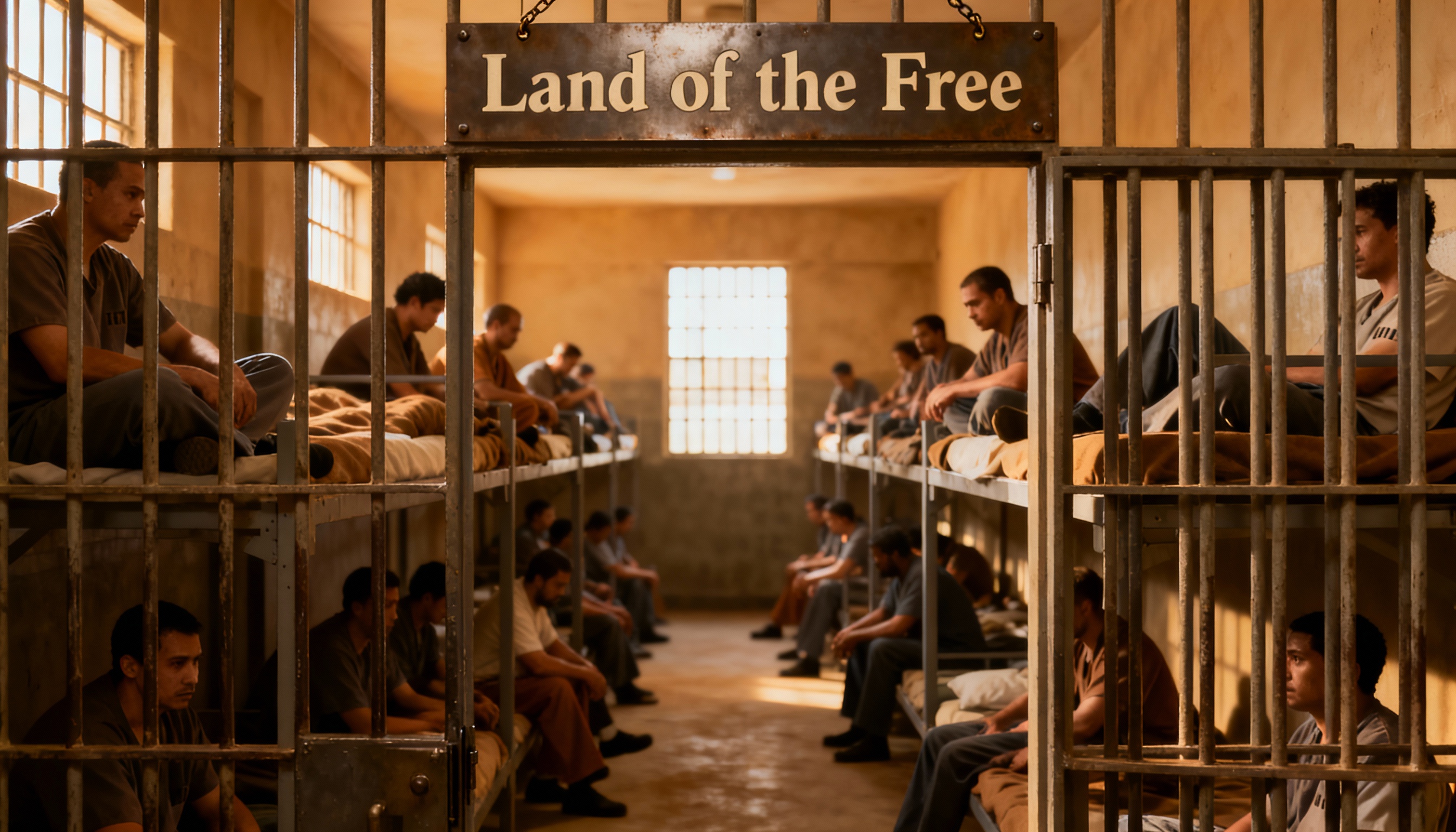
The United States is no different. In fact, the U.S. may be the clearest example of this truth. The nation was founded on soaring ideals that were immediately contradicted by its practices. The gap between what Americans claim to believe—freedom, equality, opportunity—and what the nation has historically enforced reveals its actual operating beliefs. No other modern democracy has such a stark split between its mythology and its material reality. From slavery to Jim Crow to mass incarceration, the United States has repeatedly demonstrated that its policies reflect its deepest cultural beliefs—not its stated values.
We say we want equality, fairness, justice, safety, democracy, and freedom—but centuries-old belief systems keep resurfacing, even when progressives win short-term victories. Cultures don’t change because a law changes; they change when the underlying beliefs of the people evolve.
And America has a belief problem.
Related stories
The Policies We Get Are the People We Are
Every major policy outcome—from civil rights protections to abortion rights to the grotesque concentration of wealth—is a reflection of what enough Americans believe is acceptable.
You don’t get mass voter suppression unless a significant number of people believe that some Americans shouldn’t vote.
You don’t get draconian abortion bans unless people believe women’s autonomy is negotiable.
You don’t get runaway wealth inequality unless millions believe poverty is a personal failing rather than a political choice.
You don’t get racialized mass incarceration unless people believe punishment equals safety and that some communities are inherently dangerous.
Beliefs shape policy. Policy shapes lives. Until we confront the cultural beliefs operating beneath American politics, progress will keep getting rolled back.
The Voting Rights Act: A Victory Undone by Belief
The Voting Rights Act of 1965 was more than legislation—it was an assertion of dignity and a recognition that Black Americans deserved full citizenship. For almost half a century, it worked, and many assumed it was permanent.
But laws don’t erase beliefs. They sit on top of them like a thin coat of paint.
In 2013, in Shelby County v. Holder, the Supreme Court struck down the coverage formula in Section 4(b) of the Act, effectively disabling preclearance and opening the door to a new wave of voter suppression. Within days, states moved to restrict voting access. The old belief—that political power should remain in the hands of a narrow, protected electorate—had never gone away. It simply waited for an opening.
Progressives won the policy fight in 1965, but they never fully won the cultural one. When culture doesn’t shift, the law becomes temporary.
Roe v. Wade: A Right the Culture Never Fully Accepted
For nearly fifty years, Roe v. Wade stood as settled law, recognized as guaranteeing a constitutional right to abortion under the framework of privacy and liberty. But anyone paying attention knew abortion rights were never culturally secure.
Opponents did not stop organizing. They did not stop preaching. They did not stop embedding their beliefs into the courts, statehouses, school boards, and media ecosystems. The anti-abortion movement built institutions, funded legal strategies, and cultivated judges for a half century.
Progressives, meanwhile, often behaved as though legality meant permanence.
In 2022, Dobbs v. Jackson Women’s Health Organization overturned Roe and erased nearly 50 years of precedent. The belief that women must be controlled, regulated, and overridden had never truly disappeared. Dobbs was not a shock; it was the predictable outcome of a long, disciplined belief war.
The Right’s Long Game: From the Powell Memo to Project 2025
If progressives want a case study in cultural continuity, they don’t have to guess. The conservative movement wrote down its playbook.
In 1971, corporate attorney Lewis Powell—soon to be a Supreme Court justice—wrote a confidential memorandum to the U.S. Chamber of Commerce titled “Attack on American Free Enterprise System.” He warned that business interests were under attack from civil rights movements, students, consumer advocates, and the media, and he urged corporate America to build a long-term infrastructure: think tanks, legal organizations, academic centers, media pressure groups, and messaging operations to reshape public opinion.
They listened.
The Heritage Foundation, the Federalist Society, ALEC, and a network of right-wing institutions grew out of this strategic shift. Over decades, they worked to mainstream a worldview that equates corporate power with freedom, deregulation with liberty, and minority rule with “real America.”
Today’s Project 2025, a Heritage-led initiative, is the logical extension of that strategy: a detailed roadmap to remake the federal government, purge civil servants, concentrate power in the executive, and entrench a reactionary agenda across agencies, courts, and policy. It is not a random document. It is the culmination of fifty years of institution-building inspired by the Powell Memo.
This is the long game: reshape the culture and the state so thoroughly that reactionary policy victories become inevitable—and very hard to reverse. That’s why victories like the Voting Rights Act and Roe were vulnerable: the beliefs they challenged never died. And now even marriage equality—once treated as untouchable—is clearly in the crosshairs of that same ideological machine. Syracuse Law Review
Why Short-Term Progress Keeps Getting Rolled Back
Progressives often mistake policy wins for cultural change. We pass a law and exhale, as if the work is finished. But policies are the leaves; beliefs are the roots.
You can prune a tree, replant it, or change how it looks—but if the roots are still fear, hierarchy, misogyny, white supremacy, and Christian nationalism, the same old tree will grow back.
This is why the battles repeat. The cultural foundation has not shifted.
Conservatives understand this. Their institutions—churches, talk radio, cable news, legal training pipelines, donor networks, partisan media, and Christian nationalist infrastructure—reinforce their worldview 24/7. Progressives, by contrast, often rely on election cycles, protests, and litigation while underinvesting in long-term belief-shaping institutions.
The Beliefs That Still Define America
If we’re honest, America still believes in hierarchy:
- Wealth signals virtue
- Whiteness signals safety
- Masculinity signals leadership
- Christianity signals morality
- Punishment signals justice
- Poverty signals failure
- Voting is a privilege
- Women’s autonomy is optional
These beliefs are not fringe. They are mainstream, and they quietly guide everything from budget priorities to policing to foreign policy. Until they shift, the political system will keep producing outcomes that reflect them.
Culture Change Is Slow—But It’s the Only Thing That Lasts
Here’s the truth progressives must accept: nothing becomes permanent until the culture believes in it.
That is the right’s greatest strength. And it’s the left’s greatest vulnerability.
If we don’t change the underlying beliefs of the culture:
- Voting rights will continue eroding
- Reproductive justice will remain fragile
- Economic inequality will deepen
- Racial justice will stay aspirational instead of real
- Bodily autonomy rights—including marriage equality—will remain on the chopping block
Because a country doesn’t become what it wants. It becomes what it believes.
The Work Ahead
America is at a crossroads. We can continue chasing short-term policy wins without addressing the cultural rot beneath them, or we can do the deeper work that makes progress durable.
That old line—“You don’t become what you want, you become what you believe”—is not self-help fluff. It’s a political diagnosis.
If Americans believe in equality, we will build a more equal nation.
If we believe in justice, we will build a just one.
If we believe in freedom, we will expand it.
But if we continue to believe in hierarchy, fear, and exclusion—those are exactly the policies we will keep reproducing.
The stakes are too high to pretend otherwise.
Real progress requires more than wanting change. It requires believing we deserve it—together. And reshaping the beliefs of a nation is the most radical act of all. If you know of a left leaning organization that is doing on the left what the Heritage Foundation, ALEC, or Project 2025 is doing on the right, please give us the name of the organization in the comments.
Comments

Powered by RoundtableAn AI/DeFi-powered Enterprise Media Operating System. Learn more at Roundtable.io.© Roundtable 2026. By using this site you agree to the Terms of Use and Privacy Policy