


Jan 10, 2026 5:27 AM
Updated Jan 11, 2026 1:16 AM
Be the Revolution — How Occupy Wall Street and the Bernie Sanders Movement Reshaped American Politics
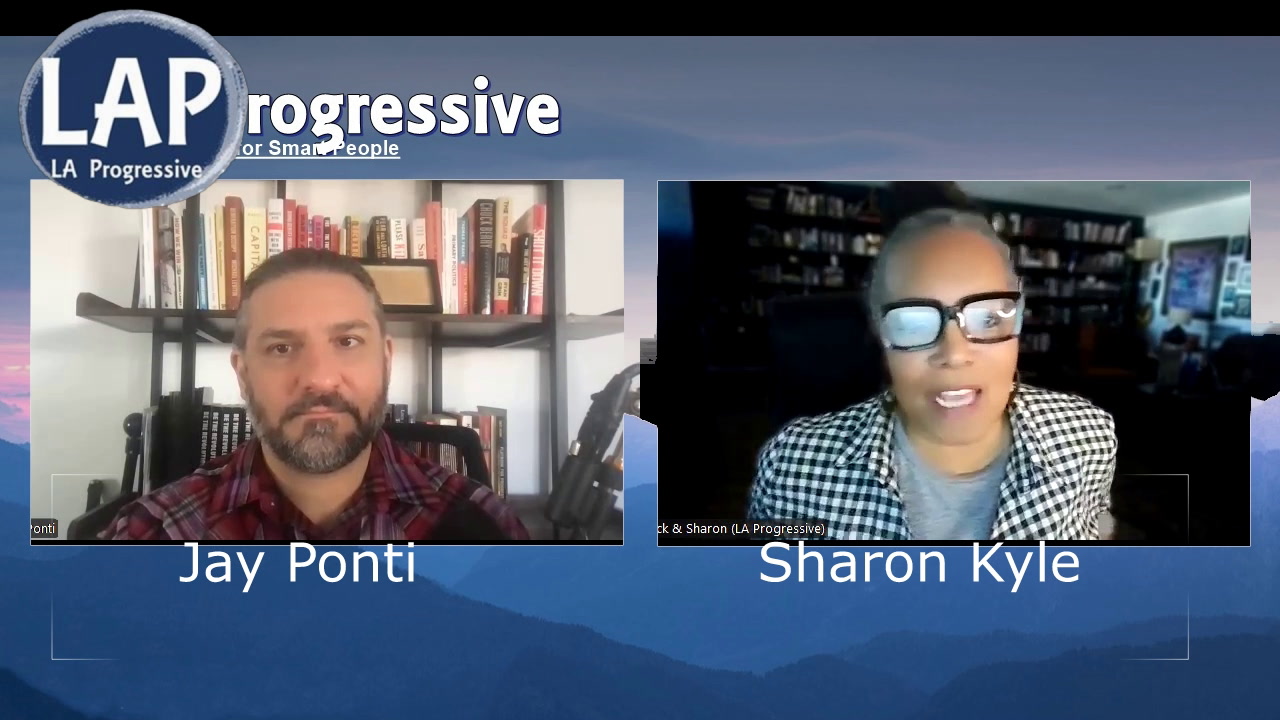
Jay Ponti is a longtime grassroots political organizer, activist, and writer whose work focuses on movement building, economic justice, and democratic participation. He has been involved in progressive organizing for decades, including labor struggles, anti-war activism, and economic justice movements.
Ponti is best known for his analysis of Occupy Wall Street and its legacy, as well as his work connecting movement politics to electoral insurgencies like the Bernie Sanders campaigns. He is the author of Be the Revolution: How Occupy Wall Street and the Bernie Sanders Movement Reshaped American Politics a book that makes a blunt argument that many political commentators still resist: the most consequential political changes of the last decade did not originate in Congress, party leadership, or elite institutions. They came from movements—specifically Occupy Wall Street and the grassroots insurgency that propelled Bernie Sanders from the political margins into the center of national debate.
Ponti’s book is not a campaign memoir, nor is it a policy white paper. It is a movement-centered political analysis, grounded in lived organizing experience, that challenges conventional metrics of “success” and “failure” in American politics. His central claim is straightforward: if we judge movements only by whether they immediately seize formal power, we misunderstand how power actually shifts.
The Myth of Occupy’s “Failure”
Ponti opens by confronting one of the most persistent narratives of the 2010s—that Occupy Wall Street failed. In mainstream political commentary, Occupy is often dismissed as unfocused, leaderless, and ultimately irrelevant. Ponti argues this framing is both lazy and strategically dangerous.
Related stories
Occupy, he contends, permanently altered the political vocabulary of the United States. Before Occupy, economic inequality was rarely discussed in moral or structural terms. After Occupy, “the 1%” and “the 99%” became unavoidable reference points in public discourse. This reframing mattered. It shifted public understanding of inequality away from individual failure and toward systemic design.
Ponti emphasizes that movements should be evaluated by the infrastructures and consciousness they leave behind—not by whether they immediately translate into legislation. Occupy built networks, trained organizers, normalized anti-corporate critique, and radicalized a generation that would later reappear in labor fights, climate organizing, racial justice uprisings, and electoral insurgencies.
Bernie Sanders as a Movement Expression, Not a Savior
A central contribution of Be the Revolution is Ponti’s insistence that Bernie Sanders did not create a movement—the movement made Bernie viable.
Ponti rejects the personality-driven narrative that frames Sanders as a singular political phenomenon. Instead, he situates Sanders’ campaigns as electoral expressions of energy that had already been building through Occupy and related grassroots struggles. The crowds, the volunteer armies, the small-dollar fundraising—these were not miracles. They were the visible effects of years of organizing that preceded Sanders’ national rise.
This distinction matters politically. By centering the movement rather than the candidate, Ponti avoids the trap of treating electoral defeat as movement defeat. Sanders did not win the presidency, but Sanders-era ideas—universal healthcare, tuition-free college, a livable minimum wage, student debt cancellation—moved from “unthinkable” to mainstream policy debate in less than a decade.
Ponti argues that this shift alone represents a redistribution of ideological power, even if institutional power has been slower to follow.
Movements as Long-Term Infrastructure
One of the book’s strongest themes is time. Ponti repeatedly warns against short-termism—the tendency to declare movements dead because they fail to achieve immediate wins.
Movements, he argues, are not moments. They are processes. They rise, fracture, recombine, and reappear in new forms. Occupy did not disappear; it diffused. The Sanders movement did not collapse after electoral losses; it seeded new organizations, candidates, and issue campaigns.
Ponti’s framework echoes labor history and civil rights history more than modern campaign analysis. Change rarely arrives in a single election cycle. It arrives when sustained pressure forces institutions to respond—or exposes them as illegitimate when they refuse.
Coalitions Over Purity
Ponti is unsentimental about internal movement dynamics. He acknowledges factionalism, ideological rigidity, and burnout as real obstacles. But he consistently returns to the necessity of coalition-building.
Movements that remain siloed—by identity, ideology, or issue—limit their reach. The power of Occupy and the Sanders campaigns, Ponti argues, came from their ability to connect economic justice to racial justice, climate justice, and anti-war politics without collapsing those struggles into competition.
This emphasis on coalition does not mean erasing difference. It means recognizing shared material interests while respecting distinct experiences of oppression.
Narrative Is Power
Another throughline in the book is narrative control. Ponti shows how corporate media and political elites work aggressively to define what counts as “realistic,” “responsible,” or “electable.” Movements that challenge economic power are almost always branded as naive, extreme, or dangerous.
Ponti argues that accepting these frames is itself a political defeat. The task of movements is not just to demand change, but to contest the stories that limit what people believe is possible. Occupy succeeded here. Sanders succeeded here. The backlash they provoked is evidence of that success, not its absence.
What the Book Is—and Is Not
Be the Revolution is not a tactical manual. Readers looking for step-by-step organizing blueprints will not find them. What Ponti offers instead is strategic clarity: an insistence that movements matter, that losses are not the same as erasure, and that power accumulates unevenly over time.
The book is also not a neutral academic study. Ponti writes from inside the struggle, unapologetically. For some readers, that will be a strength; for others, a limitation. But the argument stands on evidence visible to anyone paying attention to American politics over the last decade.
Why This Book Matters Now
At a moment when democratic institutions are hollowed out, corporate power is entrenched, and political cynicism is widespread, Be the Revolution offers a corrective to despair. Not optimism—clarity.
Ponti does not promise easy victories. He does not romanticize protest. He insists that if change is going to come, it will come from people organizing themselves into durable, collective force—not from waiting for permission or rescue from above.
That may be an uncomfortable message. It is also a necessary one.
The following links were mentioned in the video conversation between Jay Ponti and Sharon Kyle. You can purchase the book, download a free bonus chapter and/or learn more about the tour. Enjoy
Comments

Powered by RoundtableAn AI/DeFi-powered Enterprise Media Operating System. Learn more at Roundtable.io.© Roundtable 2026. By using this site you agree to the Terms of Use and Privacy Policy