
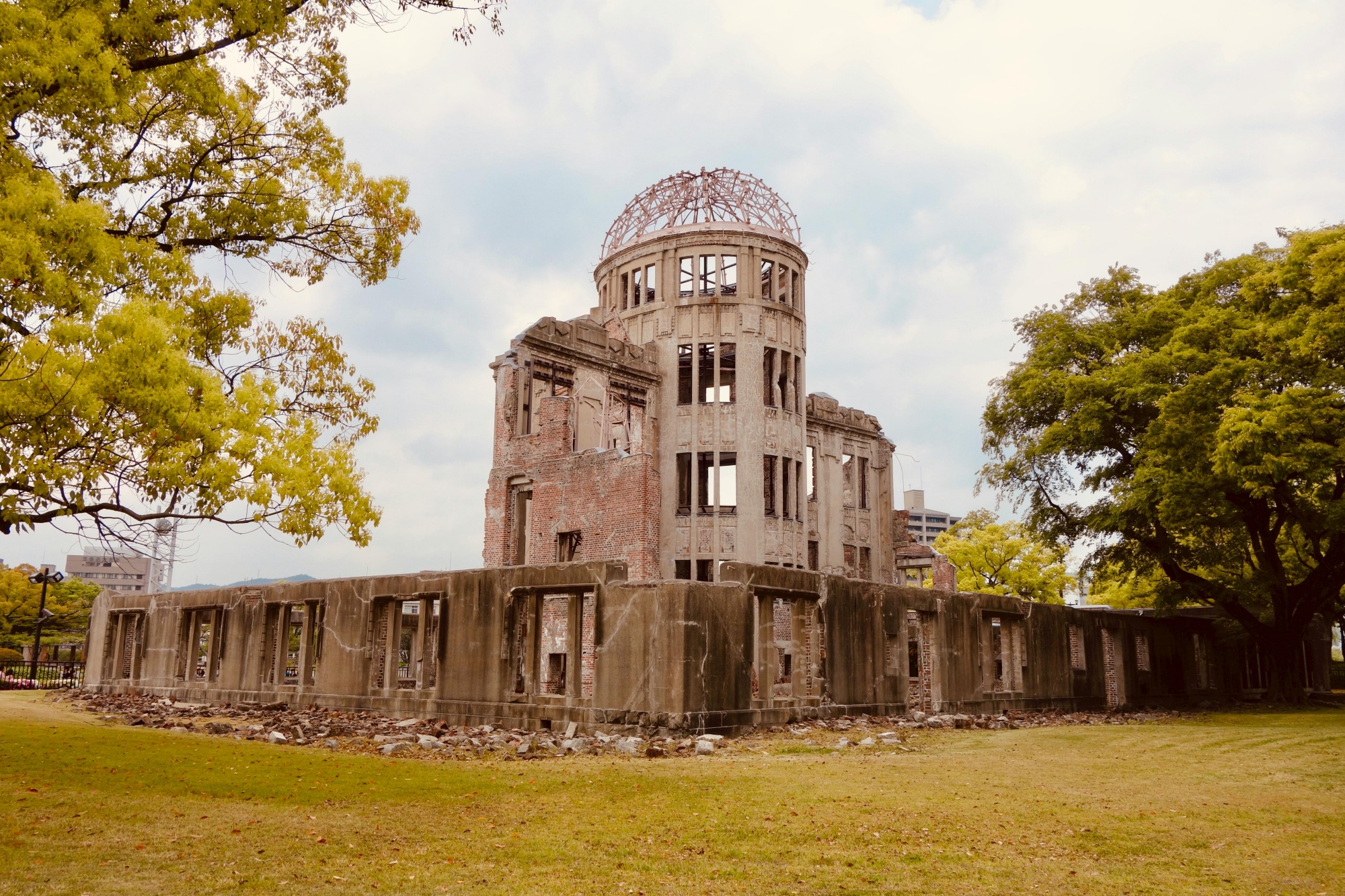


Hiroshima Peace Memorial
Aug 7, 2025 3:33 PM
Acclaimed Biographer Charlotte Jacobs on Atom Bomb Survivor and Renowned Antinuclear Weapons Activist Setsuko Nakamura Thurlow
Humanity and nuclear weapons cannot coexist. Setsuko Nakamura Thurlow, Antinuclear Weapons Activist
“Little Boy” was the innocuous code name for the uranium-235 atomic bomb that fell on Hiroshima, Japan, on August 6, 1945, at 8:15 AM, Japan Standard Time. The bomb exploded about 2,000 feet above the ground with the force of 20,000 tons of TNT and incinerated much of the once thriving city.
At detonation and in the ensuing months, Little Boy killed more than 100,000 people, most of whom were civilians. By the end of 1945, an estimated 140,000 people had died, although exact figures could not be determined because of the chaos and because the firestorm had cremated so many people.
Reports to the American public following the atomic bombings of both Hiroshima and then Nagasaki contained little information on how the destructive new devices affected the human beings trapped under the mushroom clouds. Indeed, the US government celebrated the new weapons while suppressing reports on agonizing radiation injuries and poisoning, complicated thermal burns, birth defects, illnesses, and other novel and horrific consequences of nuclear war. And, after the war ended, the military closed the atomic cities to reporters.
Related stories
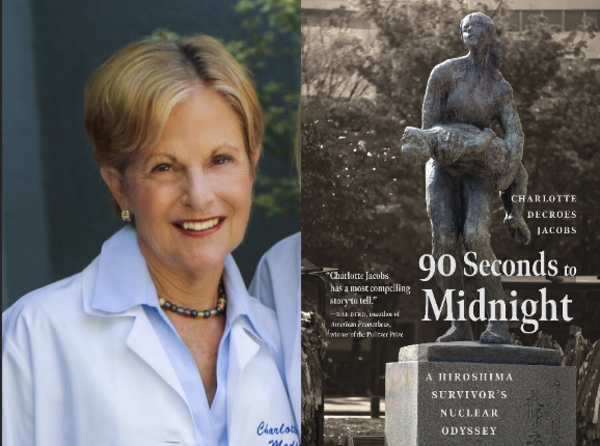
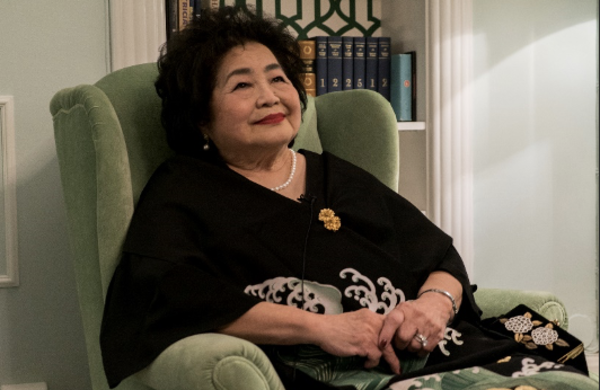
But from the fiery rubble of the devastated Hiroshima, a special witness arose who put a human face on the terrible reality of nuclear war: Setsuko Nakamura Thurlow. And, in her new book 90 Seconds to Midnight, A Hiroshima Survivor’s Nuclear Odyssey (Potomac Books, University of Nebraska Press, Melbourne University Publishing), acclaimed biographer Charlotte Jacobs recounts the inspiring story of Setsuko who survived the world’s first nuclear attack and became a courageous activist and moral force for the abolition of nuclear weapons.
As Jacobs recounts, Setsuko Nakamura, a talented 13-year-old student, was rescued from the ruins of the Japanese military headquarters where she had just begun work decoding and, where after the atomic blast, many of her schoolmates burned alive. As she wandered in the immediate fiery aftermath of the bombing, she saw the terrible human cost of the new bomb. She saw the burnt and dismembered remains of her fellow citizens and the stunned immediate survivors with clothes torn away, ribbons of skin hanging from bones, eyes dislodged from sockets, entrails bursting from the eviscerated. And she saw many people who were mangled and burnt beyond recognition but alive and begging for water, for solace. She and two other girls comforted the injured and dying.
After the horror of the destruction of her city, her home, her friends and fellow citizens of Hiroshima, Setsuko Nakamura Thurlow set out to warn the world about the terrible human cost of nuclear war. Biographer Jacobs details Setsuko’s rise to become a leading voice of the antinuclear weapons movement. Setsuko’s witness through the decades illuminated the humanitarian threat of the diabolical arms and moved the international discussion away from deterrence to the immense human cost of nuclear war. Now in her nineties, Setsuko continues her work for a more peaceful world free of nuclear arms.
Charlotte Jacobs, M.D. is the Ben and A. Jess Shenson Professor of Medicine (Emerita) at Stanford University. Her two previous acclaimed biographies include Jonas Salk, A Life and Henry Kaplan and the Story of Hodgkin’s Disease, which was widely praised and named one of the “Five Best Books” on doctors’ lives by the Wall Street Journal.
Jacobs generously responded by email to a series of questions on her new biography, 90 Seconds to Midnight.
Robin Lindley: Charlotte, you’re renowned for your biographies of prominent physicians Jonas Salk and Henry Kaplan. How did you come to write an extensive biography of Hiroshima survivor and beloved activist Setsuko Nakamura Thurlow?
Charlotte Jacobs: In 2015, Jonas Salk: A Life was published. I had enjoyed the experience so much that I decided to write one more biography. With whom did I want to spend the next five to seven years? As opposed to my two prior biographies, in which I wrote about physician-scientists who had made exceptional medical advances, this time I knew what I wanted to write about, but not whose story I wanted to tell.
That year, nine countries held almost 16,000 nuclear weapons. Adding to that danger was the number of “broken arrows”—incidents in which a nuclear weapon is lost or accidentally detonated. The risk to the human race was (and still is) enormous. Most of the public seemed oblivious. I had five grandchildren (now eight). What role could I play as a biographer? I decided to write the story of someone who had survived the first atomic bombing—a hibakusha—in attempts to educate myself and the general public.
When I started my search for a subject, I hoped to find someone living in the United States who spoke English, who would tell me her/his story. I contacted a number of Japanese-American agencies, but none of the few remaining hibakusha were willing to talk about that harrowing event. One day, I came across a speech by Setsuko Nakamura Thurlow, a Japanese-Canadian living in Toronto. I was mesmerized. I reached out to her, and on March 7, 2017, I got a call from Setsuko. “I’ve been hoping someone would tell my and my family’s story,” she said. Two months later, I flew to Toronto to meet a remarkable woman with whom I would be engaged for the next eight years.
When it comes to nuclear weapons, the stakes are high—the survival of mankind. I felt that Setsuko Thurlow’s relentless striving to protect the world from an unspeakable fate would provide a heartrending, yet uplifting narrative.
Robin Lindley: It’s certainly heartrending and inspiring. Can you please remind readers of the human toll of the Hiroshima atomic bomb and the area of destruction?
Charlotte Jacobs: At 8:15 on the morning of August 6, 1945, Colonel Paul Tibbets, pilot of the B-29 Enola Gay,gave orders to release the first atomic bomb, named “Little Boy,” over Hiroshima. The temperature on the ground reached seven thousand degrees Fahrenheit. Almost every human being within a five-hundred-yard radius was incinerated in an instant: all the doctors, nurses, and patients at Shima Hospital, three thousand troops on the East Parade Ground, four hundred children at Honkawa Elementary School, and eighteen hundred teens mobilized to the city center to create firebreaks. An enormous fireball annihilated five square miles around the bomb’s hypocenter.
A thunderous, violent shock followed the flash, shooting bullets of glass, wood splinters, and tile fragments through the air in all directions, slashing and impaling anyone in their paths. The blast hurled people into the air, blew them through glass windows, bashed them against walls, trapped them under falling buildings. The blast wave rebounded off the surrounding mountains, demolishing ninety percent of the buildings and spreading fire in all directions. Incinerated, lacerated, crushed, eviscerated, beheaded, approximately eighty thousand perished in an instant. Most were women and children.
Robin Lindley: Thank you for that vivid description. Setsuko was 13 years old when the atom bomb hit Hiroshima. How did she survive and what did she witness?
Charlotte Jacobs: At 8:15 on August 6, Setsuko and twenty-nine girls gathered at Army Headquarters one mile from the hypocenter to begin decoding messages for the Imperial Army. She had just pledged loyalty to the Emperor when she saw a blinding flash and sensed she was floating, then falling. When she regained consciousness, she found herself pinned under the collapsed building. In the darkness, she heard her classmates’ faint cries for help. Someone touched her shoulder. “I’m trying to free you,” a man said. "Keep pushing. See the light coming through that opening? Crawl towards it as quickly as you can.” When she squeezed through the opening, she found a blackish-brown cloud enveloping the area. Frantic screams erupted. The building was ablaze. Within minutes, it was reduced to ashes. Twenty-seven classmates had just been burned alive while she watched helplessly.
Setsuko and two surviving students fled to the hills, joining a column of people with charred skin hanging from their arms, entrails protruding, faces melted. When they reached a military drill ground, they found thousands dead and dying with no help in sight. "Water please," people begged. Setsuko and her two classmates soaked their blouses in a stream and squeezed water into the mouths of the injured. That was all they could do. At dusk, the three girls sat on the hillside and watched Hiroshima burn. At dawn, Setsuko saw nothing but a great void. Hiroshima had disappeared.
Almost miraculously, her parents had survived. They located her on the drill ground and took her to a friend’s summer home. Inside lay her sister Ayako, her once beautiful face now a disfigured mass. Next to her lay Eiji, Setsuko’s precious four-year-old nephew, burned beyond recognition. Days later, she watched soldiers throw the two into a ditch and cremate them, turning their bodies with bamboo poles as they chatted. For years, it troubled Setsuko that she had witnessed this gross violation of human dignity with no tears. She felt nothing. And that was the worst feeling of all.
In writing 90 Seconds to Midnight, I was intrigued by a central question about Setsuko’s character: How could a thirteen-year-old girl who crawled out of a collapsed building to see her classmates being burned alive, then to escape to the hillside where she found hundreds of bloody, mangled people begging for water not yield to despair? How could she not languish in sorrow when her cherry blossom life ended in an instant, when she lost so many people she cherished?
Since early times philosophers and clergy have pondered how one can live a meaningful life amid pain and destruction, how the human spirit can rise up in the face of overwhelming adversity and indifference. Holocaust survivor Viktor Frankl wrote in Man’s Search for Meaning that one can’t avoid suffering but can choose how to cope with it and move forward with renewed purpose. Setsuko did not succumb to her sorrow. She took her trauma, processed it and emerge with a remarkably positive life force.
Robin Lindley: She’s a figure of unusual strength. As a physician, did you have a special interest in the medical consequences of the atomic bombing that led to your interest is Setsuko’s story?
Charlotte Jacobs: The medical consequences of the atomic bombing did not influence my choice of Setsuko Thurlow as the subject of a biography. I was interested in learning about them, however. For example, Dr. Michihiko Hachiya, director of Hiroshima Communications Hospital, located a mile from the hypocenter, noted that many patients recuperating from burns and wounds suddenly developed vomiting and diarrhea, sometimes up to forty stools per day. Dr. Hachiya assumed this was an outbreak of dysentery, but that didn’t explain the hair loss, bruising, painful mouth ulcerations, and bloody urine. Some patients spontaneously recovered; others, tormented by high fevers and shaking chills, died days later.
On postmortem examinations, Dr. Hachiya found massive internal bleeding in the abdominal cavity, lungs, wall of the heart, and brain. Once he obtained a microscope and examined blood smears, he discovered a profound reduction in the platelet and white blood cell counts. That explained the spontaneous hemorrhages and inability to fend off infections. The bone marrow, the body’s factory for blood cell production, had been severely damaged. The closer to ground zero, the more likely patients were to be afflicted, suggesting that radiation exposure from the atomic blast caused what he called “radiation sickness.”
Setsuko’s beloved aunt and uncle, as well as several classmates, died from excessive radiation exposure. When she started losing her hair and found blood in her urine, she expected that she, too, would die. Within a month after the bombing, the death toll reached 160,000, many having died from what was called “A-bomb disease.” Setsuko miraculously recovered.
Robin Lindley: Setsuko was one of the surviving hibakusha after the atomic bombing. Who were the hibakusha and didn’t they face ostracism and discrimination in Japan after the war?
Charlotte Jacobs: Those who survived the atomic bombing of Hiroshima and Nagasaki were called hibakusha, meaning “explosion-affected person.” (Later the term was expanded to include individuals affected by nuclear exposure, including a nuclear disaster.)
Hibakusha experienced social alienation and discrimination. Some citizens referred to them as “atomic cripples” since they always seemed to be tired and sick. Some thought that these sequelae from radiation were contagious; others thought hibakusha carried genetic defects which would increase the chance of bearing deformed children. Employers avoided hiring them, and marriage bureaus deemed them unacceptable, resulting in social alienation and discrimination.
Atomic bomb survivors tried to hide their identity; they no longer admitted exposure to radiation, no longer talked about their harrowing experiences, and thus no longer received consolation from others. Nevertheless, hiding was almost impossible for those marred by large disfiguring scars, called keloids. Treated like untouchables, they disappeared from society, resulting in isolation and overwhelming loneliness.
Robin Lindley: How did Setsuko come to leave Japan and travel to Canada after the war?
Charlotte Jacobs: In 1954, Setsuko graduated from Jogakuin University with a degree in English literature. Although most classmates planned to wed, she eschewed an arranged marriage. Her college president thought her well-suited for a career in social work. Setsuko had just accepted a scholarship to study at Lynchburg College in Virginia when she fell in love, throwing her life into turmoil.
The summer before graduation, Setsuko had volunteered to help build a community center in a remote coal mining town. There she met James Thurlow, a Canadian missionary serving in Japan. Jim was attracted to this ingenious, committed woman who almost sparkled when she talked. Setsuko found herself drawn in by this gentleman who held strong convictions about human rights and the status of women. What may have started as a flirtation evolved into a deep attachment. Despite her parents’ initial objection to an inter-racial marriage, Jim and Setsuko married after her year in Lynchburg. The newlyweds moved to Toronto where Setsuko entered a master’s program in social work, and Jim worked toward a PhD in American History.
Robin Lindley: Setsuko studied and practiced social work. What led her to publicly share her story of the Hiroshima bomb and tirelessly work for the abolition of nuclear weapons?
Charlotte Jacobs: Jim and Setsuko found Canadians indifferent toward nuclear weapons, only briefly roused when the Cuban Missile Crisis brought the United States and the Soviet Union to the brink of nuclear war. Most considered Hiroshima’s bombing an historical issue between the United States and Japan. Canada’s role in the Manhattan Project, supplying most of the uranium for that atomic bomb, wasn’t taught in school or disclosed by the media, nor was the fact that most First Nations men who worked in those uranium mines died of cancer. Each year, August 6 passed without any mention of Hiroshima’s anniversary. Busy with their two children and careers—Jim as Head of the History Department at Don Mills Collegiate Institute, Setsuko providing social services for immigrants—they were not yet prepared to act.
Then in May of 1974, they got a jolt: Canada planned to sell a nuclear reactor to India, providing them with the means to make an atomic bomb. The Thurlows decided the time had come to make nuclear weapons a prominent public issue. They formed Hiroshima-Nagasaki Relived (HNR), a group of socially-conscious professionals who set out to educate the public. They called MPs, placed antinuclear proliferation ads in local, then international newspapers, gave press interviews, organized a Citizens March to Ban the Bomb, and held an exhibition of Hiroshima and Nagasaki photos at Toronto City Hall. HNR hoped to stir the public to action by enlightening them about the consequences for individuals and their families. As a witness to the first atomic bomb, Setsuko had a story to tell. She began to perceive the special role she could, or rather should, play.
Robin Lindley: Setsuko had triumphs and faced many obstacles in her long journey to see nuclear weapons banned. What were some of her successes and what propelled her to international fame?
Charlotte Jacobs: Setsuko Thurlow stepped onto the world stage in the mid-1970s. Recognizing that discussion of nuclear arms tended to be abstract and technical, she resolved to tell her harrowing story.
Although she conducted her work through a number of NGOs, she remained a solo activist, giving thousands of addresses and interviews worldwide. Before long, she became a familiar face in the antinuclear movement. At times, however, her prominent role provoked hostility: hate mail, death threats, a bomb scare. That had to change. And it did when she joined the International Campaign Against Nuclear Weapons (ICAN).
Disheartened by the slow progress in nuclear disarmament, Malaysian obstetrician Dr. Ron McCoy, former co-president of the International Physicians for the Prevention of Nuclear War (IPPNW), had concluded that they needed a different tactic. The International Campaign to Ban Landmines, founded by peace activist Jody Williams, had led a successful effort to prohibit the use of landmines resulting in the Anti-Personnel Mine Ban Treaty. Why not model their approach? McCoy proposed a new organization--the International Campaign to Abolish Nuclear Weapons (ICAN). This global coalition of nongovernmental organizations—eventually 400 NGOs worldwide--was launched in 2007. Its goal was to stigmatize, prohibit, and eliminate nuclear weapons.
Survivors’ testimonies became the cornerstone of its campaign. Now Setsuko Thurlow was invited to almost every major conference and eventually summoned to the United Nations— the seat of power for achieving any binding worldwide antinuclear agreement. In an address at the UN General Assembly in 2008, she proclaimed: “Humanity and nuclear weapons cannot coexist.” With what became a rallying call for antinuclear activists, she helped shift the international debate from deliberations on the number and strength of nuclear warheads to the humanitarian consequences of their use, a concept that had been missing from most political discussions and treaty negotiations. She pressed world leaders to condemn nuclear weapons and confronted those who opposed her. Her tenacity encouraged non-nuclear weapon states and activists to carry on despite numerous setbacks.
On March 27, 2017, she gave the opening remarks at the UN where delegates from 130 states gathered to craft the Treaty on the Prohibition of Nuclear Weapons (TPNW). On July 7, the TPNW was adopted by 122 countries. In her final comments to the UN General Assembly, Setsuko said, “This is the beginning of the end of nuclear weapons.” To go into force, it now had to be ratified by 50 states. That same year ICAN won the Nobel Peace Prize.
Robin Lindley: Setsuko was asked to jointly accept the Nobel Peace Prize on behalf of ICAN in December of 2017. Why?
Charlotte Jacobs: From the start, a major centerpiece for ICAN had been a group of hibakusha. Setsuko Thurlow came to be regarded as a moral voice of the antinuclear movement. She took the misery inflicted upon her by the atom bomb and converted it from a passive into an active force. “I don’t want your sympathy,” she repeatedly said, “I want your action.” She had been pivotal in shifting the international discussion of nuclear arms from their necessity for security and deterrence to their catastrophic ramifications for mankind—the key in creating the United Nations landmark Treaty on the Prohibition of Nuclear Weapons (TPNW). ICAN leadership asked her to share the Nobel Peace Prize acceptance speech with Beatrice Fihn, ICAN’s executive director.
Many considered it to be one of the finest Nobel Peace Prize speeches. The stirring, poignant, ending would be quoted repeatedly: “When I was a 13-year-old girl, trapped in the smoldering rubble, I kept pushing. I kept moving toward the light. And I survived. Our light now is the Ban Treaty. To all in this hall and all listening around the world, I repeat those words that I heard in the ruins of Hiroshima: ‘Don’t give up. Keep pushing. Keep moving. See the light? Crawl towards it.’” The audience rose in a single ovation as if propelled from their seats by a crashing wave.
Robin Lindley: Nuclear weapons were declared illegal in 2021, in part because of the work of Setsuko with many other activists and world leaders. What happened? I don’t think many readers realize that these weapons are now illegal under international law. And the US has thousands of these weapons and is still developing new destructive nuclear devices.
Charlotte Jacobs: On July 7, 2017, the Treaty on the Prohibition of Nuclear Weapons (TPNW) was adopted by 122 countries. The Treaty includes a comprehensive set of prohibitions on participating in any nuclear weapon activities: not to develop, test, produce, acquire, possess, stockpile, use or threaten to use nuclear weapons. It prohibits the deployment of nuclear weapons on national territory. States parties are obliged to prevent and suppress any activity prohibited under the TPNW undertaken by persons or on territory under its jurisdiction or control. It obliges States parties to provide adequate assistance to individuals affected by the use or testing of nuclear weapons, as well as to take necessary and appropriate measure of environmental remediation in contaminated areas under its jurisdiction. In other words, nuclear weapons were now illegal under international law, making it unlawful for TPNW States parties to possess, develop, deploy, test, use or threaten to use them.
The Treaty on the Prohibition of Nuclear Weapons opened for signature on September 20, 2017. Following the deposit with the Secretary-General of the 50th instrument of ratification of the Treaty on October 24, 2020, it entered into force on January 22, 2021.
The nine nuclear-armed states have not signed or ratified the TPNW, meaning that they are not legally bound by its provisions. The number of signatories continues to increase as does its influence. In November of last year, a UN resolution to form a Scientific Panel on the Effects of Nuclear War received overwhelming approval.
Robin Lindley: Setsuko’s focus is the human cost of this terrible crime against humanity, the atomic destruction of Hiroshima. Her words have moved many. How do you see the power of her witness and her intense focus on the humanitarian consequences of this horrific history?
Charlotte Jacobs: Critical historical events need a personal narrative, and Thurlow is such a storyteller for Hiroshima. 90 Seconds to Midnight recounts her ascent from the netherworld where she saw, heard, and smelled death and her relentless efforts to protect the world from an unspeakable fate. Knowing she would have to live with those nightmares, Setsuko turned them into a force to impel people across the globe to learn from Hiroshima, to admit that yes, it could happen again—and then to take action. As Rudyard Kipling wrote, “If history were told in the form of stories, it would never be forgotten.”
Robin Lindley: Where do we stand now in terms of nuclear arsenals and the steadfast position of the US and other nuclear powers that these weapons are required for deterrence?
Charlotte Jacobs: Currently nine countries have nuclear weapons: the United States Russia, China, France, the United Kingdom, India, Pakistan, Israel, and North Korea. Combined they have over twelve thousand nuclear warheads, almost 90% of which belong to the United States and Russia. Although they assert that these weapons are needed to prevent another nation from launching a nuclear attack, thus providing security by “deterrence,” the TPNW states consider this approach to be misguided and dangerous. Historian Eric Schlosser called it “a psychological threat to annihilate the population of another country.” Setsuko Thurlow debunked this assertion at every chance.
Robin Lindley: One of the most frightening aspects of your book for me is the risk of a nuclear weapon accident, and there have been many close calls in the past. What did you learn about this horrifying risk?
Charlotte Jacobs: In 2013, investigative journalist Eric Schlosser’s Command and Control: Nuclear Weapons, the Damascus Accident and the Illusion of Safety was published. It focused on a 1980 nuclear mishap when a repairman, working on a Titan II missile near Little Rock, dropped a socket which fell seventy feet, piercing the fuel tank. The Titan II exploded, ejecting the second stage and the warhead. After hours of frantic searching, the Air Force retrieved the warhead from a shallow ditch not far from the silo. Its safety mechanisms had prevented a nuclear discharge. The incident appeared on the Pentagon’s list of thirty-two reported “broken arrows,” defined by the military as “any incident in which a nuclear weapon is lost, stolen or inadvertently detonated.” Schlosser’s research revealed that more than a thousand had occurred in an eighteen-year period.
Around midnight on January 23, 1961, a B-52 bomber on routine surveillance mission from an Air Force base in Goldsboro, North Carolina, started losing fuel rapidly. As it spiraled toward the earth, it began to break apart. The B-52 carried two four-megaton hydrogen bombs. On one, the centrifugal force yanked a lanyard, which a crew member would pull to release the bombs in an attack situation. It proceeded through arming steps to detonate. The final switch, later found to be faulty, aborted a thermonuclear explosion hundreds of times more powerful than that in Hiroshima. An estimated 28,000 would have been annihilated in the Goldsboro area, and radioactive fallout would have spread up the East Coast, affecting millions.
Schlosser also recounted how the engines of a B-52 bomber, parked at a Grand Forks Air Force base, caught fire when a maintenance worker forgot to replace a nut on a fuel strainer. The fire could have detonated the twelve nuclear weapons on board. Luckily a strong wind blew the flames away from the bomb bay. A crew member later told Schlosser that if they had been assigned to a different parking space on the runway, the wind could have blown the flames toward the bomb bay, exploding the weapons and obliterating Grand Forks. “We were lucky, Schlosser was often told. “The problem with luck,” Schlosser pointed out, “is that eventually it runs out.”
Robin Lindley: You call your biography of Setsuko 90 Seconds to Midnight. What does the title mean?
Charlotte Jacobs: “90 seconds to midnight" refers to the setting of the Doomsday Clock, a metaphorical clock used by the Bulletin of the Atomic Scientists to indicate how close humanity is to a potential global catastrophe. Since 1946, when it was set at 7 minutes to midnight, the clock has been adjusted annually based on scientists' assessment of threats like nuclear war and climate change. I thought the image of a clock ticking in the background throughout book added to the suspense.
When my biography of Setsuko Thurlow ended, the clock was at 90 Seconds to midnight. In January of 2025, the clock was reset to 89 seconds, indicating that the world is moving closer to doomsday.
Robin Lindley: What can average citizens do to help in the movement to abolish nuclear weapons?
Charlotte Jacobs: What can the average citizen do to help? Read about nuclear weapons, follow the news, educate yourself. Setsuko often said to her audience, especially to students, “Don’t take my word for it. Read, learn, draw your own conclusions.” If you oppose nuclear weapons, support one of the many antinuclear organizations. If you are a writer, write about it. If you are a vocalist, sing songs about it.
The popularity of the movie “Oppenheimer,” based on Kai Bird and Martin Sherwin‘s Pulitzer Prize winning biography, American Prometheus, shows that the public does want to know more about nuclear weapons. One criticism about the movie is that it never showed what happened to the people living in Hiroshima. The movie is based on the biography of Oppenheimer and stays close to the book. 90 Seconds to Midnight tells the story of those living in Hiroshima.
Robin Lindley: At age 92, Setsuko is still active. Has she read your inspiring biography?”
Charlotte Jacobs: As you know, when writing about a living subject, unless it is a work of joint authorship, the relationship between the author and subject can be tricky. As a biographer, my charge is to portray my subject as accurately as possible—capturing her essence, her vital spark, how despite impediments, she lived and loved and accomplished as much as she did.
I did ask Setsuko to read some sections for accuracy, which was helpful, especially when it came to Japanese words or concepts. On the other hand, it did open up discussions on her part about what wasn’t included, what should be omitted, often centered around her concerns that something might be offensive to others.
On several occasions, she insisted I remove parts of the text that lauded her, concerned that friends and associates would think she was bragging. While I appreciated her modesty, I had to remind her that this was not a memoir. This was a biography written by me and of the importance of biography, quoting Henry Wadsworth Longfellow:
“Lives of great men (women) all remind us
We can make our lives divine
And departing leave behind us
Footprints on the sands of time.”
Robin Lindley: Do you and Setsuko have special plans for the observance of the 80th anniversary of the Hiroshima bombing?
Charlotte Jacobs: Your question reminds me of Jim and Setsuko’s observance of August 6 early in their marriage after moving to Toronto. The anniversaries of Hiroshima and Nagasaki’s destruction passed without public notice. So each year on August 6, Setsuko and Jim rowed a canoe onto the lake near their cottage. They bowed their heads in remembrance and prayed for the souls of those who had died. And Setsuko renewed her vow: Never again.
On August 6, Setsuko will be speaking at Hiroshima Nagasaki Day Coalition’s commemoration to be held at Toronto City Hall’s Peace Garden. The international press seeks her comments on every anniversary. Setsuko’s poignant story is as moving as ever, her passionate commitment never wanes.
As for me, I will find a quiet spot on the beach in Half Moon Bay and watch the waves crashing on shore, the sun peeping out from behind the fog, the green hills at my back, and pray that nuclear weapons never destroy this beautiful earth.
Robin Lindley: Thank you, Charlotte, for your generous and thoughtful comments on your timely and crucial biography of Setsuko Nakamura Thurlow and her work for a healthier and safer world. Her inspiring story deserves a wide audience. Best wishes.
Comments

Powered by RoundtableAn AI/DeFi-powered Enterprise Media Operating System. Learn more at Roundtable.io.© Roundtable 2026. By using this site you agree to the Terms of Use and Privacy Policy