

Jan 13, 2023 2:00 PM
Every gun that is made, every warship launched, every rocket fired signifies, in the final sense, a theft from those who hunger and are not fed, those who are cold and are not clothed.
Sometimes a little history is just what the doctor ordered.
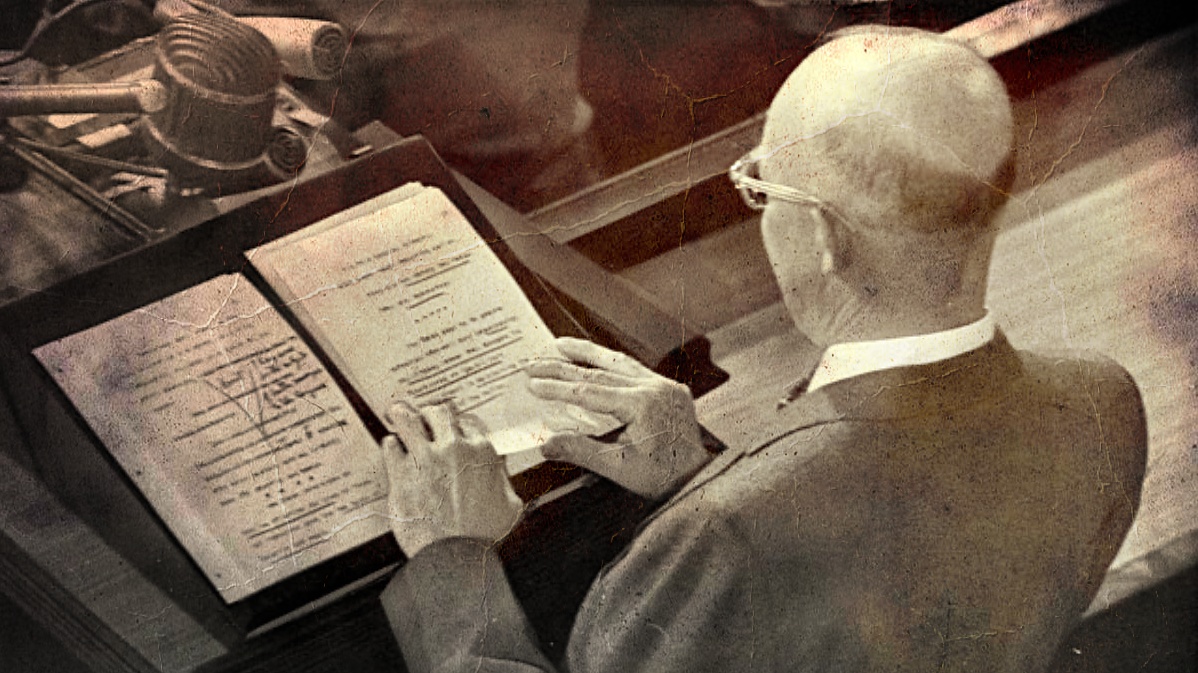
It was April 16, 1953, and Dwight D. Eisenhower, the former supreme commander of allied forces in Europe in World War II, had been president for just 12 weeks. That first great Cold War conflict, the Korean War, was still months away from ending when he addressed the American Society of Newspaper Editors at the Statler Hotel in Washington. It was also, as he saw it, his first presidential moment to speak to the American people and the subject he chose was not what you might have expected from the ultimate warrior of the second great conflict of the twentieth century. His focus was peace even as “the shadow of fear again has darkly lengthened across the world.”
At a moment when the Cold War was still ramping up, Eisenhower laid out the global situation in a strikingly grim and memorable fashion. If things didn’t improve, he told those editors, “The worst to be feared and the best to be expected can be simply stated. The worst is atomic war. The best would be this: a life of perpetual fear and tension; a burden of arms draining the wealth and labor of all peoples.” And then he added these classic words as a kind of yardstick for measuring his future presidency, perhaps all future ones:
“Every gun that is made, every warship launched, every rocket fired signifies, in the final sense, a theft from those who hunger and are not fed, those who are cold and are not clothed. This world in arms is not spending money alone. It is spending the sweat of its laborers, the genius of its scientists, the hopes of its children. The cost of one modern heavy bomber is this: a modern brick school in more than 30 cities. It is two electric power plants, each serving a town of 60,000 population. It is two fine, fully equipped hospitals. It is some fifty miles of concrete pavement. We pay for a single fighter plane with a half million bushels of wheat. We pay for a single destroyer with new homes that could have housed more than 8,000 people.”
Related stories
Eisenhower couldn’t have been more eloquent or on target. As it happened, though, the Cold War and the national security budgets that went with it only grew more excessive during his presidency. Almost eight years later, he would end it with a brief, classic “farewell address” to the American people in which he pointed out that “this conjunction of an immense military establishment and a large arms industry is new in the American experience.” He then issued a warning, the heart of his goodbye, and in doing so coined a term that has, for obvious reasons, never left us: “In the councils of government, we must guard against the acquisition of unwarranted influence, whether sought or unsought, by the military-industrial complex. The potential for the disastrous rise of misplaced power exists and will persist.”
And sadly, so it has, even decades after Eisenhower’s Cold War, which ended with the implosion of the Soviet Union in 1991. Yesterday, as TomDispatch regular, co-creator of the Costs of War Project, and military spouse Andrea Mazzarino describes in all-too-devastating detail, a staggeringly over-funded military-industrial complex is, to use Eisenhower’s phrasing, indeed stealing from “those who hunger and are not fed.” And irony of irony, as Mazzarino makes clear, that’s not just in the society at large but, believe it or not, in the military itself.
Comments

Powered by RoundtableAn AI/DeFi-powered Enterprise Media Operating System. Learn more at Roundtable.io.© Roundtable 2026. By using this site you agree to the Terms of Use and Privacy Policy