
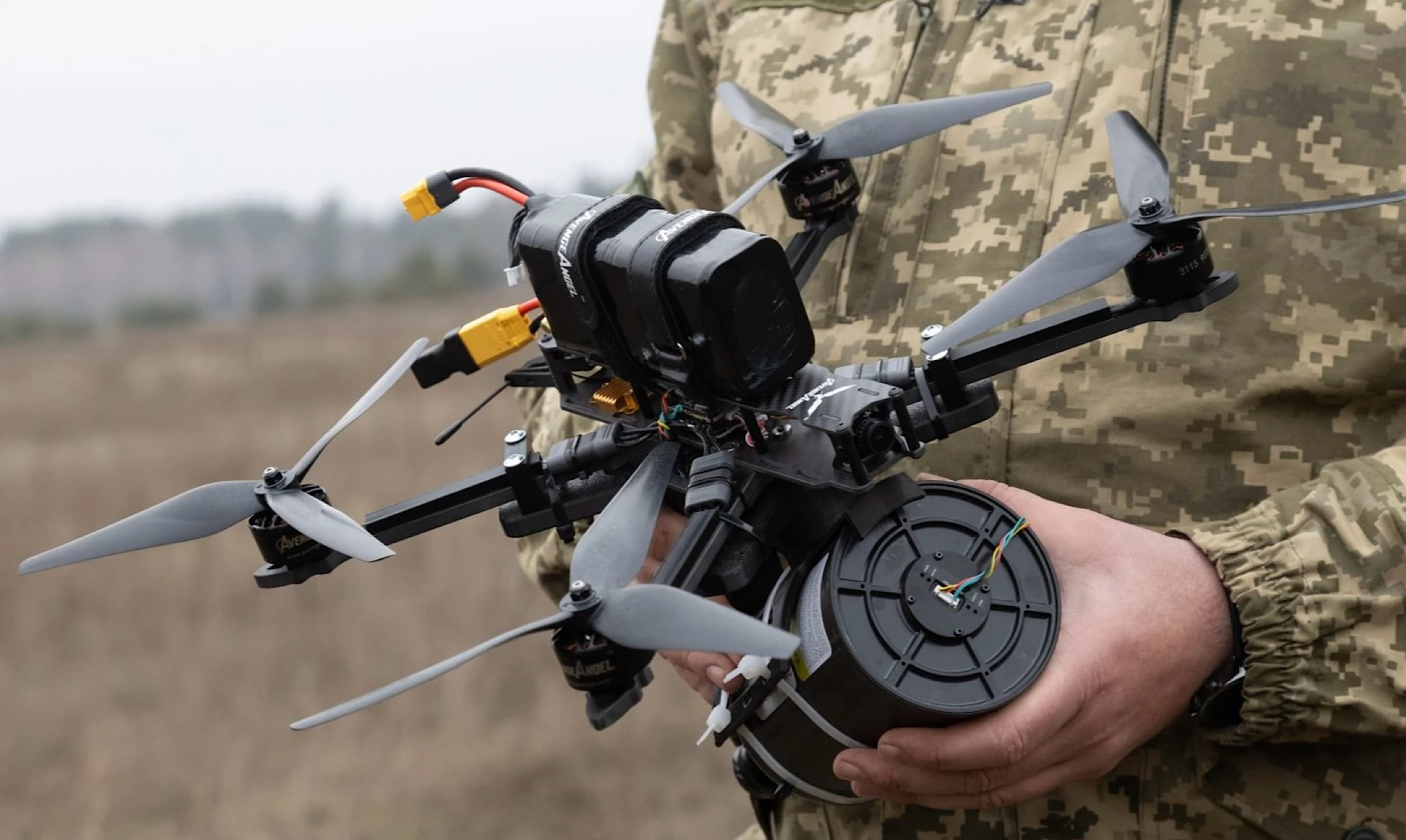
АрміяІнформ, CC BY 4.0, via Wikimedia Commons


The U.S. should negotiate reductions or at least spend our money as efficiently as possible in order to get more bang for the buck under today's changed conditions.
Aug 12, 2025 2:50 PM
Updated Aug 12, 2025 2:54 PM
The U.S. should negotiate reductions or at least spend our money as efficiently as possible in order to get more bang for the buck under today's changed conditions.
President Dwight D. Eisenhower, who had led allied forces in World War II, believed that our military policy should aim for "more bang for the buck."
To this end, Ike cut spending on conventional ground and naval forces while increasing appropriations for the Air Force and nuclear weapons.
Eisenhower's policy made sense because the United States and its NATO allies were unwilling to maintain the large standing armies that would have been necessary to cope with the immense ground forces of the Soviet Union. Billions of dollars spent on atomic bombs and bombers as well as intercontinental ballistic missiles could provide adequate security for less money that conventional forces.
The Soviet leaders were also interested in saving money, seeking "more ruble for the ruble."
Related stories
Eisenhower's idea that we should get our military security as efficiently as possible is obviously still valid, but today's world circumstances are very different. We need to find the least expensive way to achieve military security given these new circumstances.
Probably the major new development in military technology has been weaponized drones, the potential of which has been vividly demonstrated by the war that has been raging between Russia and Ukraine since 2022.
That many Americans have not recognized the revolutionary implications of weaponized drones is suggested by the way Congress has continued appropriating large amounts of money for large scale military equipment like aircraft carriers and expensive airplanes.
Aircraft carriers can cost about $12 billion each, but each one takes several years to build. Since 2020, Congress has appropriated about $2 billion to $2.5 billion per year to pay for building these carriers.
In the age of drones, we need to consider that a swarm of drones costing a few hundred dollars each might be able to take out an aircraft carrier with all of the military aircraft it is carrying — billions of dollars worth. Inexpensive drones could also destroy billions of dollars worth of military planes at air bases around the world.
Perhaps Congress is just preparing to fight the last war rather than ones we might find ourselves in in the future. And no doubt many of its appropriations are motivated, not by national security needs — thought those are always the reasons cited — but by the desire to bring lucrative purchase contracts and employment to aircraft producers and shipyards in representatives' home districts.
It is otherwise hard to explain why Congress keeps appropriating huge amounts for the purchase of a fighter jet that the Pentagon itself says it does not want.
Even the limited U.S. development of military drones has been focusing on very expensive ones, ignoring Ukraine's focus on producing hundreds of thousands of drones costing only a few hundred dollars each.
Merely spending a lot of money does not necessarily produce desired results. I have invented a word to make this point. Appropitiation: attempting to solve a problem merely by dedicating a lot of money to it, unsuccessfully.
Spending a relatively small amount of money can sometimes be combined with creative planning to achieve a very large result.
A dramatic example of this point can be found in the 9-11 attack on the United States. Al Qaeda spend an estimated $400,000 to $500,000 to prepare and carry out the attack, whereas the attack cost about $33-$36 billion (with a 'B"!) in losses, repairs and cleanup during the following year.
Throw in the $4-$6 trillion (with a "T"!) the U.S. spent on the subsequent Afghanistan and Iraq wars, and by the late senator Everett Dirksen's standards we are talking some real money!
As I have suggested elsewhere, ideally the U.S. should negotiate mutual reductions in our military budgets with potential enemies, releasing immense amounts of money for more constructive purposes. But if we cannot do that, we should at least spend our money as efficiently as possible in order to get more bang for the buck under today's changed conditions.
Comments

Powered by RoundtableAn AI/DeFi-powered Enterprise Media Operating System. Learn more at Roundtable.io.© Roundtable 2026. By using this site you agree to the Terms of Use and Privacy Policy