
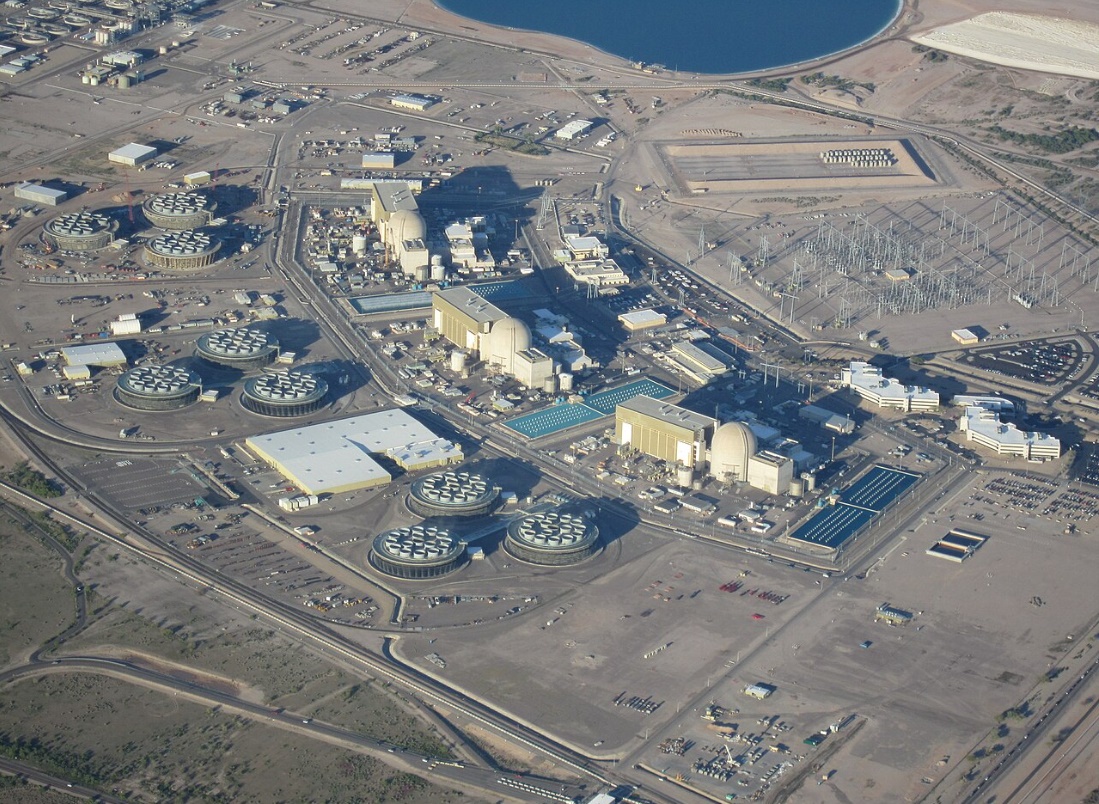
Palo Verde Nuclear Power Plant Wikimedia


Why Does Nuclear Power Exist? Follow the Money. You'll Find the Answer.
Sep 16, 2024 1:59 AM
Nuclear power is neither safe nor economically sensible. It can't hold a candle to truly renewable, sustainable energy sources when it comes to cost or viability.
The City of Los Angeles and its Department of Water and Power (LADWP) are not just casual participants in the energy marketplace; they are deeply entrenched in one of the largest nuclear power operations in the country—Palo Verde, nestled in the sun-scorched Arizona desert on the ancestral lands of the Hohokam, Patayan, and Yavapai people. This isn't merely a matter of importing a portion of the city's electricity from a distant nuclear plant. It's a legacy of ownership, long-term investments, and, quite frankly, an unsettling partnership that Los Angeles must reckon with.
What’s alarming is that many residents of Los Angeles are unaware of the fact that the city and LADWP own a 10% stake in Palo Verde. This isn't some negligible footnote in the city's energy portfolio. No, it’s a deliberate investment decision, forged in the shadow of the 1979 Three Mile Island disaster—a disaster that should have opened the eyes of every public official to the dangers of nuclear power. And yet, despite public outcry and clear warnings about the risks, the Los Angeles City Council chose to plow taxpayer money into this hazardous venture, helping to finance Palo Verde’s construction. This was a moment when the world was beginning to understand the deadly consequences of nuclear energy, yet Los Angeles invested in the wrong future.
Let’s get one thing clear: nuclear power is neither safe nor economically sensible. It can't hold a candle to truly renewable, sustainable energy sources when it comes to cost or viability. Look no further than the latest data from Lazard, a highly respected financial advisory firm, which shows the stark contrast in costs. Utility-scale solar power costs less than $1,000 per kilowatt (KW), while nuclear energy lumbers along with costs ranging from $6,500 to $12,250 per KW. Just take a look at the fiasco unfolding at the Vogtle nuclear plant in Georgia, where new reactors came online seven years behind schedule at a staggering cost of $35 billion—more than double the original $14 billion estimate. The energy produced there is expected to cost around $10,300 per KW. In other words, nuclear power is nearly ten times more expensive to build than solar on a per-KW basis.
In a region grappling with chronic water scarcity, Palo Verde evaporates 27,000 gallons of water per minute to prevent its reactors from overheating.
Related stories
So why does the nuclear industry persist? It’s simple: it makes money for a select few, all while placing the public’s safety and our planet’s future in peril. Instead of channeling billions of taxpayer dollars into meaningful infrastructure or truly renewable energy projects that could help tackle the climate crisis, we continue to pour money into this high-risk, financially untenable industry. And this isn’t just poor policy; it’s an ethical failure.
Palo Verde stands as a glaring example of the inherent contradictions in the nuclear industry. This facility alone generates more high-level radioactive waste than any other nuclear plant in the country. And unlike most nuclear plants, which are built near large bodies of water to keep their reactors cool, Palo Verde is located in one of the driest regions of the United States. Its cooling system relies on an eye-popping 27,000 gallons of treated wastewater—yes, sewage—from across Arizona every single minute. Let that sink in: in a region grappling with chronic water scarcity, Palo Verde evaporates 27,000 gallons of water per minute to prevent its reactors from overheating.
But this goes beyond electricity generation. Los Angeles’ involvement in Palo Verde is a reflection of willful ignorance—of the environmental damage, of the moral compromises, and of the exploitation of Indigenous lands that come with nuclear power. In a region that has suffered centuries of colonial exploitation, the City of Los Angeles’ investment in this plant only perpetuates a long history of environmental degradation and social injustice. When a city like Los Angeles invests in nuclear power, it isn’t just buying electricity—it’s buying into a system that profits from risk, destruction, and exploitation.
The City of Los Angeles didn’t just stumble into this relationship with Palo Verde. It was a key player in the plant’s creation. And every kilowatt of energy that flows from Palo Verde to Los Angeles comes with a heavy cost—radioactive waste that will last for millennia, drained water resources in an already drought-stricken region, and a reminder of the high price we pay for nuclear power.
It’s time for Angelenos to take a hard look at what kind of energy future we want. We stand at a crossroads. Do we continue down the path of dangerous, expensive nuclear energy, or do we seize the opportunity to lead the world in renewable energy? Picture Los Angeles covered in solar panels—on homes, apartment buildings, office complexes, parking lots, even sports arenas. The technology is here, and the potential is limitless. What we need is political courage. We need leaders with the vision and integrity to make this transition a reality.
The choice is ours. Do we cling to a legacy of radioactive waste and environmental harm, or do we create a future where Los Angeles becomes a global beacon for clean, sustainable energy? The answer should be clear.
Myla Reson
Myla Reson (along with Harvey Wasserman) co-hosts California Solartopia, heard Wednesdays from 5 to 6pm on Pacifica Radio Los Angeles KPFK 90.7 fm.
Comments

Powered by RoundtableAn AI/DeFi-powered Enterprise Media Operating System. Learn more at Roundtable.io.© Roundtable 2026. By using this site you agree to the Terms of Use and Privacy Policy