


Apr 19, 2024 4:27 PM
Updated Apr 19, 2024 4:29 PM
Jeremy Rifkin on Climate Change
Jeremy Rifkin’s recent book (The Age of Resilience: Reimagining Existence on a Rewilding Earth, 2022) is, as always, provocative. He first posits, plausibly, that the capitalist drive for steadily increasing efficiency led to the Industrial Revolution and its commodification and privatization of our environment. That, in turn, has led us to our present dilemma of climate change threatening to destroy our civilization, and indeed much of the natural world as well.
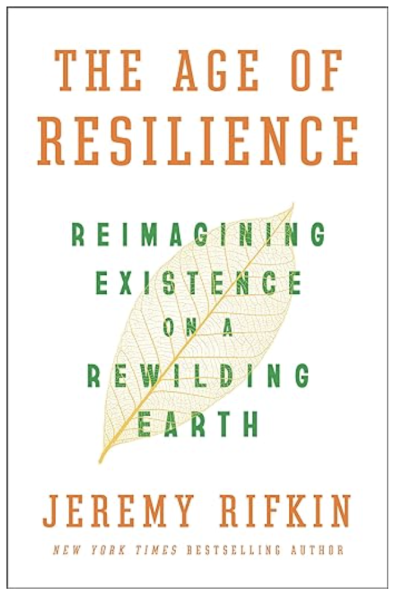
He proposes that we can escape this hellscape through fundamental changes in how we see ourselves in the world. From dominating and exploiting the earth, we should come to see ourselves as part of its complex ecology. Instead of increasing control of resources, we should be contributing to the resilience of the ecosystems of which we are part.
Several emerging trends can move us out of the industrial era and into the Age of Resilience. Infrastructure will be transformed by advances in digital communication that actually undermine capitalist concentration of power and promote both global and local responses to the challenges of climate change.
The present gulf between rural and urban America is being countered, he argues, by a growing move from cities back to rural and small town areas.
Related stories
Bioregional governance across national boundaries, such as in the Great Lakes or the Pacific Northwest, can make decisions for communities shaped by a common ecology, even when separated by borders. He cites examples in both regions.
Representative democracy, with its emphasis on maximizing individual autonomy, will increasingly make way for a more decentralized “distributed peerocracy,” whereby decision-making power will be in the hands of local communities. He cites the well-known example of participatory budgeting as pioneered in Porto Alegre, Brazil, as well as experiments in community control of schools and community oversight of police.
Ultimately, he says, we must move from a consciousness of ourselves as dominating nature, to “biophilia consciousness,” seeing ourselves as integral parts of nature and working to see it thrive, with us.
Rifkin is absolutely right about what we need to do to successfully confront the challenges of climate change. He concludes thus:
It is a long journey of epic proportions that is bringing our species back home once again, grounded and hopefully renewed and ready for the great struggle before us of reanimating the breath of life. The earth beckons. (p. 254)
Yet, for all he cites many intriguing initiatives and experiments that would move us in the right direction, it is too little and too late.
Climate scientists have long known, and have tried to tell us, what we must do to mitigate the worse effects of climate change. Many, even most of us understand, but some refuse to accept what is increasingly obvious in each day’s weather. Governments make audacious commitments, but fail to meet them when confronted by obstacles and resistance.
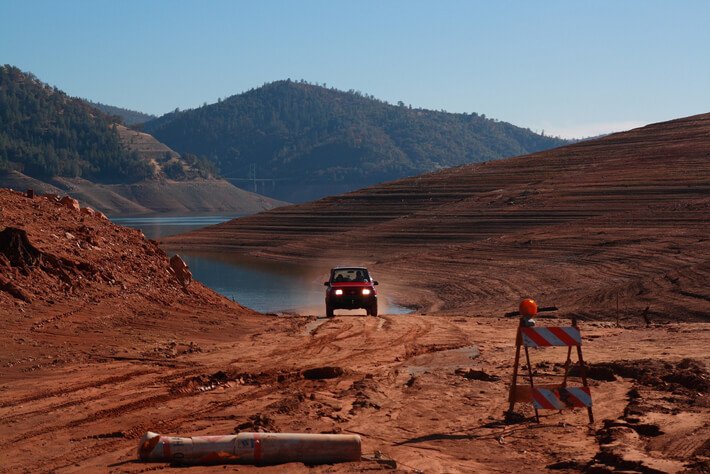
We are headed for a climate apocalypse. Vast regions, whole countries will be rendered uninhabitable by flood or drought. Millions, no, billions of people will be on the move, seeking succor where they can, and often met instead by hostility from those who still have a precarious hold on life. Maybe by that time the doubters will be convinced, but it will be too late for them, too. Such human society as survives will be increasingly dedicated to killing their neighbors inn order to take their land. Those not killed by climate change could be killed by nuclear war.
And of course the rest of life on earth, from the corals of the oceans to the elephants and lions of the African plains, will also die back.
But the earth will survive. After our species is reduced to scattered bands of hunter-gatherers, no longer capable of feeding climate change, millions of years of evolution will produce new life from whatever survives the apocalypse. We may hope that this new life will not make the same mistakes we humans did. But one of our mistakes could turn out for the best: extensive nuclear war could cause a “nuclear winter,” which would cancel out global warming.
So you see, there is hope.
Comments

Powered by RoundtableAn AI/DeFi-powered Enterprise Media Operating System. Learn more at Roundtable.io.© Roundtable 2026. By using this site you agree to the Terms of Use and Privacy Policy