
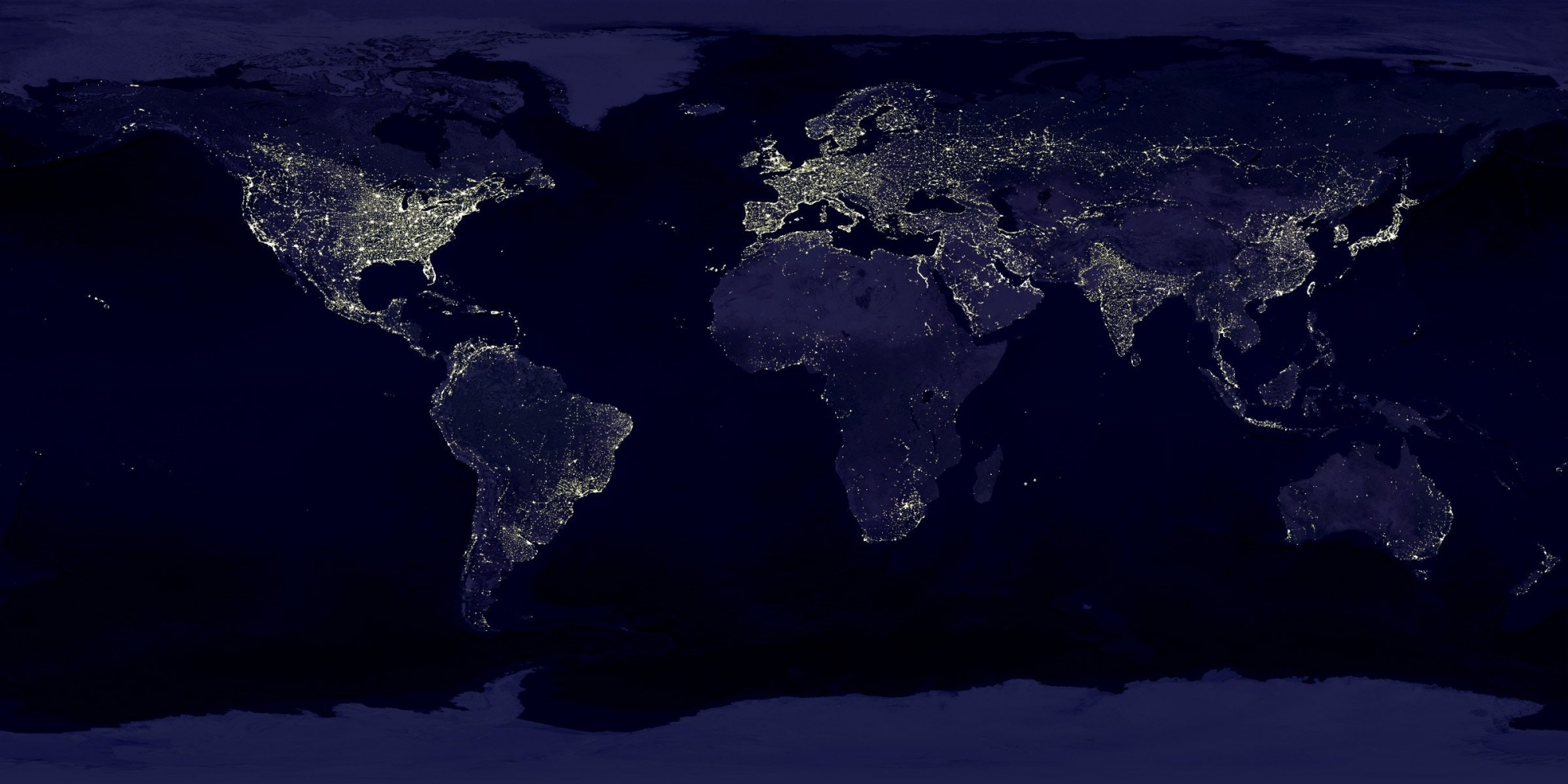


The Worldwide Grid is a far more reachable and critical goal for the money being spent on researching other clean energy technologies.
Oct 14, 2023 2:00 PM
Updated Feb 28, 2024 4:54 AM
All of the money being spent on hydrogen fusion, green hydrogen and space-based solar power would be much better spent on completion of the worldwide grid.
The New York Times recently noted that "space-based solar power, once a topic for science fiction, is gaining interest." But beaming solar energy down to earth from orbiting PV panels might best be left to science fiction.
Huge amounts of noxious gases, including carbon dioxide, would be put into the atmosphere by the rockets putting so many solar panels into orbit. We should use rockets, if at all, only for high value payloads for which there are no ground-based alternatives.
There is a vastly more attractive alternative. Space-based solar is not the only way to get around the awkward intermittency of locally produced solar energy.
Local availability of solar energy varies greatly thanks to nighttime, weather changes, and (especially) seasonal changes. The main advantage of space-based solar is that orbiting PV panels could be in sunlight nearly all of the time.
Related stories
But the sun is always shining on half of the earth. It has been clear to me since 1972 that nearly total reliance on solar energy will be possible if we connect the entire planet into a single electrical grid.
The PV panels on my own roof produce only one fifth as much monthly electricity mid-winter as they do in the summer. Storing enough locally produced electricity to handle nighttime demand is probably possible. Maybe we could even store enough to last a day or two of bad weather. However there is no way we could store enough to power us through a whole winter.
Fortunately, thanks to high voltage direct current (HVDC) wires, electricity need not be locally produced. Winter in the U.S. is summer in South America, and vice versa. A north-south grid connecting North, Central, and South America would allow solar energy produced where it is plentiful to be shipped to the other hemisphere where it is needed, year round. A similar north-south grid could also connect Eurasia, the Middle East, and Africa-Australia. No long-term storage would be necessary.
Adding connections between eastern and western hemispheres would allow electricity produced where it is daytime to be shipped to where it is nighttime, reducing even the short term need to store electricity.
The resulting worldwide grid can be built using existing technology. In fact its elements are already being built by entrepreneurs taking advantage of new technologies to build bigger and more efficient grids.
Once these grids are interconnected, we will have the worldwide grid. The only question is: how soon?
Unlike the worldwide grid, all of the green alternatives to it would require substantial breakthroughs in technology.
Controlled hydrogen fusion is still far from being a practical energy source. Long term storage by using solar power to produce efficiently the needed hydrogen, and then burning the hydrogen or running it through fuel cells, is still only speculative.
And as the New York Times article makes quite clear, there are tremendous technical, economic, and legal obstacles to putting huge numbers of solar panels into orbit.
Alternatives to a worldwide grid might turn out to work, but to get to that point would require huge amounts of money. Decisions whether to support this research, which might get nowhere, should consider the "opportunity costs of such expenditures." These are "the potential benefits that an individual, investor, or business misses out on when choosing one alternative over another."
Why not spend this money, instead, on building the worldwide grid?
Lack of adequate grid is currently a principal barrier to faster expansion of solar energy. The more money available for grid building the faster it will happen. If all of the money currently being spent on research into hydrogen fusion, green hydrogen, and space-based solar power were spent instead hastening completion of the worldwide grid, it would be better spent.
Alternatives to a worldwide grid would depend on future technological breakthroughs. Why not put our money on a sure thing?
Comments

Powered by RoundtableAn AI/DeFi-powered Enterprise Media Operating System. Learn more at Roundtable.io.© Roundtable 2026. By using this site you agree to the Terms of Use and Privacy Policy