
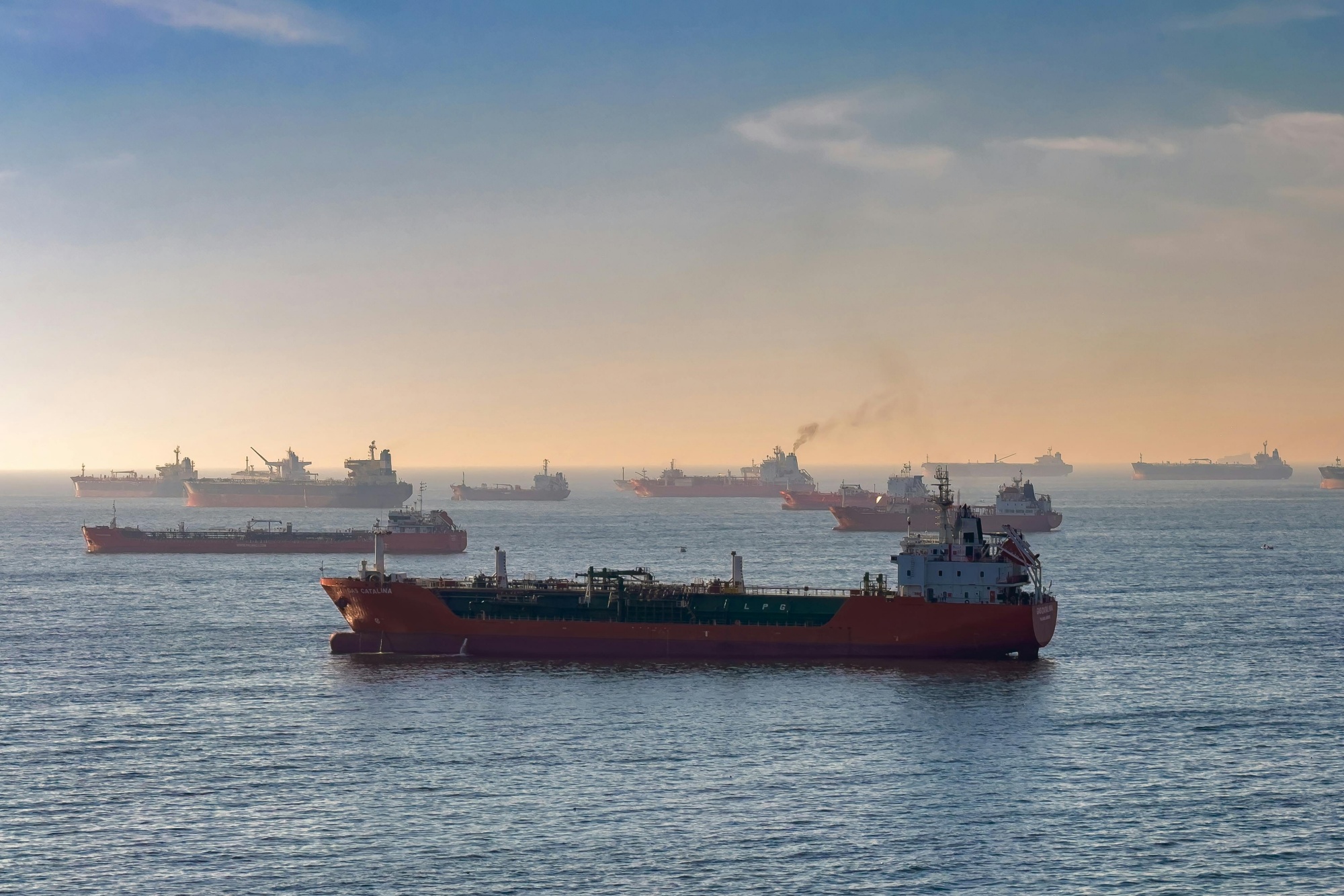
Photo by İrfan Simsar


Renewable power like wind and solar is the most cost effective way to supply our energy needs. I’ll focus on how the Iran war sharpens our realization of this.
Apr 16, 2026 9:33 PM
Renewable power like wind and solar is the most cost effective way to supply our energy needs. I’ll focus on how the Iran war sharpens our realization of this.
Admittedly, the PBS News Hour and its hosts have a leftist or progressive slant, and it’s probably the main reason that the Trump administration recently ended its financial support of this PBS news program. One of the News Hour’s regulars, William Brangham, also hosts PBS’s "Horizons." And he recently welcomed two long-time advocates of “clean energy,” Bill McKibben, of whom I’ve written before; and Jigar Shah, who headed President Biden’s loan programs in the Department of Energy and dispensed billions of dollars in loans for renewable energy projects.
Since I’ve already made the case for President Donald Trump being our chief climate-crisis denier, I’ll not repeat the charge here except to say that McKibben makes the same accusation: “the biggest impediment” to transitioning to clean energy “is the occupant of the White House, who has a corrupt relationship with the oil and gas industry” and possesses “an unwavering hatred of renewable energy.”
Moreover, McKibben adds that “the Trump administration has tried to shut down wind farms that were 90% complete off the Atlantic seaboard. . . . U.S. taxpayers are going to get to spend one billion dollars buying back the lease rights to wind power . . . off the Atlantic coast to make sure that it never gets captured.” And Trump is doing this because he “literally told the heads of the big oil companies that, if they gave him one billion dollars for his campaign, he would do whatever they wanted. And so he has.”
Instead of going on about Trump’s malfeasance, I’ll concentrate on the insistence of both Brangham’s guests that renewable power like wind and solar is the most cost effective way to supply our energy needs. And I’ll focus on how the Iran war sharpens our realization of this.
Related stories
As McKibben states, “Five years ago or so, we crossed some invisible line where it became cheaper to produce energy from the sun and the wind than from burning things, coal, gas, oil.” And more recently, “the world is producing about a third more energy from the sun this spring than we were last spring. The growth over the last 36 months has been astonishing. About 90% of new generation, new electric generation around the world has come from the sun and the wind.”
And Shah adds, “People are surprised that renewables are delivering so much power now. . . . Whether it's AI data centers or whether it's electric vehicles or whether it's heat pumps or new manufacturing facilities. If you look at, not only the United States, but also the entire world . . . almost 100 percent of all of that growth globally came from solar, wind, some nuclear power.”
Shah also points out that the war in Iran now means that “if you are a country that requires importation of coal or importation of oil or finished products like gasoline or diesel or fuel oil, you are looking for ways of generating power locally. And so this is not really about climate for most of the decision makers. It's really about how do we use what we have in our country?” And he provides two examples of countries who have done so, even before the recent Iranian war.
One is Lebanon, which actually “went from 1% solar power two years ago to 30% solar power this week.” And “Pakistan did something very similar from 2021 to 2025. And so you're in this place where, when things get tough, this technology can rise to the occasion in a way that the other technologies cannot. So now it's a national security and economic security solution.”
McKibben reinforces Shah point when he states, “No world leader is going to want to be held accountable to the Middle East, to Vladimir Putin, to Donald Trump for their energy supply. Sunlight has to travel 93 million miles to reach the earth. But none of those miles go through the Strait of Hormuz.”
A main problem is that many people don’t realize the global shift that is already occurring; and therefore, especially in the USA, many are ready to believe that Trump is right in thinking that alternative energy is not right for average citizens, that they still need to rely on oil and gas.
As Brangham suggested many people believed that alternative energy was “nice for when the sun is out or when the wind is blowing, but they cannot supply the power that we need every single moment that we want to turn on a switch or power a factory or a plant.” (As McKibben points out, however, many voters fail to understand the advances in battery storage.
“If the last three or four years was about the rise of solar and wind power, the next two or three years are going to be about the deployment of batteries everywhere on that grid and elsewhere to make that solar and wind power all the more valuable. If you look at the numbers from California this year, what we're seeing all of a sudden is that from nine in the morning to six at night, the state's basically running on solar power. But from six o'clock to nine or ten o'clock at night, it's basically running on batteries that were soaking up excess sunshine all afternoon.”)
Shah explained this ignorance as partly due to people’s failure to understand how power is actually generated. As he told Brangham, “It's not solar or wind or battery storage or coal or natural gas. It's the grid. . . . And that grid has shifted. It used to be 50 percent coal. It's now very like [a] very small percentage of coal. . . . The cheapest way to get those electrons right now are solar, wind and battery storage. And so that is what's getting built. And no one cares about the CO2 footprint . . . when they're making those financial decisions.”
Shah also thinks that even though Democrats are much more favorable to wind and solar and battery storage than are Republicans, the economic case for alternative energy needs to be made better. He points out that the “states that use the most wind power in the entire country are the states from North Dakota all the way down to the panhandle of Texas. These are not like, you know, blue states, right? They're 30, 40, 50% wind powered.”
And both Shah and McKibben emphasize that rural America, which mainly supported Trump, has many alternative energy users--not because of political considerations, but because of economic ones.
As McKibben stated, “As a proud and lifetime resident of rural America, sometimes in red states, sometimes in purple ones, I can tell you I've got lots of neighbors who have Trump flags on the mailbox and solar panels on the roof. They're doing it not necessarily out of concern about climate change. More likely, they are to say, ‘My home is my castle, and it's a better castle if it's got an independent power supply.’”
And Shah added that he thinks there are “a lot of folks who have an independent streak in rural America who want to be a part of this. And they have less of those constraints around permits and some of those things that get blocked. They can really put something that looks like a shed in their backyard in all of an hour and a half, you know, to put 16 kilowatts of solar on their roof and get their energy bill to zero. And so the products are getting so much easier to put in place.And I think some of these places haven't really been focused on.”
Mentioning permits, McKibben made the point that “it costs three times as much to put solar panel on your roof [in the USA] as it would in Australia or Europe, mostly because we have too much bureaucracy in the way.” Voter ignorance about climate change has long been a problem--in 2020 voters thought 10 other issues were more important.
Now with Trump, “who has done more than any other human to set back effective climate-change responses” as president, roadblocks to overcoming our climate-change crisis are increasing significantly. But economics is on the side of reformers, on the side of alternative energy advocates. Yet, the clock is ticking. greenwashing and fossil-fuel propaganda--reminiscent of that of the earlier cigarette industry--are still powerful forces. It will take a strong political force to overcome them.
Comments

Powered by RoundtableAn AI/DeFi-powered Enterprise Media Operating System. Learn more at Roundtable.io.© Roundtable 2026. By using this site you agree to the Terms of Use and Privacy Policy