
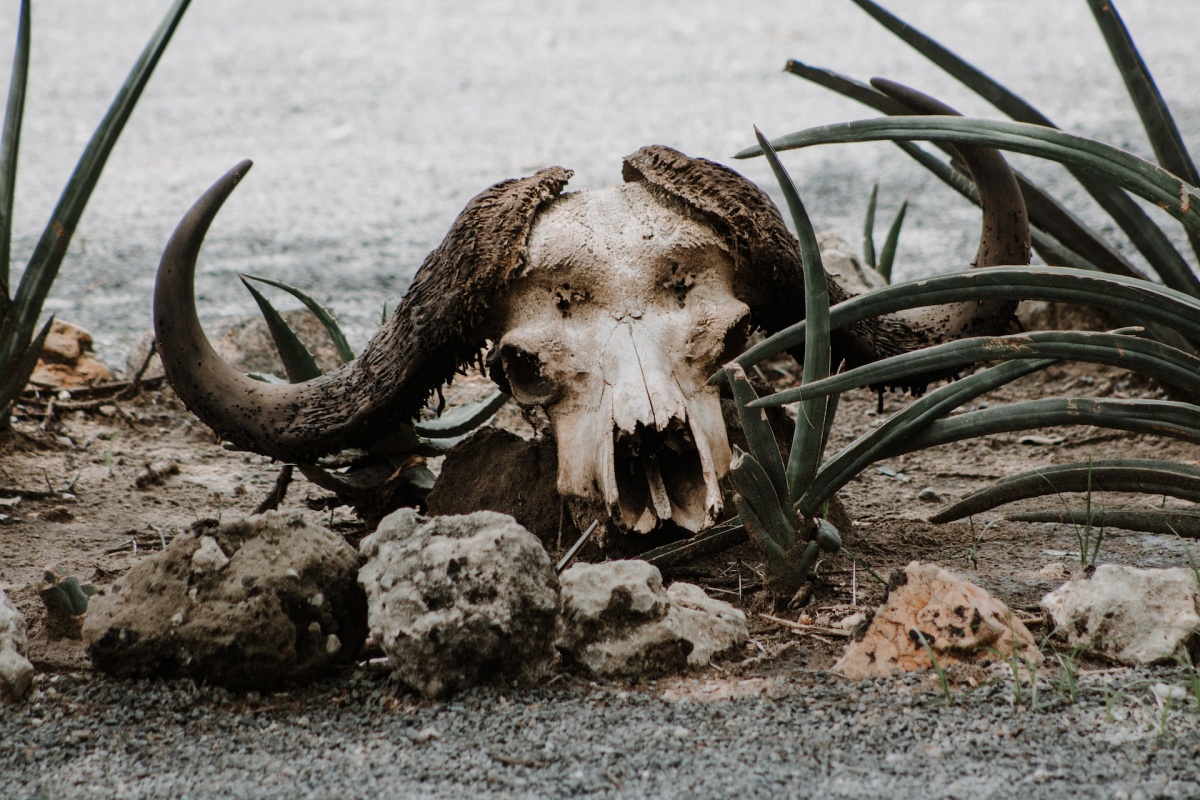
Photo by Upesh Manoush on Unsplash


Solve Our Climate Crisis
Dec 18, 2024 7:13 PM
Bringing Trump’s post-2024 election thinking up to date regarding climate, we can look at some of his picks for various government positions.
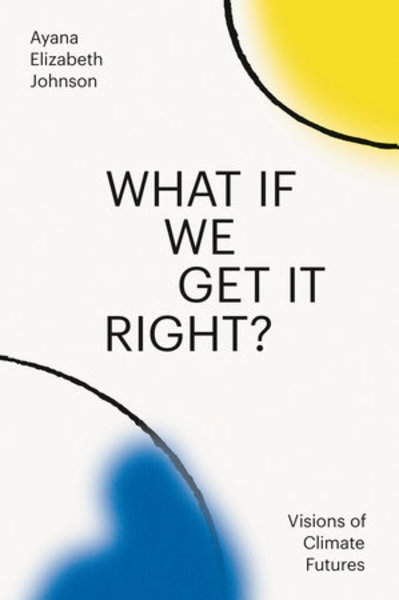
Marine biologist Dr. Ayana Elizabeth Johnson, in her edited book published this year, What If We Get It Right?: Visions of Climate Futures, summarized our present climate crisis:
The Earth is hotter now than at any other point in human history. We spew greenhouse gases (aka pollution) out of more than a billion tailpipes and smokestacks, creating a dangerously insulating blanket around the planet. And measuring atmospheric temperatures actually masks the true scale of climate change, because the ocean has absorbed the vast majority of the heat—in Florida the water surpassed 100°F (37.8°C), jacuzzi temperatures. Not good. Heat waves are more frequent and last longer. Hurricanes are getting stronger and wetter. Glaciers are melting faster than expected. The massive ocean currents that regulate our climate are slowing down, screwed up by excess heat and excess fresh water—water that was recently ice. Sea level is rising—two more meters (over six feet!) of water could be coming soon to a coastline near you, displacing hundreds of millions of people.
She also recently said, “We basically have all the solutions we need. We already know how to make energy that's clean and renewable. We already know how to green buildings and be more efficient with our energy. . . . It's implementation of those solutions that's really not up to the pace that we need. There's a lack of political will that's holding us back.”
She’s referring primarily to the USA, and we see this lack of will primarily in our country’s selection of Donald Trump as our incoming president. Four years ago in LA Progressive placed my “Voters Say Climate Change Is Not Very Important. Are They Crazy?” And then in the last two years it posted several more of my opinion pieces such as “Climate Change Denial and Republican Head-in-the-Sandism" and “Bernie Is Right: Electing Trump Would Be Catastrophic for Our Climate.”
Related stories
Bringing Trump’s post-2024 election thinking up to date regarding climate, we can look at some of his picks for various government positions. Fortunately, the Grist website has posted an early December article, “The Trump Cabinet nominees who could decide our climate future. According to it, none of the 11 nominees are ardent environmentalists, and Lee Zeldin, Trump’s choice to head the Environmental Protection Agency (EPA), “regularly voted against progressive climate and environment policies” during his eight years as a congressman. Another pick, Chris Wright for Energy Secretary, “has deep roots in the fossil fuel industry” and has said “there is no climate crisis.” Several nominees have spoken out against the Inflation Reduction Act (of 2022), which put almost $400 billion into clean energy and which The New York Times (NYT) called “the most significant federal investment in history to counter climate change.” Commenting two weeks ago about Trump’s cabinet choices NYT also stated, “virtually all support Mr. Trump’s plan to extract more oil and gas and erase environmental rules, which would exacerbate global warming.”
But back to Dr. Johnson and her book. I was drawn to it because she has interviews with individuals whose works I admire, like climate activists like Bill McKibben and poems by Wendell Berry and Marge Piercy. And she has a section entitled “A Note on Hope,” a virtue I praised just a little over a month ago and contended that we greatly needed as we’re about to enter another Trump presidency. I quoted Martin Luther King Jr. (“The arc of the moral universe is long, but it bends toward justice”), Jesse Jackson, and Barack Obama, and recalled that after three straight Republican presidents we had Franklin Roosevelt, and after George W. Bush, Barack Obama.
In her interview with McKibben, she and he talked about Third Act, the organization he founded “to engage an older audience” in climate activism. “People who are in their third act of life, people who are probably retired, are in their sixties or seventies or eighties and wanting to make sure they do their part to leave behind a habitable planet.” As a member of that organization and age group, I found especially inspiring Berry’s poem “A Vision.” Now age 90, he speaks especially to us oldsters, The poem opens with these lines:
If we will have the wisdom to survive,
to stand like slow-growing trees
on a ruined place, renewing, enriching it,
if we will make our seasons welcome here,
asking not too much of earth or heaven,
then a long time after we are dead
the lives our lives prepare will live [my bolding]
here, their houses strongly placed
upon the valley sides, fields and gardens
rich in the windows. The river will run
clear, as we will never know it,
and over it, birdsong like a canopy.
And it closes with these:
. . . The abundance of this place,
the songs of its people and its birds,
will be health and wisdom and indwelling light.
This is no paradisal dream.
Its hardship is its possibility.
Indeed a “vision"—a vision worth all the “blood, sweat, and tears” that we oldsters have left to exude.
Comments

Powered by RoundtableAn AI/DeFi-powered Enterprise Media Operating System. Learn more at Roundtable.io.© Roundtable 2026. By using this site you agree to the Terms of Use and Privacy Policy