


Jun 5, 2023 12:00 PM
Updated Feb 28, 2024 4:54 AM
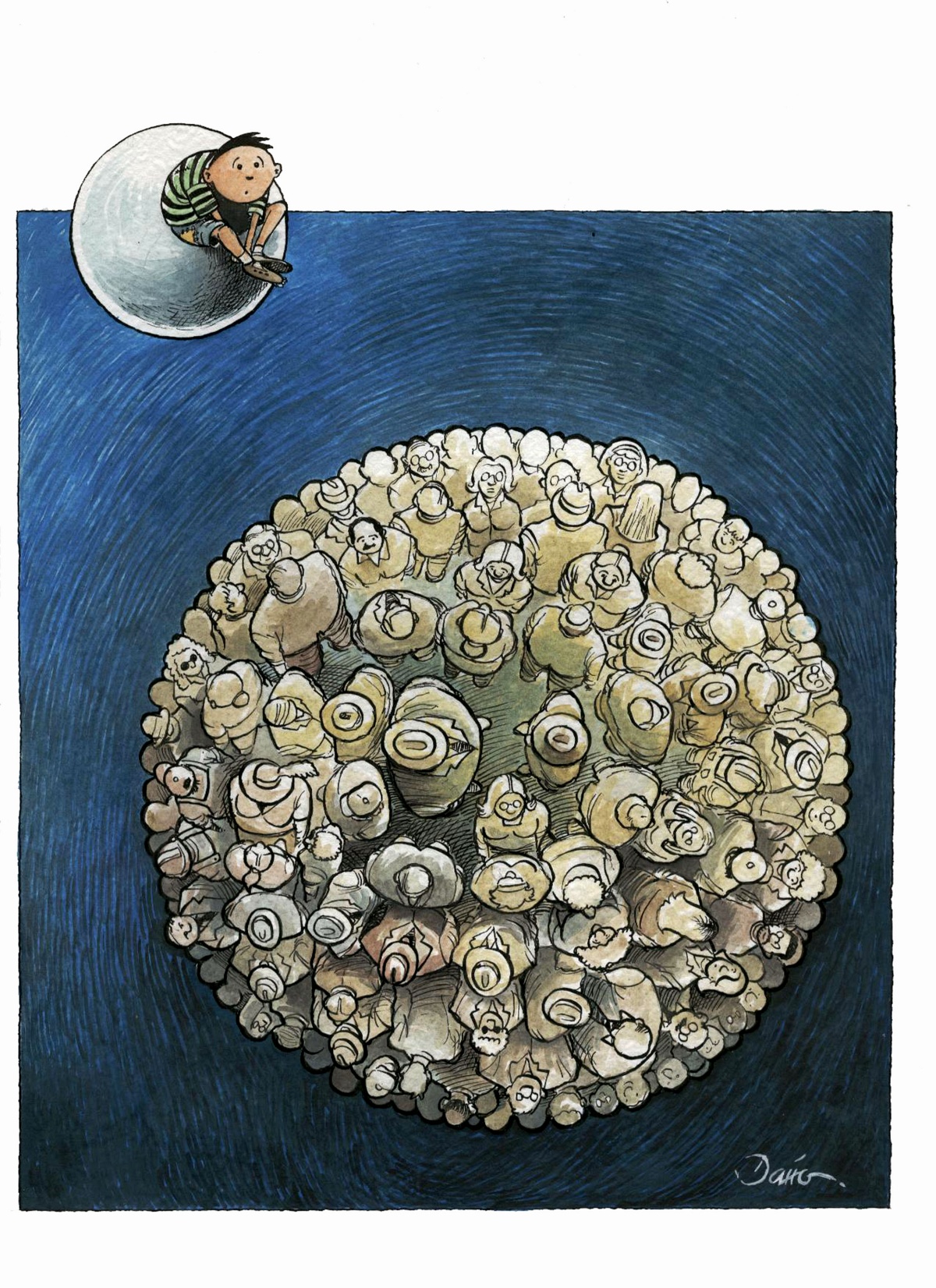
Whether or not the Earth could sustain four billion people suggested that the folks making the argument had no clue.
When I was a teenager in the late 1970s, there was already a great deal of talk about overpopulation, though we’d just passed four billion humans on the planet.
My religious leaders would scoff at suggestions that bringing more babies into the world could be damaging in any way. God wanted us to bring as many babies into the world as we could. A popular Mormon musical of the time had certain characters singing about “Zero Population” to demonstrate how corrupt they were.
And this nonsense about running out of room or resources? Why, the lower forty-eight states in the U.S. alone consisted of 1,996,725,760 acres. Divided by four billion, each person could have half an acre to themselves. A family of four would have two full acres. Plenty of room.
Even as a true believer, I wasn’t convinced. If we crammed four billion people into the lower forty-eight states as described, they could only be allotted that much space if there were no schools, no restaurants or hospitals or movie theaters. There’d be no room for churches or temples.
Related stories
There’d be no room for forests, so there’d be few building materials for those four billion people to construct housing. And since there’d be no room for mines to extract ore or factories to refine it, those homes would be meager indeed. There’d certainly be no shipping materials from elsewhere without room for roads or bridges or trains.
If every family of four had two acres to themselves, would those two acres be in the desert?
If every family of four had two acres to themselves, would those two acres be in the desert? On a mountaintop? In a swamp? In a volcanic crater?
Whether or not the Earth could sustain four billion people, or eight billion, or twelve billion, using such ridiculous statistics suggested that the folks making the argument had no clue what they were talking about. When they then added dismissively, “And in reality there’s the rest of the world, too,” I had to wonder if they were referring to all those acres in the Sahara and Gobi deserts, in Greenland, in Antarctica…
What struck me as even stranger was that the people embracing this delusion acted as if they were describing heaven. Sounded like hell to me.
Who wanted to live in a world where you were trapped for life on two tiny acres, not even allowed to visit friends or family without trespassing on a neighbor’s land? Then again, perhaps trespassing wouldn’t be a problem since there’d be no police stations or courthouses or prisons. But what happened when your kids grew up and needed two acres of their own? Would they have to move to Canada or Mexico and start gobbling up acres there?
What happened if you had a fourth or fifth child? Would your neighbors have to move farther away to give you more space, forcing their neighbors to move farther away, on and on to the border of the nation?
Your kids and grandkids couldn’t live anywhere close by. All 1,996,725,760 acres were already spoken for.
Often, people who refuse to accept reality will perform extreme mental gymnastics to avoid addressing a crisis. That may get them kudos for their competency in mind games. But deflection doesn’t solve problems.
We need problem solvers, not problem deniers.
The first step is acknowledging the problems exist. Too many people on the planet consuming too many resources, and using fossil fuels to do it, meaning even fewer livable areas and resources left for those already here. As hardworking and well-meaning as my Sunday School teachers and other religious leaders were, they weren’t up to the challenge.
If we want to solve the problems of overpopulation and climate breakdown, we’ll have to think outside the box. That almost certainly means outside the pulpit as well. But whatever the case, that box had better be larger than two acres.
Comments

Powered by RoundtableAn AI/DeFi-powered Enterprise Media Operating System. Learn more at Roundtable.io.© Roundtable 2026. By using this site you agree to the Terms of Use and Privacy Policy