


Mar 8, 2020 5:11 PM
Updated Feb 10, 2022 10:21 PM
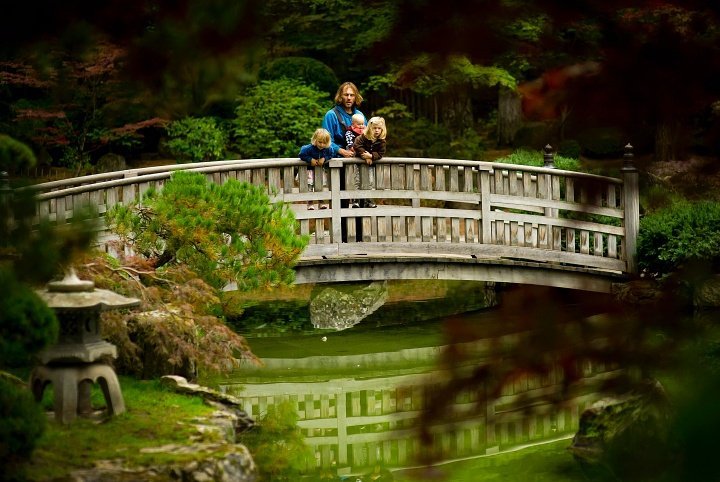
Johnny Townsend: This was our first Family Saturday of the year. What with the cold and the rain and the coronavirus outbreak, only a few dozen people had shown up, probably the most peaceful Saturday I’d worked at the Garden in three years
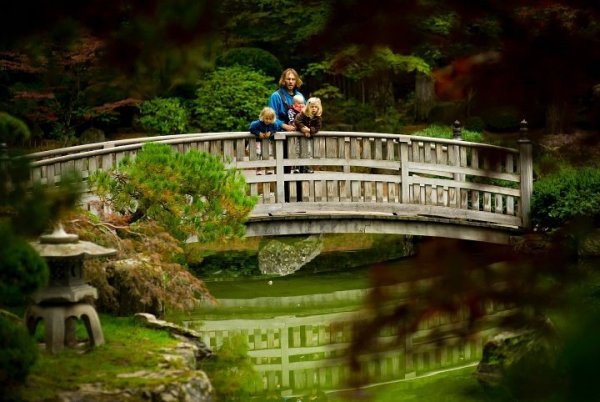
The temperature was 43 degrees in the Japanese Garden. Rain fell heavily all morning, rare for Seattle, where the precipitation most people complained about was often no more than a light drizzle. This early in the season, only a week after opening at the beginning of March, the rich, vibrant green of all the mosses on our trees and rocks and bridges was the most impressive feature of the park.
Three middle-aged women walked up to my window on their way out of the garden. “We just wanted you to know,” one of the women said, “that we were very disappointed by the climate change activities today.” She looked at the other two women, who nodded their agreement. “It was very disruptive. They were even using a microphone. We came here for the peace.”
The women then walked out to their car.
This was our first Family Saturday of the year. What with the cold and the rain and the coronavirus outbreak, only a few dozen people had shown up, probably the most peaceful Saturday I’d worked at the Garden in three years.
This was our first Family Saturday of the year. What with the cold and the rain and the coronavirus outbreak, only a few dozen people had shown up, probably the most peaceful Saturday I’d worked at the Garden in three years. The climate change program consisted of a gentle musical performance, a bit of theater, and a few readings. The place was hardly a mosh pit.
Related stories
Seattle’s Japanese Garden lies beside Lake Washington Boulevard, the only thoroughfare through the Arboretum and the fastest route through this part of the city. The street is always busy during operating hours, any day of the week. The most frequent complaint we heard from visitors was over all the traffic, which produced far more noise than anything a handful of artists performing under umbrellas beside bare cherry trees could generate.
Japanese gardens typically take advantage of something called a “borrowed view.” The area surrounding a garden may not officially be part of that garden, but because it can be seen from the various pathways, it becomes part of the experience. Seattle’s garden, inside the 230-acre Arboretum, is surrounded by tall, lush trees and steep hills on both sides. Bald eagles and osprey sometimes fly overhead. On a good day, a blue heron might swoop down to wade in the koi pond, stalking the fish for hours. At closing time, we might see a family of raccoons making their way to the water’s edge for dinner.
One famous garden in Japan is situated right next to a hospital. Part of its borrowed ambiance is the wail of emergency sirens.
The three unhappy middle-aged visitors on Family Saturday seemed to be telling me, “We wanted to enjoy this Japanese garden that’s completely unaffected by climate change.”
But our garden, like every other, has a “borrowed emergency,” a climate crisis far more dire than the blossoming pandemic of COVID-19, as bad as that may turn out to be. During my lunch break, I caught up on the news, learning that hundreds of empty planes flew “ghost flights” over Europe because of rules which took flight slots away from airlines if their planes stayed on the ground.
My job with the Parks department requires me to walk through the entire Japanese Garden every morning before opening the gates. On a cloudy day, when I look down into the koi pond from the Moon Viewing platform, I feel I’m staring off a cliff into a bank of clouds far below. I listen to the waterfall flowing past the teahouse. I look up, beyond the borders of the garden into the Arboretum, where there are old-growth cedar, fir trees, even a few giant Sequoia.
But if you come to Seattle and stop by the Japanese Garden, don’t expect it to be a refuge from the world. Even the most tranquil, apolitical spots anywhere on the face of the Earth are surrounded by climate disaster. If we want peace, and I think most of us do, we’ll need to do more than complain about climate activists. We’ll have to address the climate crisis itself. And it’s just possible that might require us to listen to people speaking with microphones and reading climate poetry in the rain.

Johnny Townsend
Comments

Powered by RoundtableAn AI/DeFi-powered Enterprise Media Operating System. Learn more at Roundtable.io.© Roundtable 2026. By using this site you agree to the Terms of Use and Privacy Policy