


Jan 22, 2025 7:09 PM
Updated Jan 26, 2025 6:25 PM
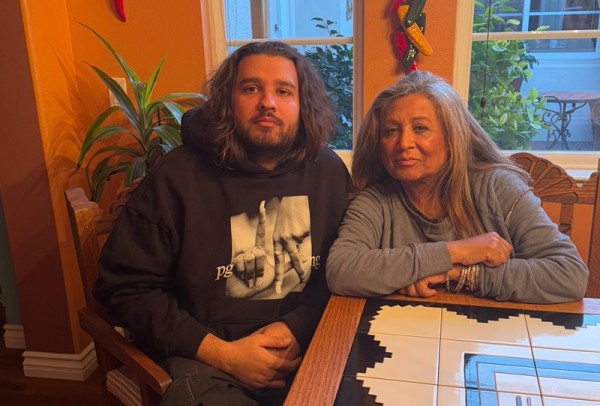
Azmina and her son Sasha have faced the devastating loss of not just a house but a community hub, a livelihood, and countless irreplaceable treasures. This is their story
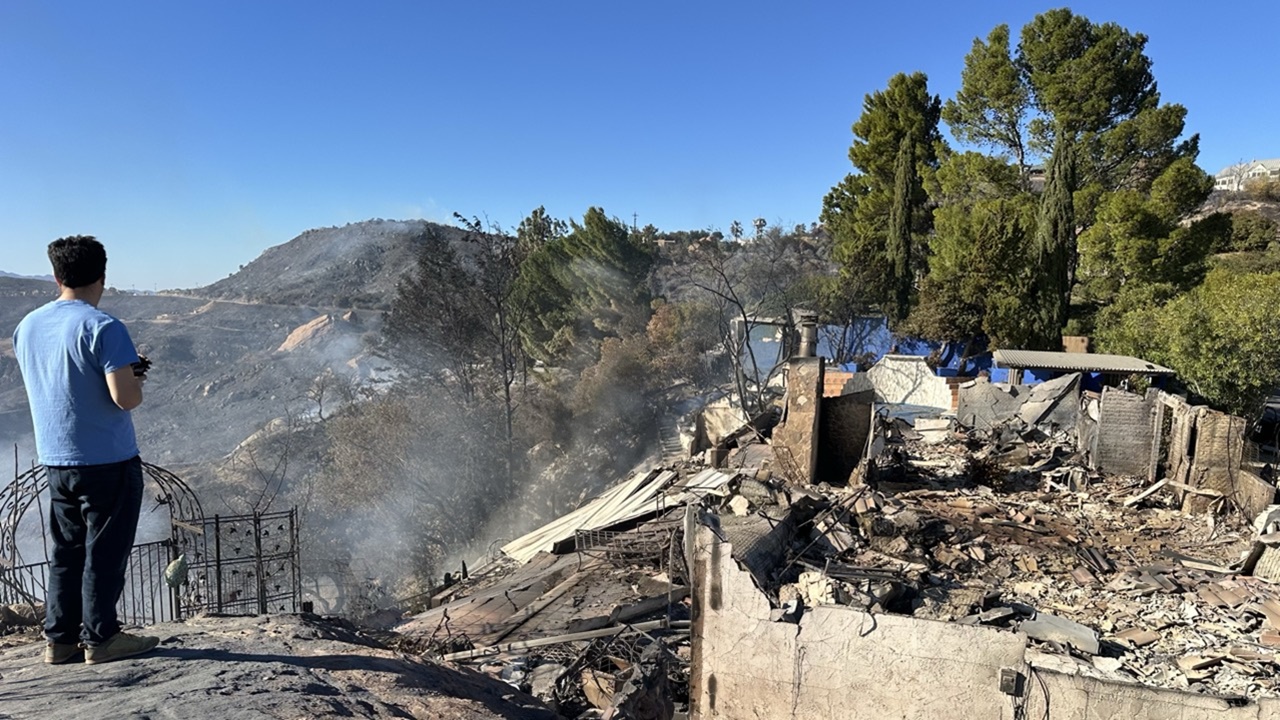
On a quiet evening in Topanga Canyon, Azmina Kanji stood on her deck, gathering pillows to protect them from the gusting wind. After 38 years of living through wildfires, she had never evacuated—never felt the need. But that night, as the wind howled with a force she’d never experienced, a gnawing realization took hold. Within hours, the Palisade Fire would consume her home, her sanctuary, and the centerpiece of a life she had spent decades building.
Azmina and her son Sasha, now displaced, have faced the devastating loss of not just a house, but a community hub, a livelihood, and countless irreplaceable treasures. Yet, in their grief, they’ve found resilience. This is their story—one of loss, love, and the determination to rebuild.
Azmina’s journey to Topanga began thousands of miles away in Uganda, where she was born to Indian parents. Her family’s life in Uganda was upended in 1972, when Idi Amin’s regime expelled the country’s Asian population.
“My parents were prominent in the community, but after Uganda’s independence, they became citizens there. When Amin came to power, they lost everything,” Azmina recalls. Her family ended up in a refugee camp in Austria, a facility originally built for those fleeing Nazi Germany during World War II. Eventually, they resettled in Valley Forge, Pennsylvania, with the help of a Baptist church.
Related stories
Azmina, who had been attending boarding school in England, joined them ten months later. “I had stayed behind to help my aunt, a single mother with six children, settle in Scotland,” she says. “We were close, and I couldn’t leave her to face it alone.”
After moving to the United States and working a high-pressure job at LAX, Azmina sought refuge from the chaos. She found it in Topanga Canyon. “I used to drive Topanga Canyon Boulevard and dream of living here. When I finally moved, it felt like coming home,” she says. By 1986, she had purchased the house that would become her masterpiece.
Azmina’s home was a reflection of her cultural heritage and artistic spirit. A trained fashion designer, she infused her sanctuary with Indian textiles, vibrant colors, and a welcoming warmth that drew people from all walks of life. “I’d host bohemian tea parties,” she says, smiling. “People came for chai, food, music, and my handmade clothing. The house became a place where everyone felt at home.”
Over the years, the Kanji home became a safe haven, affectionately known as “the house with the Buddha on the mailbox.” It was a place for birthdays, community gatherings, and even Buddhist chanting sessions. “We’d have 50 or 60 people chanting for peace,” Azmina recalls. “It wasn’t just a house; it was a sanctuary for the soul.”
Sasha, her son, remembers it as a gathering place for his friends, neighbors, and even strangers. “It felt like the United Nations on that deck,” he says. “People of all ages and backgrounds sitting together, talking, laughing. It was magical.”
The winds were Azmina’s first warning. “I was on the deck, and the wind almost knocked me over,” she says. “I’d never heard anything like it.” As head of her neighborhood’s fire group, she began texting her neighbors to prepare for evacuation. “Some of them said, ‘If you don’t evacuate, we’re not evacuating,’” she recalls. That’s when she made the call: it was time to go.
Azmina packed her dogs and a few belongings into her car and led a caravan of neighbors down the mountain. “There were five cars behind me and two more waiting because a fallen tree blocked the road,” she says. By morning, the house that had been her life’s work was reduced to ashes.
The Aftermath of the Palisades Fire
In the days following the fire, the reality of their loss set in. “We lost everything,” Sasha says. “Our home, our livelihood, the art and heirlooms that can never be replaced.” Yet, their bond as mother and son has kept them going. “Life goes on,” Azmina says. “I started with nothing once before. I can do it again.”
For Sasha, the fire has been a turning point. “I just turned 30,” he says. “It’s my time to step up and make sure my mom gets back to where she needs to be. This is my full-time job now.”
The Kanjis hope their story will highlight the human cost of climate change and the increasing frequency of wildfires. “This wasn’t just bad luck,” Sasha says. “We’ve never seen winds like this, and we’ve had no rain. People need to understand that climate change isn’t just about rising temperatures; it’s about changing weather patterns that devastate communities.”
As Azmina reflects on her role as a community leader, she offers a simple piece of advice: “Evacuate. Don’t wait. Things can be replaced, but lives cannot.”
Rebuilding will be a long and challenging process, but the Kanjis remain hopeful. “This fire is just a plot twist, not the final chapter,” Azmina says. For now, they’re navigating the labyrinth of insurance claims, permits, and debris cleanup. Donations to their GoFundMe have provided a lifeline, but the journey ahead is daunting.
“We’re not just rebuilding a house,” Sasha says. “We’re rebuilding a home, a community, and a sanctuary. That’s what keeps us going.”
As they look to the future, Azmina and Sasha invite others to join them in their fight for resilience—not just for themselves but for the countless families facing the same struggle. “Reach out,” Sasha says. “Support your neighbors. People need you now more than ever.”
To support Azmina and Sasha in their efforts to rebuild, please consider donating to their GoFundMe campaign linked here.
The Palisades Fire, which ignited on January 7, 2025, has been one of the most devastating wildfires in California’s recent history. Fueled by severe drought conditions and powerful Santa Ana winds reaching up to 100 mph, the fire rapidly spread through the Pacific Palisades, Topanga, and Malibu communities. As of January 21, 2025, containment efforts have reached 63%, with firefighters continuing to battle the blaze amid challenging weather conditions.
The fire has led to widespread destruction, consuming nearly 2 square miles of land in the Pacific Palisades neighborhood alone. The Los Angeles Department of Water and Power reported that some fire hydrants ran dry during critical moments, complicating firefighting efforts.
Alongside the Palisade Fire, other recent blazes like the Eaton Fire stand as stark reminders of the escalating toll of climate change. These fires underscore the urgent need for comprehensive climate action and community preparedness to mitigate the growing risks of such disasters.
Ace Estwick
Born and raised in Santa Monica, to first-generation Caribbean-American parents, Ace Estwick serves on KPFK’s Local Station Board and Equity and Inclusion Committee. They are focused on bringing reform, amplifying diverse voices, and fostering independent, non-corporate-funded media. With a background in curating platforms that highlight Black history and current events, Ace is dedicated to ensuring KPFK thrives as a progressive voice that informs, inspires, and empowers communities.
Comments

Powered by RoundtableAn AI/DeFi-powered Enterprise Media Operating System. Learn more at Roundtable.io.© Roundtable 2026. By using this site you agree to the Terms of Use and Privacy Policy