
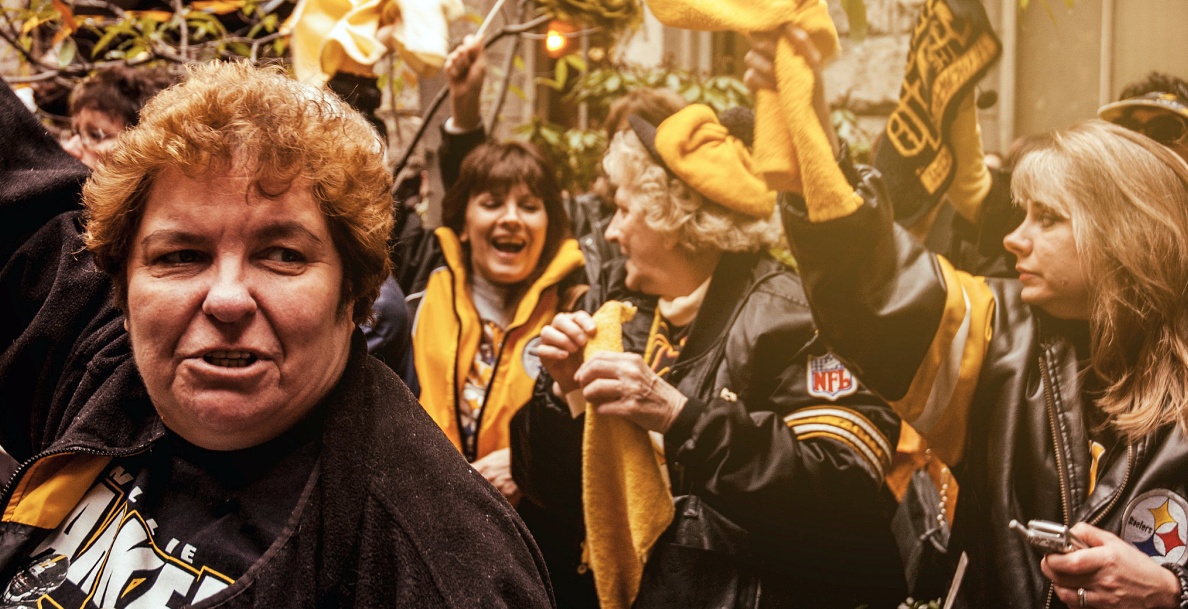
Fans by David Kent: Attribution-NonCommercial-NoDerivs (CC BY-NC-ND 2.0) Flickr


Dec 16, 2022 6:55 PM
My attitude toward sports is almost identical to that of millions of people worldwide who don't care about climate disaster.
When I came out to a straight Mormon friend years ago, he reacted as positively as his cultural background would allow. “I don’t understand it,” he said, “but then, I don’t understand why some people don’t like basketball, either. I just accept that it’s true.”
My friend’s reaction is a healthy way of approaching reality most of us could incorporate into our own lives.
I’m a former Mormon who is now atheist. Religion pretty much bores me, at least the way it’s practiced much of the time. Yet ignoring religion because it doesn’t personally interest me would be a mistake, since religious leaders perverting their influence negatively impact LGBTQ folks like myself, limit women’s rights, make the lives of workers more difficult. They also shape cultural attitudes toward climate.
We can’t ignore reality if we want to enact meaningful climate policies.
Related stories
At the risk of offending sports fans, I’m not the least bit interested in soccer or football or baseball or hockey. Not even basketball like my Mormon buddy.
But I know that billions of people worldwide follow sports religiously. Whether or not I care about it, whether or not I understand why other people do, the fact remains that sports fandom is real. Universities devote huge portions of their budget to stadiums and training at the expense of academics. Governments orchestrate slave labor to build arenas. People spend thousands on game tickets, spend their yearly allotted vacation to attend playoffs. Fans even riot and kill over the outcome of these “games.”
Sociologists devote their careers to mapping out the causes and effects of these phenomena. Lawmakers step in to mitigate the corrupting influence of gambling. Pastors and rabbis write sermons using sports analogies to persuade their congregants to practice spiritual principles.
Meanwhile, I grumble and groan when I’m forced to board light rail at the end of a tough workday and squeeze in beside hundreds of fans heading to the stadium. What could possibly possess people to waste so much time and energy?
Ignoring the reality of sports culture would be foolish. Yet my attitude toward sports is almost identical to that of millions of people worldwide who can’t bring themselves to care about climate disaster. Those of us who do care are mystified by their disinterest, the same way my straight Mormon friend can never understand why I don’t follow the Utah Jazz.
We need to individualize approaches to reach our friends and family to show them it’s normal not to care about every single thing we do but also that their lack of personal interest doesn’t alter reality. If it’s not a moral failing to feel disinterest in basketball or numismatics or opera—or politics, for that matter—we must accept the reality that our friends and family who aren’t interested in reducing greenhouse gases can still be caring, humane people.
Sometimes, because the issue is so important to us, that’s a difficult concept. But we can’t make progress without accepting this reality as well.
Granted, another reality is that some people are hemorrhoidal assholes who are completely unreachable. I hope we’ve already learned to distance ourselves from the trolls in our circle. But not everyone is a sphincter who isn’t committed right this very minute to stabilizing our climate.
After all, we don’t devote our lives to every single vital cause, do we? How many of us risk our lives and jobs fighting for racial equity? Or better representation for the disabled in media? Or tuition-free college and vocational training for every American who wants it?
There are too many important causes for everyone to feel the same on every issue. Sometimes, our friends and family have been deliberately deceived, too easily perhaps, but even that doesn’t make us morally superior.
Everyone has believed something wrong, something damaging, at some point. We progress, we learn, we grow, and just because we’re ahead on this one point doesn’t mean our friends and family may not be ahead on others. If we believe in our hearts these folks are morally “less than” because they don’t instinctively appreciate the severity of the problem, our scorn will come out in every interaction.
We must accept the reality that self-righteousness, even when we’re right, damages the climate because it impedes persuasion.
Just as I need to plan my commute around sports traffic, we can help people unconcerned about climate understand they still need to make logistical concessions to its reality. Those concessions almost certainly include a ban on all new fossil fuel projects, perhaps rationing fossil fuels to encourage citizens to adapt to changing infrastructure, even diverting part of the military budget toward subsidizing renewable energy, since climate breakdown is an issue of national security.
People who are disinterested in climate issues don’t need to like these adaptations. They don’t even have to understand them. They simply need to accept reality.
So how do we reach Grandma? If she’s a dairy farmer, let’s try an analogy about milk production. If she’s an accountant, perhaps a ledger sheet would work better. Our other friends and family might respond to analogies for gardening, yoga, Game of Thrones, or pottery.
Maybe they’re not basketball fans but can’t get enough tennis.
Let’s find an analogy that meets our loved ones where they are. Because climate change is as real as homosexuality, whether we like it or not.
Comments

Powered by RoundtableAn AI/DeFi-powered Enterprise Media Operating System. Learn more at Roundtable.io.© Roundtable 2026. By using this site you agree to the Terms of Use and Privacy Policy