


Mar 29, 2023 12:00 PM
From Mutually Assured Destruction to Climate Solution and Peace
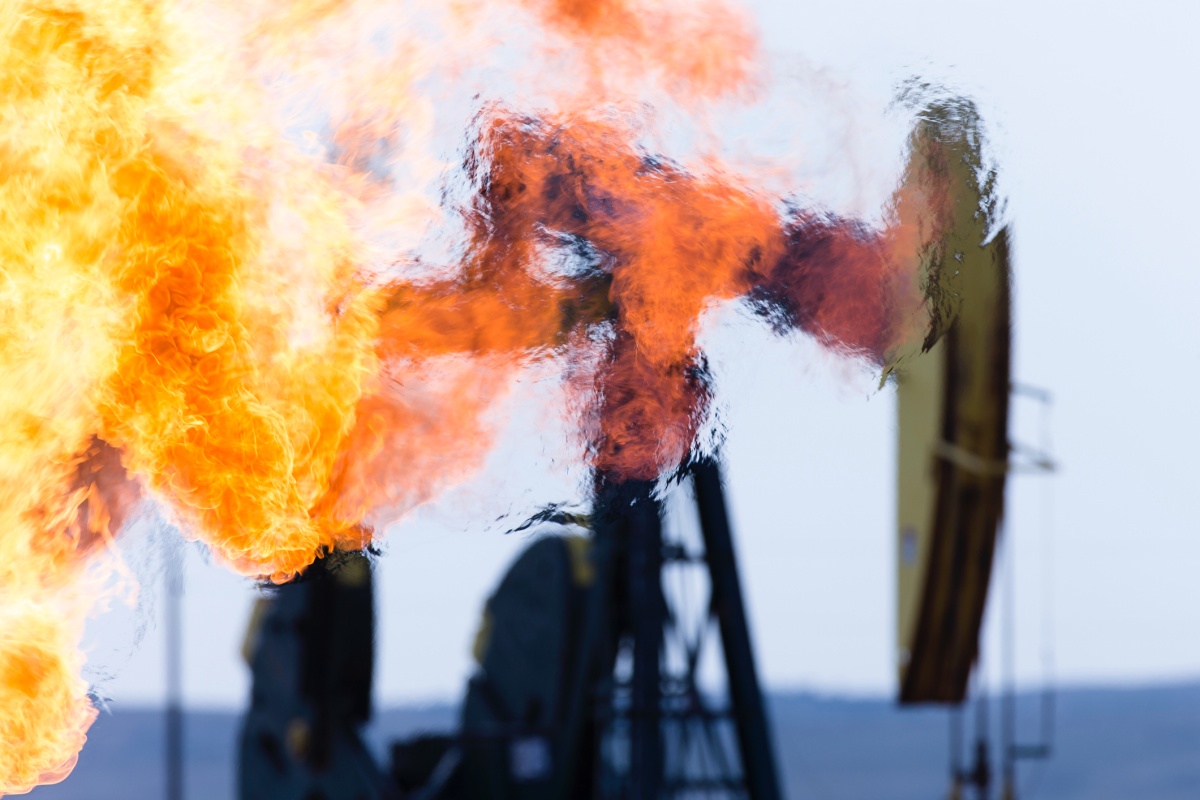
In 2014, Rex Tillerson, former US Secretary of State during the Trump Administration and former Chairman, President and CEO of the oil giant ExxonMobil Corporation—also a major player in the fracking industry—joined a lawsuit to block the construction of a 160-foot, 15-stories high water tower next to his home in Bartonville, Texas, that would supply water for nearby fracking operations. The lawsuit charged that the project would create (According to an ExxonMobil spokesman, the lawsuit is Tillerson's own matter and the corporation "has no involvement in the legal matter." Receiving “mocking national attention,” Tillerson later dropped out of the lawsuit).
Aggressively pursued behind the façade of energy independence from foreign sources and domestic job creation, however short-term, highly profitable fracking has accelerated the path to long-term economic, environmental and public health catastrophe. Fracking causes much more than “a nuisance and traffic hazards.” Fracked regions have overnight turned some communities into a wasteland of health-hazard homes and plummeting property values. Hydraulic fracturing of rock and shale to extract oil and gas also poisons water, pollutes air, contaminates soil, provokes earthquakes and contributes to climate change.
All these consequences are well documented and the fossil fuel industry knows that as much as anyone else. But that didn’t make Tillerson oppose fracking. What did was that he (his property) was being impacted by it.
Tillerson’s success—also ExxonMobil’s and the rest of the fossil fuel-nuclear industry’s—is well-rooted in his saying, “My philosophy is to make money. If I can drill and make money, then that’s what I want to do.” In a few words, the statement exposes the greed-driven, short-sighted and compartmental worldview of the fossil fuel industry—coupled with years of conscious denial and suppression of scientific findings of catastrophic climate change impacts to mislead and exploit the public—which has led to the global ecological crisis we are in.
Related stories
This fracking example—microcosmic but macrocosmic in its implications—should be a warning to all: the accelerating destructive consequences of the nonrenewable energy path spare none, including its prime diggers and beneficiaries.
And it brings home the truth that wherever we live, we breathe the same air, we drink the same water, we stand on the same soil and we are sustained by the same Sun. Such is our interconnection, such is our interdependence. This is the global ecological condition of our existence—commonly shared, interdependent and inescapable. The solution to the modern ecological crisis demands that we regain this holistic perspective. This is not just philosophical speculation; it is the core of the science of ecology. And this ecological understanding warns us that climate change may not impact everyone equally, at least initially, but, with greater devastation, ultimately all are impacted. That ultimatum is knocking on everyone’s door—“developed” or “developing” countries, rich or poor, sheltered or shelterless. It is time to answer.
However, in that interdependence we can also engage in a dialogue to build bridges, devise both shared and individual actions, and through local autonomy and global collaboration create a holistic, equitable and integrated solution, or multiple solutions for all. Every act of solution, small or big, is a part of the whole and contributes toward the solution for the world. A holistic perspective also motivates us to act because we feel that we are in solidarity with others, contributing to a larger solution, as opposed to feeling discouraged and powerless because we feel what we can do individually is too little and isolated. The incredible range and diversity of the types, sources, designs, scales and applicability of renewable energy technologies—that are also cost-effective and globally accessible—offer opportunities to act to expedite a transition toward a 100% renewable energy future. It’s a revolutionary possibility backed by a repeated number of scientific reports.
In a world dominated by divisiveness, a lack of transparency, distrust, corruption, fierce competition and wars, collaboration is a monumental challenge. But if survival is the goal, there’s no alternative.
While the global action to mitigate climate change lags farther and farther behind the 1.5C target, the years of 2015, 2016, 2017, 2018, 2019, 2020, 2021 and 2022 are the eight hottest on record. The number and intensity of hurricanes, tornadoes, cyclones, typhoons, floods, rising sea levels, droughts, desertification, forest fires, heatwaves, receding groundwater levels, thawing permafrost, freakish weather patterns, outbreak of diseases, destruction of biodiversity, species extinction, climate migration and the Arctic and Antarctica melting continue to accelerate. In one part of the world or another one or more of these catastrophes are happening simultaneously, thrusting the world into a state of perpetual emergency.
After the biggest-ever expedition to the Arctic in 2020, involving 300 scientists from 20 countries, noting that Arctic ice is retreating faster than ever before, scientists have warned that global warming may have already passed an irreversible tipping point, thrusting the whole of humanity and the entire planet at risk. We are being repeatedly warned by scientists that the pace and scale of action are insufficient to tackle climate change. U.N. Secretary General António Guterres summarized the latest UN-IPCC Report released in March 2023: “The climate time-bomb is ticking. But today’s IPCC report is a how-to guide to defuse the climate time-bomb. It is a survival guide for humanity. As it shows, the 1.5-degree limit is achievable. But it will take a quantum leap in climate action.”
Historically, the hunt for energy has been a main reason behind wars. The Iraq war—an oil war—and its devastating consequences stand witness. But now, with the Russia-Ukraine (backed by NATO-US) war, it’s the other way: the war has led to an energy crisis. Instead of a solution to either, it has already turned cyclical—into a deadly, costly, (except for the record profits for the weapons industry), ecocidal and suicidal vicious cycle of war-energy crisis-war that keeps escalating out of control with no end in sight. Like climate change knows no border, devastation by modern warfare—launched with nuclear capabilities and ever-deadlier non-nuclear arsenals, and with the propensity to trigger a global chain reaction—knows no limit.
Compounding further the vicious cycle is the equally vicious cycle of militarism-climate change-militarism. Militarism, as a most fuel-intensive establishment, is a leading contributor to climate change. Wars, with an insatiable appetite for weapons, deployment and proliferation—beyond the massive human, environmental and economic destruction and costs—also fuel climate change which, in turn, can intensify militarism in response to political tensions such as food insecurity, supply chain disruptions, migration and the destruction of natural resources caused by climate change.
The crises of energy, climate change and war are inextricably linked. So is a solution to any of these.
The War Drum of M.A.D. (Mutually Assured Destruction) beats louder than ever. The battleground is the planet Earth, with people and other inhabitants of the world as sacrificial offerings and pawns in the deadly game which, ultimately, has no winner. For the casualties the war has already incurred and the price that’s already been paid for the war, globally, one could even justly conclude that the war is already lost—with no winners. With the failure of global diplomacy to resolve the conflict, shunning such initiatives without offering a viable alternative, and the hawkish mentality of warring parties—puppeteered by the global weapons industry driven by insatiable greed for permanent profit from permanent war—the Dove on its flight path is threatened by showering missiles and bullets.
Based on their annual assessment, largely because of the mounting dangers of the war in Ukraine, but also the climate crisis, The Bulletin of the Atomic Scientists reset the 2023 Doomsday Clock at 90 seconds to midnight—the closest to global catastrophe it has ever been.
H.G. Wells said years ago, “Human history becomes more and more a race between education and catastrophe.” Racing against time, our path to survival depends on education inspiring and empowering the global citizenry from all walks of life to act—individually and collaboratively, utilizing every usable tool—to urgently expedite the transition toward a renewable energy future. On that path we may also come to a fuller realization that not just survival, but the flourishing of infinite human possibilities lies in our unity in diversity and, in turn, diversity is the ultimate guarantor and expression of a lasting unity. Gandhi put it so well: “Our ability to reach unity in diversity will be the beauty and the test of our civilisation.”
This may seem like a formidable challenge, but not impossible. In the words of system theorists Fritjof Capra and Pier Luigi Luisi:
To be sure, the transition to a sustainable future will not be easy. Gradual changes will not be enough to turn the tide; we also need some major breakthroughs. The task seems overwhelming but not impossible. From our new understanding of complex biological and social systems we have learned that meaningful disturbances can trigger multiple feedback processes that may rapidly lead to the emergence of a new order. (p. 452)
And in the words of Claussen, regional Vice President of International Physicians for the Prevention of Nuclear War (Europe):
More arms mean more damage to the climate, not greater security. Rising defense budgets among NATO states will simply convince Russia and China to increase military investment in turn. At $2.1 trillion, global arms spending has already reached record levels.
As the war in Ukraine goes on, the biggest challenge of the 21st century—the climate crisis—has slipped down the agenda. We must not forget, though, that efforts to tackle that crisis can only succeed if all countries—including Russia—work together. The immediate demand is for a ceasefire, followed by measures to build trust, such as international disarmament treaties. Moreover, Russia will need outside help if it is to transition to a climate-friendly energy industry. What’s required is a fundamental socio-ecological transformation, with policy-making dictated by the needs of all. That may seem inconceivable at present, but what’s the alternative? Unchecked global warming would be catastrophic for the planet’s entire population.
The choice between M.A.D. and collective survival is at hand. This is not a choice which the fossil fuel-nuclear industry, the weapons industry or the current political leadership on both sides of the war—with their compartmental and myopic worldviews, vested interests and self-justifying narratives—may want to acknowledge or are yet able to acknowledge. But I believe—and there are signs—that there’s a growing awareness among people around the world that the choice is critical—and that it’s time to act. The need—and a conscientious awakening—to ignite such movements has never been more urgent—with the potential to influence and reclaim “politics” to its most fundamental meaning of power to the people, legitimacy and practice.
Together embracing the opportunity and power inherent in our interdependence, fueled by the Sun—the inexhaustible energy source of all the renewables, guided by Nature—the primordial guardian, and steered by irrepressible and potential human intelligence, we can make the revolutionary transition toward a common future of sustainability, equality and peace unstoppable!
Comments

Powered by RoundtableAn AI/DeFi-powered Enterprise Media Operating System. Learn more at Roundtable.io.© Roundtable 2026. By using this site you agree to the Terms of Use and Privacy Policy