


Climate Threats
Aug 16, 2024 4:34 PM
In our economic system, with its profits-first mentality, proponents of geoengineering--like those of the Internet and Artificial Intelligence--must always keep a wary eye on profiteering.
There are many reasons to work hard to see that Donald Trump does not again become the U. S. president. Replacing democracy with authoritarianism being one of the main dangers. But perhaps his greatest threat is to our climate. Almost no one doubts he would do little to slow down increasing temperatures. Many of his followers simply think climate change is a “hoax” or the issue is not a high priority, but more enlightened voters know better.
On 11 August The New York Times ran a piece entitled “How Close Are the Planet’s Climate Tipping Points?” Although the article mentions our “hotter summers and wetter storms,” our “higher seas and fiercer wildfires,” its focus is on “great systems in the natural world that warming, caused by carbon emissions, might be pushing toward collapse.”
The “great systems” that it includes are the following:
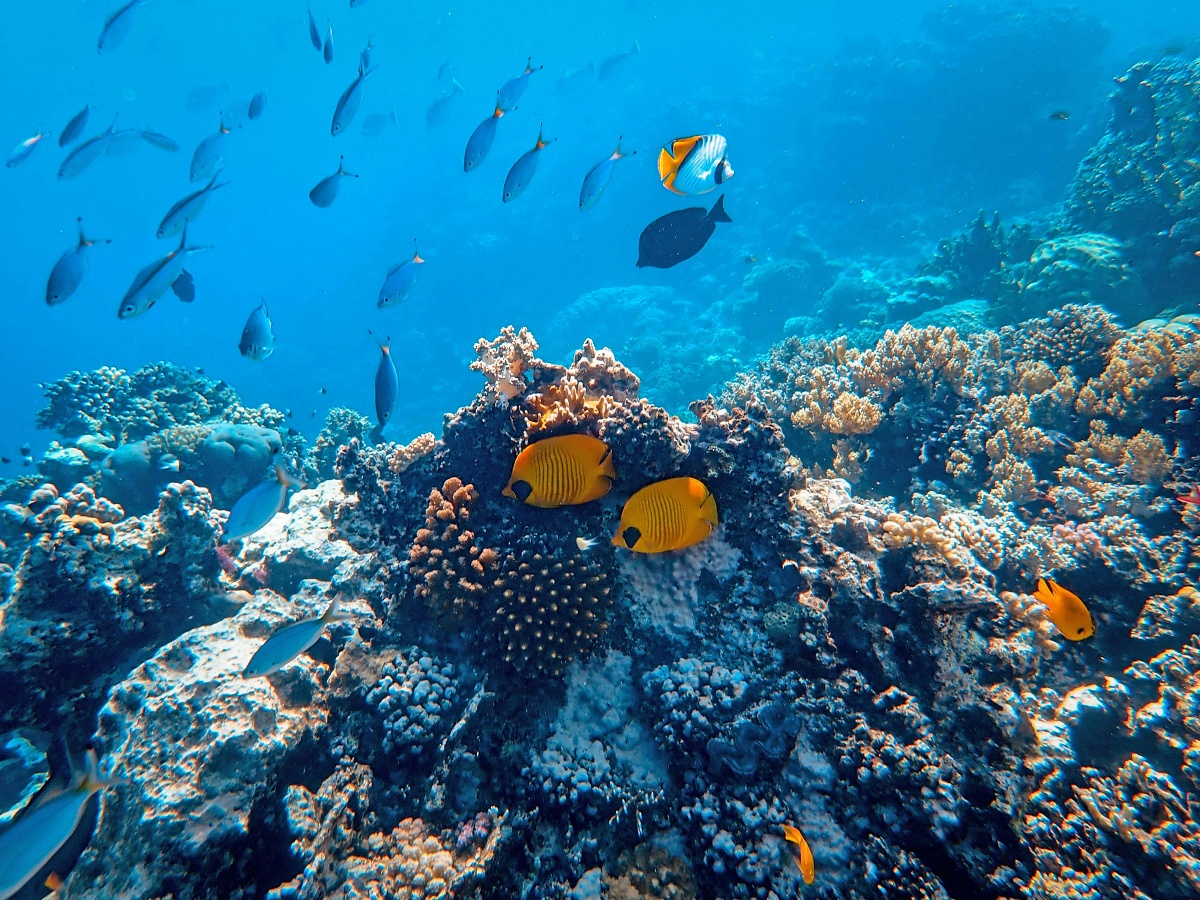
- Mass Death of Coral Reefs
- Abrupt Thawing of Permafrost
- Collapse of Greenland Ice
- Breakup of West Antarctic Ice
- Sudden Shift in the West African Monsoon
- Loss of Amazon Rainforest
- Shutdown of Atlantic Currents
Related stories
Following are the main points that it makes about each of these items.
- Number 1. “Even if humanity moves swiftly to rein in global warming, 70 percent to 90 percent of today’s reef-building corals could die in the coming decades. If we don’t, the toll could be 99 percent or more.” The reason such a loss would be catastrophic is that reefs provide about 25 percent of all marine species. And, as natural historian David Attenborough tells us in Netflix’s “A Life on Our Planet,” one way out of our present climate-change crisis is restoring “its biodiversity. The very thing that we’ve removed. It’s the only way out of this crisis we have created.”
- # 2 -- Permafrost (ground frozen for at least two years and as many as hundreds of thousands of years) has in recent decades “come unfrozen, in Western Canada, in Alaska, in Siberia.” And it is difficult to predict how much more will become unfrozen in the future. Rising global temperatures, however, insure that at least some will, and the NYT article notes that in the permafrost at present there’s about “twice the amount [of carbon] that’s currently in the atmosphere.” (Carbon dioxide in the atmosphere is the main, but not only, cause of global warming.)
- #s 3 and 4 -- A climate website at the University of Colorado states, “Together, the Antarctic and Greenland Ice Sheets contain more than 99 percent of freshwater ice on Earth. If they both completely melted, they would raise sea level by an estimated 67.4 meters (223 feet).” No one knows how much of these ice sheets might melt in future years, but increased global temperatures will certainly increase the amount. From 1992 to 2020 Greenland’s ice-sheet melting amounted to the of about 5,390 billion tons. Continued melting would eventually have devastating effects on coastal cities like Miami, Rio de Janeiro, Alexandria, Shanghai, Bangkok, and Tokyo. In one of the best novels of recent years depicting climate-change problems, Kim Stanley Robinson’s The Ministry for the Future: A Novel (2020), the author devotes many pages to his characters’ struggle with melting ice in Antarctica.
- # 5 -- About the sudden shift in the West African Monsoon, the NYT article reports that scientists are unsure “about how, and whether, the West African monsoon might shift or intensify in response to today’s warming.” (One dictionary defines monsoon as a “periodic wind” or the “rainfall associated with the monsoon,” and the NYT piece clarifies that despite the “West African” designation, “the region’s monsoon unleashes rain over parts of East Africa as well.”)The potential negative effects of any African climate-change warming were spelled out in a 2019 BBC article, which stated that “the African continent will be hardest hit by climate change.” A few of the reasons for this are that “African society is very closely coupled with the climate system; hundreds of millions of people depend on rainfall to grow their food”; the “degree of expected climate change is large. The two most extensive land-based end-of-century projected decreases in rainfall anywhere on the planet occur over Africa”; and “the capacity for adaptation to climate change is low.”Although long-range forecasts are difficult to predict, one northern African country already suffering from “erratic monsoon rains” is Sudan, where civil war is also raging and famine beginning to spread. As the Middle East Council on Global Affairs reported in April, 2024, “Sudan is one of the world’s most vulnerable countries to climate change. Rising temperatures, increasingly erratic monsoon rains, prolonged droughts, and frequent flooding pose mounting threats to both the environment and human society.”
- # 6 -- Regarding the Amazon Rainforest in South America, what David Attenborough said in his “A Life on Our Planet,” about biodiversity being the “only way out” of our present climate-change crisis is pertinent here. Greenpeace estimates that “the Amazon is one of the most biodiverse places on earth. Over 3 million species live in the rainforest, and over 2,500 tree species (or one-third of all tropical trees that exist on earth).” The NYT article, however, indicates that now “ranchers and farmers are clearing the trees, and global warming is worsening wildfires and droughts. . . . By 2050, as much as half of today’s Amazon forest could be at risk of undergoing this kind of degradation, researchers recently estimated.”
- # 7 -- According to the NYT piece, a “colossal loop of [Atlantic] seawater sets temperatures and rainfall for a big part of the globe.” But “Greenland’s melting ice is . . . infusing the North Atlantic with immense new flows of freshwater,” which is likely to change temperatures “for billions of people in Europe and the tropics.”
One overall major point that the newspaper article makes is that much of what might happen in regard to the seven areas mentioned above is uncertain. Nevertheless, it concludes with this quote from a German climate scientist: “The longer we wait to slash emissions, the farther we go into dangerous territory.”
Finally, in mentioning “dangerous territory” this present essay would be remiss if it failed to mention one more climate threat that deserves attention. An August 2024 article in Foreign Affairs, “The Battle Over Blocking the Sun,” stated the problem succinctly: “As the climate crisis intensifies, the temptation to deploy technologies to artificially shade the planet will only grow stronger. Guardrails must be put in place before a solar geoengineering experiment or unilateral deployment destabilizes the world’s climate patterns.”
For years now various forms of geoengineering--a term for technologies that aim to cool the planet and offset climate change--have been suggested as ways of tackling climate change. Two recent notable examples have been Robinson’s The Ministry for the Future: A Novel (see above) and the eight-part Apple TV+ series, “Extrapolations” (2023).
In the novel, the biggest geoengineering fix is to pour yellow dye into the Arctic Ocean. As the book describes the experiment, “The solar heating of the Arctic Ocean when there was no ice covering it might be enough all by itself to tip the world irrevocably into jungle planet. . . . Yellow water didn’t allow sunlight to penetrate it, and even bounced some sunlight back into space. Relatively small quantities of dye could color a large area of ocean. Both the artificial and natural dyes they were using broke down over a summer season, and could be renewed or not the following year.”
In the TV series two episodes, numbers 4 and 8, have special reference to geoengineering. In Episode 4 a woman tells the U. S. president that “all it takes is two million tons of calcium carbonate dispersed into the atmosphere to begin to cool the planet,” and she has a plan to do it. But her ex-husband, who is an adviser to the president, opposes her, saying he used to believe in geoengineering but has changed his mind. “We were wrong. We were arrogant. . . .We disrespected one of the most fundamental principles of scientific investigation, which is that an experiment has to be able to be replicated. . . . Geoengineering doesn't allow for that, okay? You get one shot, and then you . . . you live with the results. That's not science. That's gambling.” He adds, “We've treated this planet like an all-you-can-eat buffet for 250 years since we started burning fossil fuels. And changing the chemical composition of the atmosphere is not going to fix it.” He fears that his ex-wife’s plan could lead to “changes in rainfall patterns that lead to crop failures and floods [and] . . . extreme weather events leading to mass migrations, social unrest, stress on infrastructure.”
In Episode 8 of the series another danger of our dealing with climate change is dealt with: Companies more interested in making profits than in lowering global temperatures will attempt “fixes” that do more harm than good. In the Foreign Affairs article the author mentions “that there is little in the way of international law or global governance currently in place to prevent . . . ambitious tech startups” and other entities from proposing actions, and he mentions one such company--a California startup (in 2022) called Make Sunsets.
In 2023 Time ran a story about this corporation and stated that the “with next to no background in atmospheric science,” the founder of the company “raised $750,000 from venture capital and launched a website offering customers a chance to buy ‘cooling credits’ for $10. . . . Once they get more funding—around $20-$40 million dollars,” they plan to launch SO2 [sulfur dioxide] into the atmosphere. Time goes on to report that “the reaction among geoscientists and climate experts has been a mixture of incredulity, mirth, and outrage.”
In Episode 8 of the TV series a CEO of a company is tried before the International Criminal Court. As part of his defense he says: “The prosecutor here, would have you believe that I have gamed the system, profiteered from your circumstances.” But, he continues, “If I am guilty here today, then I am only guilty of winning a game started generations ago.”As I added in a review of the series, “that ‘game’ is unbridled capitalism, whose main aim is profit.”
In our economic system, with its profits-first mentality, proponents of geoengineering--like those of the Internet and Artificial Intelligence--must always keep a wary eye on profiteering.
Comments

Powered by RoundtableAn AI/DeFi-powered Enterprise Media Operating System. Learn more at Roundtable.io.© Roundtable 2026. By using this site you agree to the Terms of Use and Privacy Policy