


Nov 9, 2025 6:19 PM
The owl was doomed as soon as entrepreneurs looked at the forest and saw money standing in groves of massive trees.
In mid-summer, 2024, CBS News published a fascinating story: “To save the imperiled spotted owl from potential extinction,” the story began, “U.S. wildlife officials are embracing a contentious plan to deploy trained shooters into dense West Coast forests to kill almost a half-million barred owls that are crowding out their smaller cousins.” At the end of October, the Senate voted down an attempt to thwart that plan, and barred owls are now in the crosshairs of a program informed by the same logic as destroying the village in order to save it.
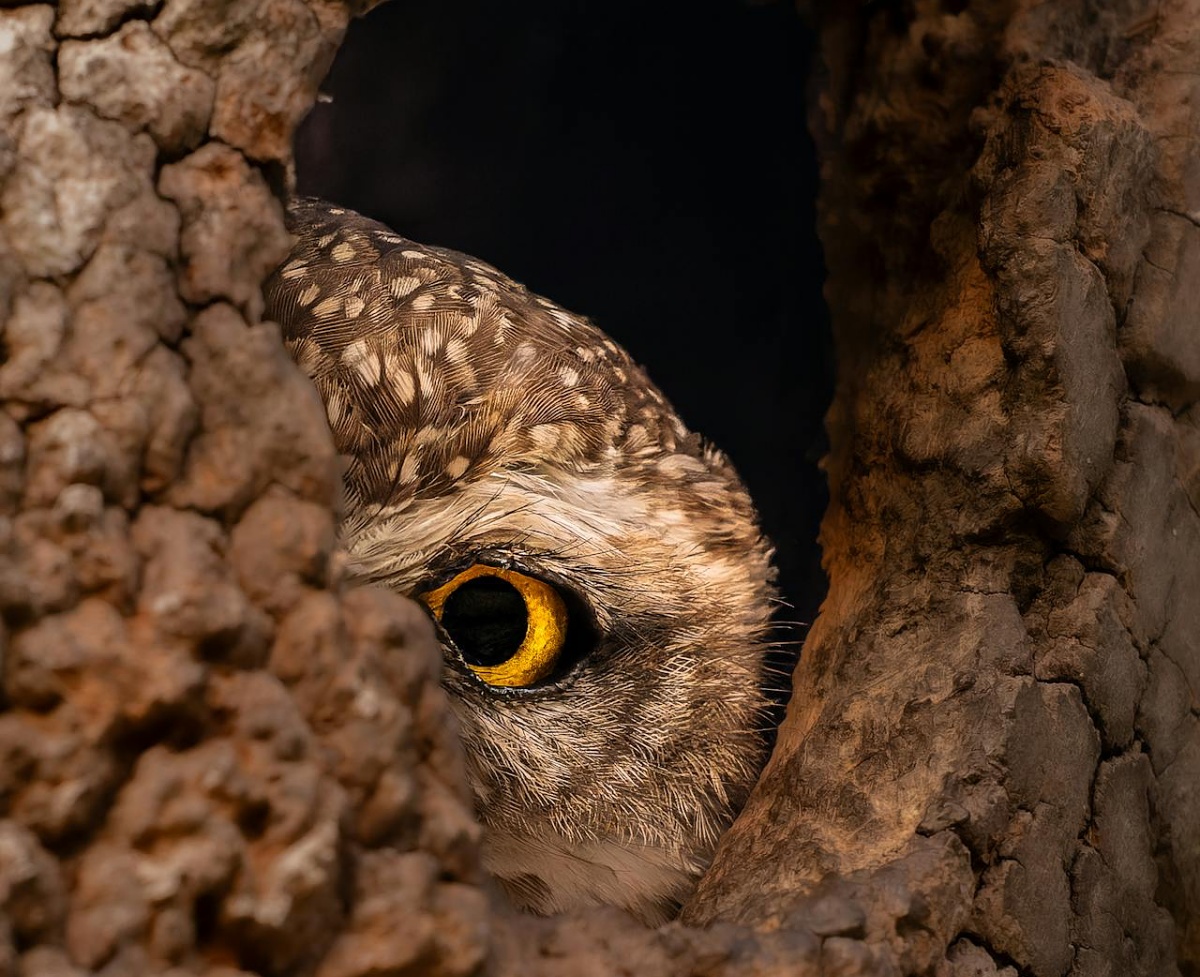
The spotted owl, which is indigenous to the old growth forests of the Pacific Northwest, was listed as endangered in 1990. Even before that listing, state laws had prohibited logging in some spotted owl habitats, which contain some of the largest and oldest trees in North America, and loggers had risen up in protest, claiming that the prohibition endangered their jobs, their families, their way of life. Since then, barred owls, indigenous to the eastern United States, have been invading the old growth forest that’s critical habitat for spotted owls, and it’s not likely the spotted owls will be able to compete.
To put that differently, a species of owl indigenous to the North American ecosystem has become an invasive species in the habitat of another species of owl also indigenous to North America, and officials have decided that the best way to save one is to exterminate the other. The same thing is happening in Wyoming, where barred owls have begun to invade the habitat of the great grey owl, also listed as endangered.
This is how habitats have always worked. Fundamentally, they’re systems—complex networks of distinct elements interacting in complex ways. Every element occupies a unique niche that benefits both it and the other elements around it. Every element in the system—every species of plant and animal—has a role to play that helps to keep the system intact, integrated, and functioning smoothly. Change one element in the system, and every other element in it has to adjust to restore the system’s network of relationships. If too many of the elements are required to adjust, the system may be fatally compromised, and it will collapse, to the cost of every one of its elements.
Related stories
The spotted owl and the old growth forest where it lives have evolved together, and it was not the barred owl that initially put the spotted owl in peril. It was the loggers and developers who began removing trees, either to sell as lumber or just to get them out of the way for the subdivisions, shopping centers, factories, office buildings, and roads that have been spreading in the region for decades, relentlessly encroaching on the old growth system, challenging its integrity, and compromising its ability to recover.
It was already too late for the spotted owl even before the loggers started taking trees.
The owl was doomed as soon as entrepreneurs looked at the forest and saw money standing in groves of massive trees. In their eyes, there was nothing there but trees—nothing but a fabulous profit to be made by taking them. Exterminating the barred owls won’t solve the problems the loggers and developers have caused.
The Fish and Wildlife Service, the Forest Service, the Bureau of Land Management, and other agencies were created to protect ecosystems like the old growth forests of the Pacific Northwest. However, they were also created to manage those systems, and to manage is to manipulate, so the critical question is whether that manipulation is beneficial or harmful. Gifford Pinchot, rightly credited as the father of the Forest Service, believed human intervention in ecosystems could be regulated so that economic exploitation could proceed without threatening the systems. He called his approach “wise use.”
Unfortunately, “wise use” is not an accurate way to describe the practices of most American loggers. Their goal is to get the usable timber out as quickly as possible, and the best way to do that, the most cost-effective way in the short term, is clear cutting—take everything you can sell, do whatever you must to get to it and harvest it, pay no attention to anything else, and leave the harvested area to recover or not, as it may. If the harvest destroys the habitat, so be it. The profit to be made is worth the cost of the ruined habitat.
John Muir put it as plainly as anyone could: “Any fool can destroy trees. They cannot run away; and if they could, they would still be destroyed—chased and hunted down as long as fun or a dollar could be got out of their bark hides, branching horns, or magnificent bole backbones.
Few that fell trees plant them; nor would planting avail much towards getting back anything like the noble primeval forests. During a man's life only saplings can be grown, in the place of the old trees—tens of centuries old—that have been destroyed.”
As it happens, the barred owls are invading western forests in response to the destruction of their original habitat in the eastern half of the country by loggers taking hardwood trees for railroad crossties, and by developers building subdivisions, shopping centers, factories, office buildings, and roads like the ones that are threatening spotted owls. The same forces that have doomed the spotted owl have also provoked a perfectly natural survival response among barred owls. Driven from their original habitat, they’ve gone in search of a new one, and they’ve found it in spotted owl territory.
Human intervention destroys ecosystems, even when it’s done in an effort to save them. Some recover, others don’t, but none remains as it was. In the old growth forests of the Pacific Northwest, it’s destroying the spotted owl, along with its habitat and hundreds of other species living there. Exterminating barred owls is merely a tragic and foolhardy attempt use human intervention to repair the damage caused by human intervention—a classic case of doing the same thing and expecting a different result.
We can mourn the owls, both spotted and barred. We cannot save either of them by wiping out the other. They both might survive, but only if we stop doing what we’ve always done and start learning less disruptive ways to occupy the world we share with owls and other living things. We could start by listening to the owls. The call of the barred owl sounds like a question: “Who shoots for you? Who shoots for you all?” The call of the spotted owl sounds like a person weeping.
Comments

Powered by RoundtableAn AI/DeFi-powered Enterprise Media Operating System. Learn more at Roundtable.io.© Roundtable 2026. By using this site you agree to the Terms of Use and Privacy Policy