


Jan 14, 2025 11:51 PM
Updated Jan 16, 2025 8:08 PM
Altadena Fire: Real stories from affected communities tell a sad story. Some were warned, others weren't.
The Coleman family moved to Altadena, CA, in 1969. The house they came to call "home" became the hub of warmth, love, and security to the five children they raised there and the broader family and friends who came there for weddings, family parties, and gatherings that included grandchildren, cousins, and dozens of kids from the community. The Coleman home was the "go-to spot" to receive advice and support.
The Coleman family loved Altadena, and the racially and ethnically diverse community loved them. Sadly, on Jan. 7, the Coleman matriarch, who is 93 years old, lost the home to one of the worst fires in the history of Southern California.
Families Affected by the Altadena Fire
After embers from the Eaton Canyon fire began setting homes on fire, the Colemans were forced to flee the home with just the clothes on their backs.
Sadly, they lost everything in the fire, including photos and items that can never be replaced.
Related stories
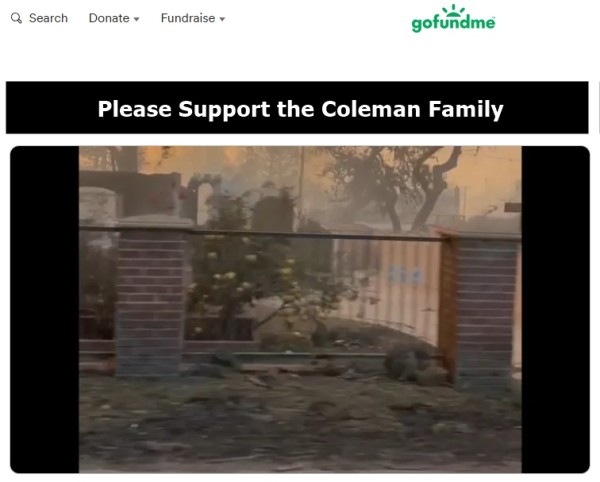
The tragedy that began on January 7th is just the beginning for the Colemans and the thousands of others who survived one of the worst disasters in California history. Here is a link to the Coleman Family GoFundMe campaign. Please give what you can:
Local journalist and frequent LA Progressive reporter, James Farr, happens to live in one of the high-risk regions adjacent to Eaton Canyon. James, who lives in Pasadena, CA, gives some insight into what he witnessed over the past few days. An evacuee himself, James took his family to Orange County initially but has now returned to Pasadena.
He talks about how the Altadena Fire has already affected Black and Brown families in ways that are different from the other communities. James maintains that marginalized communities are typically hit hardest by disasters, and this wildfire disaster is proving to be no different.
Environmental justice and economic justice go hand in hand when analyzing how disasters such as this impact different communities differently.
Katrina Comparisons
Almost twenty years ago, the world watched as Hurricane Katrina and the failure of the levees resulted in unimaginable death, damage, and disaster, particularly in New Orleans. But less of the world paid attention as the mostly white areas of ravaged New Orleans were completely rebuilt and reinhabited, while Black neighborhoods like the Lower 9th Ward experienced a far different story.
Prominent public intellectual, noted political analyst, and Georgetown Professor Michael Eric Dyson provided an analysis of these two different stories in his highly acclaimed post-Katrina book, “Come Hell or High Water: Hurricane Katrina and the Color of Disaster." In it, Dyson examines what Hurricane Katrina reveals about the fault lines of race and poverty in America. He offers a well-researched, searing indictment of the unevenhandedness of government policy as it relates to race and class.
In the week since the first embers set so many homes ablaze in the Altadena/Pasadena area of Southern California, scores of people we know personally have reached out, and we have reached out to them. What is becoming clear is that those who were already living on the edge, without much to begin with, are in worse shape than those with more resources.
James Farr has found that this story is shaping up to be omenously similar to Katrina but holds out hope that the aftermath of these two devastating tragedies will be different as do we.
Comments

Powered by RoundtableAn AI/DeFi-powered Enterprise Media Operating System. Learn more at Roundtable.io.© Roundtable 2026. By using this site you agree to the Terms of Use and Privacy Policy