


Apr 17, 2026 3:41 PM
Updated Apr 18, 2026 8:43 PM
As we approach our nation’s 250th symbolic birthday, the realities of history remind us both that Americans had some touchstones of freedom decades before the Declaration of Independence
Recently, I commented on the nation’s birthday and how it was more symbolic than actual. I pointed out that September 13, 1788, was much closer to an actual date for the birthing of the new nation than July 4, 1776.
Similarly, we can think of themes in our government as starting at different times and changing during our nationhood. For example, the Founders made their first amendment to the new Constitution language that sought to preserve the rights to free speech and free exercise of religion. Many people see 1791, when that 1st Amendment was ratified, as the start of real political journalism, by making reporting the truth a guaranteed liberty.
What then should we make of the case of People v. Harry Croswell, decided in 1804, in New York, upholding the criminal conviction of a publisher who wrote a factually accurate article criticizing the administration of President Thomas Jefferson? Or how about the 1798 Alien and Sedition Acts, four statutes which criminalized some criticisms of government? Most of the Founding Fathers were still alive and active when these laws were enacted.
As we approach our nation’s 250th symbolic birthday, the realities of history remind us both that Americans had some touchstones of freedom decades before the Declaration of Independence and that individuals acting together to oppose oppressive government have always been, and remain today among our most powerful tools to preserve and enhance the free speech which is essential to self-governance.
Related stories
In 1735, the Royal Governor of the colony of New York, put a journalist named John Peter Zenger on trial for seditious libel. Zenger was a journalist who wrote articles which criticized the New York colony’s judiciary structure. The articles were critical of, and perhaps insulting to, the colonial government.
In 18th century English Common Law, a statement disparaging the King or his government was libelous whether what was published was true. During the trial of Mr. Zenger, his attorney, Andrew Hamilton (no relation to Alexander), offered evidence that Mr. Zenger’s writing was factually accurate. But the Court rejected the evidence of truth, saying that it was irrelevant to the issue of libel. The Court instructed the jurors that the law required them to convict Mr. Zenger if he has published the articles, without regard to their truth or falsity.
For centuries, jury trials in English courts have followed the same structure: Judges decide questions of law and juries decide questions of fact. What this means is that if the parties have a dispute over what law applies to a case or what the law means, they argue their positions to the judge and the judge decides what law applies and what the law means. But when there is a dispute about what the facts are, the jury decides.
In the mid-18th century jurors were much as they are today. They were regular people: farmers, craftspeople, shop owners, bankers, businessmen (all jurors were men). They were not “men learned in the law” as judges and lawyers were. Judges in 1735 and judges today “instruct” jurors on what the law is. And lawyers present facts through witness testimony and documents. After presenting the facts, the lawyers for each party argue to the jury what they believe the facts prove and how they apply to the law on which the judge has instructed them.
The judge in the Zenger case instructed the jurors that the law required conviction if the facts showed that Zenger had published the articles which cast the government in a bad light.
Arnold Hamilton argued to the jury that there were no disputes about the facts. He also argued that the jurors had the right, even the duty to respect the truth. In 1735, all the jurors were Christian. All the jurors knew that the most fundamental laws included “Thou shalt not bear false witness.” Hamilton argued that a man should not be convicted for the ‘crime’ of telling the truth. Since the facts in Zenger’s articles were true, Zenger should not be convicted.
The jury deliberated for ten whole minutes, before finding that Zenger was not guilty of libeling the king’s government or ministers. That was in 1735. Now, more than 300 years later, in almost every country around the world, truth is a defense to a libel claim.
But we still have the examples of the Alien and Sedition Acts from 1798 and Harry Croswell’s conviction in 1804. The Croswell case was a state law case, decided 64 years before the 14th Amendment would apply the Bill of Rights to the states as well as the federal government. So, state law applied. That so outraged the people of New York, that in 1805, the New York legislature passed a new law-making truth a defense to libel.
The Alien and Sedition Acts were passed during the John Adams presidency, during the French Revolution, when many nations were gripped by fear that they too could be wracked by the violence of repressed citizens rising up.
It was a time of change in the new American government. The industrial revolution was beginning. U.S. merchant ships were competing with European countries’ ships in the growing international economy. The nation was divided over whether to remain an agricultural society, producing timber and cotton, and beaver pelts, and tobacco to the rest of the world, or to evolve into the new industrial age and become a world force.
John Adams’ Federalist politicians believed that Thomas Jefferson’s agrarian oriented anti-Federalist views would keep the new nation from reaching its true potential. The Jeffersonians believed that becoming an industrial nation would destroy the agricultural base on which the nation has succeeded from its founding up to that time. Fear was then, as it is today, one of the tools each side used to disparage and try to gain political advantage.
The Adams administration passed the Alien and Sedition Acts, to keep us all safe. As soon as the Jefferson administration took power, they repealed 3 of the 4 Acts, to preserve our safety. The one remaining, unrepealed act is one that the Donald is using to stir up fear of “the other” as a tool for trying to retain power.
This is real U.S. history, from before the founding acts to today’s efforts to destroy Constitutional governance. Citizen jurors in 1735 holding that truth is an important part of who we are. The Declaration of Independence says that Life, Liberty and the Pursuit of Happiness are “among” “certain inalienable rights” that exist from creation. They are not the only such inalienable rights, but only “among” such rights. The right to know the truth was enshrined millennia ago.
Where there are rights there have always been and will always be people (not just men - progress achieved in the 20th century) who will try to limit or take away rights. Such people always have and always will use fear as a tool for convincing people to give up their rights.
Our society is based on the concept that people should govern themselves, rather than having rule imposed upon them by feudal warlords or by rich, powerful corporations. Before the women’s rights movement of the early 20th century there were farm worker revolts. Then labor revolting against their exploitation by industrial might. Then Civil Rights fighters, after troops saw in Europe and Asia that U.S. style segregation and racial oppression were not the norm.
Each of these efforts learned from their predecessors, but also repeated mistakes. Pilipino workers, long the underclass of Asian workers, started what became the Farm Workers’ Union movement, bringing reform to a huge segment of oppressed workers. The late 20th century Women’s Liberation movement built on lessons from Civil Rights and Anti-War movements. And the more recent LGBTQ, etc., movement has drawn from all the others.
Every time a new group of people speaks out demanding rights or improvements in how society treats them, we see the reflection of the 1735 jurors who defied the judge’s instruction and said that Truth is more important than tradition. And we see the Temperance marchers demanding that society address the oppression that comes through controlling workers with cheap liquor.
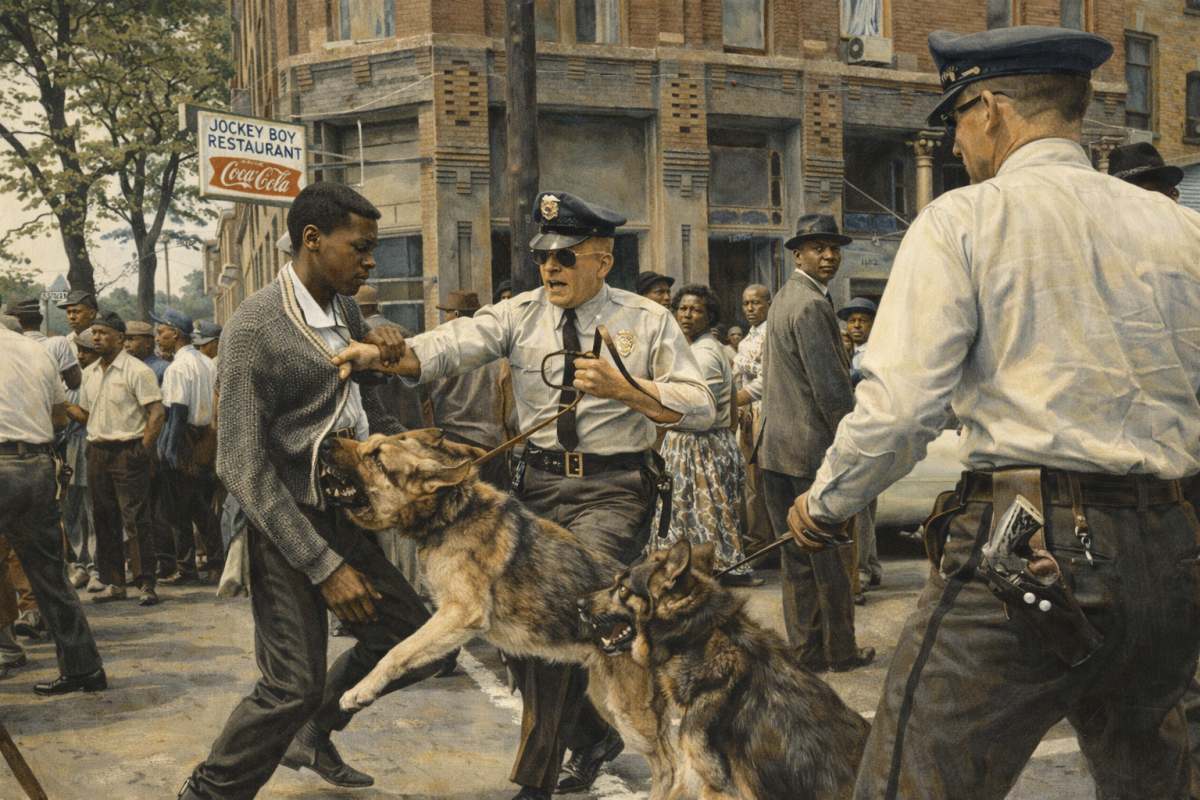
When we see ICEstapo troopers murder Alex Pretti and Renee Good, we are seeing miners gunned down by National Guard troops called out to defend mining corporations, and seeing people beaten down at the Edmund Pettus bridge. And we are reminded that there were soldiers marching for economic relief after the Revolutionary War and for benefits after WW-I and for freedom after WW-II.
And we are reminded that only through our own actions, protests, VOTES, raised voices, and sacrifices can we, do we achieve progressive change. There is no hypocrisy in trying and gaining less than we hoped. Hypocrisy exists in denying incremental progress and denying that hope has motivated our predecessors in struggle to bring us to where we are.
Comments

Powered by RoundtableAn AI/DeFi-powered Enterprise Media Operating System. Learn more at Roundtable.io.© Roundtable 2026. By using this site you agree to the Terms of Use and Privacy Policy