


Oct 19, 2015 5:21 PM
Updated Feb 10, 2022 10:46 PM
Rosemary Jenkins: In all my years of study in high school and college and throughout my research thereafter, I never read anything that explained how actions (or inactions) of another country kept ours from falling apart!
One of my majors in college covered the Civil War and Reconstruction. In all my years of study in high school and college and throughout my research thereafter, I never read anything that explained how actions (or inactions) of another country kept ours from falling apart!
It was not until I read the new book, Our Man in Charleston by Christopher Dickey, that I experienced an epiphany that explained so much. It put most of the pieces together for me.
I was always taught (backed up by my own research) that the War between the States was instigated over economic concerns (that slavery was a secondary issue but produced a salient, passionate, and relatable rallying point—for both sides). The North had become industrial and the South had remained agricultural.
There had always been a hierarchy in the South: free slave labor (once Native Americans but eventually replaced by “sturdier” African labor as a result of the slave trade) was on the bottom, the dirt-poor country folk with no slaves (who felt resentful of the slaves with whom they “competed” for paying jobs, hence getting some gratification when they exerted their power and brutality over those who could not fight back), the slightly better off who could “rent” a slave or two, the middle class who owned maybe 10 to 20 slaves, and finally at the very top were the wealthy planters who owned hundreds of slaves—overseen by brutal men who enjoyed exerting their unlimited and ruthless power over these hapless human beings.
Related stories
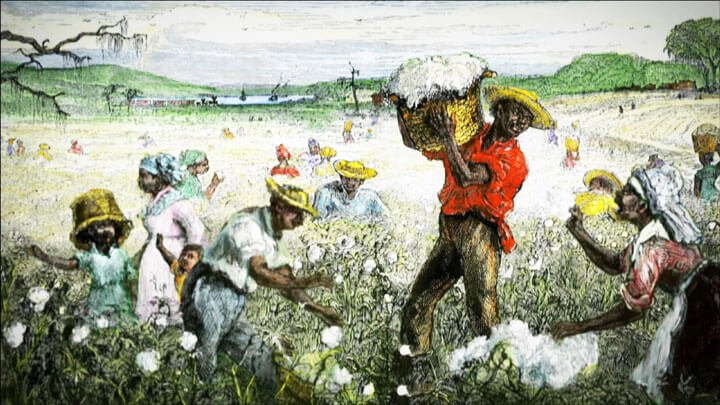
The South grew rice and sugar cane, but Cotton was King! Which country do you think—through its manufacture of cotton goods—depended greatly on that cotton for enhancing a rather prosperous economy? Great Britain (and the city of Lancashire within its borders)! A large population depended on that cotton for employment—work at the mills, selling cotton products like clothing, buying homes, and feeding families. The purchase of cotton from the South was instrumental in maintaining the Lancashire economy, let alone that of the rest of Great Britain.
Back in 1853, Robert Bunch became the British Consul in Charleston, South Carolina—the city of Fort Sumter. His job, ostensibly, was to represent Great Britain while ingratiating himself to the Southern people (and that included patronizing the rabid slave holders and the rest of the community that spoke earnestly and often about secession).
In fact, he was a type of double agent—his life and those of his family were always on the line. We have hundreds of papers left to us, written by Bunch to those officials above him in Washington, D. C. and in England itself. We also have copies of the responses—all of which substantiate the facts I am presenting here.
In order to be included in the inner circle of Charlestonites, Bunch had to play the part of supporting slave-ownership as well as the slave trade.
In order to be included in the inner circle of Charlestonites, Bunch had to play the part of supporting slave-ownership as well as the slave trade. The South assumed that any sane Brit would understand the importance, to the British Empire’s economic survival, of this “peculiar institution”—the term frequently used for slavery.
During all this time, Bunch was utterly repulsed by what the “Fire-Eaters” (those who literally screamed for secession) were espousing but even more sickened and repulsed by what he saw with his own eyes—the beatings, the murders, the torture, the rapes, the horrid living conditions for slaves, the buying and selling of human beings—if they were “lucky” enough to make it through the Middle Passage.
Here is an example of what he encountered during his walks in Charleston and what he witnessed at Charleston Harbor when a slave ship arrived:
Vomit and urine and feces and blood had seeped deep into the raw wood of the sunless, slapped-together slave decks in the hold staining them indelibly with filth. Cockroaches by the millions seethed among the boards,
and clouds of fleas and gnats rose up from them. The stench that came from this vessel wasn’t the smell of a ship full of cattle and horses, but that peculiar smell that surrounds humans, and only humans who are very
afraid and very sick or dying or dead. . . . (T)he air was stifling hot and heavy, that hideous odor [which] issued from the brig called the Echo captured off the coast of Cuba a few days before.
What the South did not know was just how abhorrent England and its leaders found not only slavery but the slave trade.
What I never knew is that even though our Constitution clearly stated (as part of a compromise) that there would be no slave trade after 1808, the South was secretly engaging all along in an active slave trade not only before that year but clearly after that designated prohibition and up to and including the Civil War—and would have continued for quite some time (probably to the turn of the century) had it won independence.
Because from the very beginning of our American history, considerations for secession was an ongoing issue, compromises were found to be absolutely necessary in order to hold this country together. For this reason, many concessions were made and written into the Constitution: the infamous 3/5 Compromise, the 1808 slave trade prohibition (Article 1, section 9), and others. Subsequent compromises were made such as the Missouri Compromise and even the Critendon Proposal (that was not passed into law). Canada, at more than one point in our history, had the opportunity to break away from the British Empire and become part of the United States (obviously it rejected the idea each time). Supreme Court decisions, such as Dred Scott, were contributory in perpetuating slavery in our nation.
Due to their interpretation of Manifest Destiny, the Fire-Eaters wanted to expand slavery westward! They wanted to expand it below the “imaginary” Mason-Dixon Line by extending it all the way to the Pacific Coast. The Missouri Compromise of 1820, a very significant arrangement, mandated that slavery could not exist above that line but did not consider what the Fire-Eaters thought they could achieve by attempting to get around the restrictions.
For many Southerners, that agreement could be interpreted as allowing them look to Cuba, Mexico, and Central America to become part of the Southern slave-holding states. General Walker is famous for his attempt to do just that.
Many Central Americans, in particular, are still resentful of what Americans tried to do to them (think of what the United Fruit Company later did and why we call these small nations, Banana Republics).
These designs required more slaves to do the labor on those future “plantations.” Thus, maintaining and even increasing the illegal slave trade would have to be pursued. By this way of thinking, secession would be a good thing—producing a situation which would allow not only slavery but also the slave trade and, ultimately, more free labor and increased profits on future agricultural enterprises.
These Southerners believed that Great Britain would capitulate, because of their “obvious” need for cotton, and support the South should secession actually transpire. Indeed, this prospect presented a very real conundrum for the English Prime Minister, his cabinet, and Parliament. The English were faced with the moral imperative of not dealing with the South (or any country for that matter) which was engaged in slavery and especially the slave trade. Yet they were also faced with the need for cotton to maintain the economy which was, at the time, doing well--in part because of the importation of King Cotton.

Many rogue ships were, during this entire period, bringing slaves (mainly from Africa) to ports along the Southern coasts, especially the port at Charleston Harbor. President Buchanan, despite his real feelings about slavery and related issues, gave orders for our own ships to interdict slave ships and remove the slaves. As a result, there were frequent encounters between the slavers and the American ships during which time many ships were taken over and brought to our shores where the captain and sailors were not only detained but often imprisoned. Sometimes the slave ships were sunk or otherwise destroyed. What transpired regarding the slaves on board is a separate issue which can be discussed at another time.
Not to be overlooked was the ongoing problem of our Negro Seaman Act of 1822 which included clauses which allowed Americans to jail and possibly even enslave any Negro (who were actually free and had papers to prove that status) who disembarked from ships from other nations when those foreign vessels docked at American ports. The British were furious when their men were being incarcerated and could do nothing about it.
The fact is that the British were regularly arriving at our shores in order to pick up cotton and other cargo to transport them to places like Lancashire in England. They carried free Black sailors who would disembark for R & R. When these sailors were arrested and kept from returning to their ships, the situation became a major bone of contention between the United States and Great Britain. Numerous court cases took place to free these men and to overturn the oppressive conditions of the Negro Seaman Act. Robert Bunch worked diligently and persistently to achieve fair judicial practices regarding this matter, but to no avail. Nevertheless and despite his position and almost without exception, the cases were lost.
In the meantime, those Fire-Eaters were naïve about the support they believed they would get from Great Britain should a Civil War break out. It did not occur to them that the latter had the option of purchasing cotton from Egypt (we still love Egyptian cotton) and from India—remember at the time, the sun never set on British soil.
The South never knew that Robert Bunch was key to England’s decisions. His messages continued (often coded) to convince his superiors just how impractical, onerous, and burdensome the decision would be should England side with the South. For many years Bunch had been able to convince the Southerners (he often travelled elsewhere in the South to learn for himself the truth of what was transpiring) that he supported their way of life when all the while he was working against them.
Several times, some of his superiors began to doubt his faithfulness to British interests (because he was so successful with his Southern charade), but thank goodness for Lord Richard Lyons, one of Bunch’s immediate superiors, who always promoted and protected Bunch, and was thus able to convince the Palmerston administration of Bunch’s fidelity and importance.
As it turned out, Bunch became instrumental in England’s decision not to support the South. Certainly, the British Empire’s navy was formidable at the time (the North eventually was able to build up an equally formidable Navy, but that might not have happened had England entered the fray from the very beginning). Had England made a different decision, it is very likely that the South would have been successful in its secession efforts and subsequent history would have been quite different from what, in fact, has transpired.
There were, however, alternatives for Great Britain, which eventually and almost to the last minute, decided the moral imperative was the path the British Empire should and must take. The British decided to boycott cotton purchases from the South. Not realizing how long this conflict would eventually take, after the large quantities of stored Southern cotton was used in manufacture, Lancashire eventually did suffer greatly (there was great unemployment, hunger, and the ravages that come when poverty spreads over the community)—the price we sometimes pay for taking the high roa
After the Civil War, Robert Bunch was able to redeem his reputation. He served in different posts in the Western Hemisphere (in Columbia and Venezuela, for instance, promoting his sense of justice and fair play) and eventually received the coveted position of minister, a title for which he had long sought.
It is ironic that this man, so important to the North’s success in keeping this nation together, was also a man far outside the “field of vision” of the government in London after the War between the States. His name is still not featured in our standard histories of the Civil War, but perhaps as a result of this book, the man once forgotten will be forever remembered as the person who saved the Union.
Let us also keep in mind that England helped save us when we needed its assistance and has subsequently been considered one of this nation’s best and most reliable friends.
I highly recommend this book. It is an easy read, well-researched, and rather short (for people, like me, who often like a quick read). More importantly, it helps us discover “new” information about our own history, parts of which few of us have been aware (and that lack of instruction applies, unfortunately, to many of our history teachers and college professors).
Robert Bunch, thank you for all you did on behalf of your country and ours. You risked your life and, sometimes, even those of your own family, to do the right thing. To quote from this wonderful tome:
Bunch did his best [throughout his life] to maintain his sense of justice. . . .(He) had helped to change the course of history; he had fought secretly but relentlessly against the cruel lunacy of slavery that surrounded him and that threatened to drag the wide world into America’s war; he had defended the humanity of black men and women who were treated no better than animals.
It is ironic that his name became “invisible” in our studies of this era. Yet, once essentially forgotten, thanks to the author, Christian Dickey, he will now be forever remembered! We must thank all those who provided the support he needed to overcome obstacles and maintain his diligence—from his wife, Helen, and Lord Lyons—to name but two. Otherwise, we might very well be living quite differently!
It truly saddens me that despite all my researching into this period, I never knew about him until just now. All that is left for me to say is thank you and thank you again, Minister Bunch!

Rosemary Jenkins
Comments

Powered by RoundtableAn AI/DeFi-powered Enterprise Media Operating System. Learn more at Roundtable.io.© Roundtable 2026. By using this site you agree to the Terms of Use and Privacy Policy