


Jun 1, 2024 11:05 PM
Our message regarding the attacks on Freedom of Speech could not have come at a better moment.
An important event took place at my home in Mt. Washington last weekend in North East Los Angeles. It was the synthesis of many years of personal and collective effort to make a difference in this world we currently occupy, fraught with contradiction and malaise.
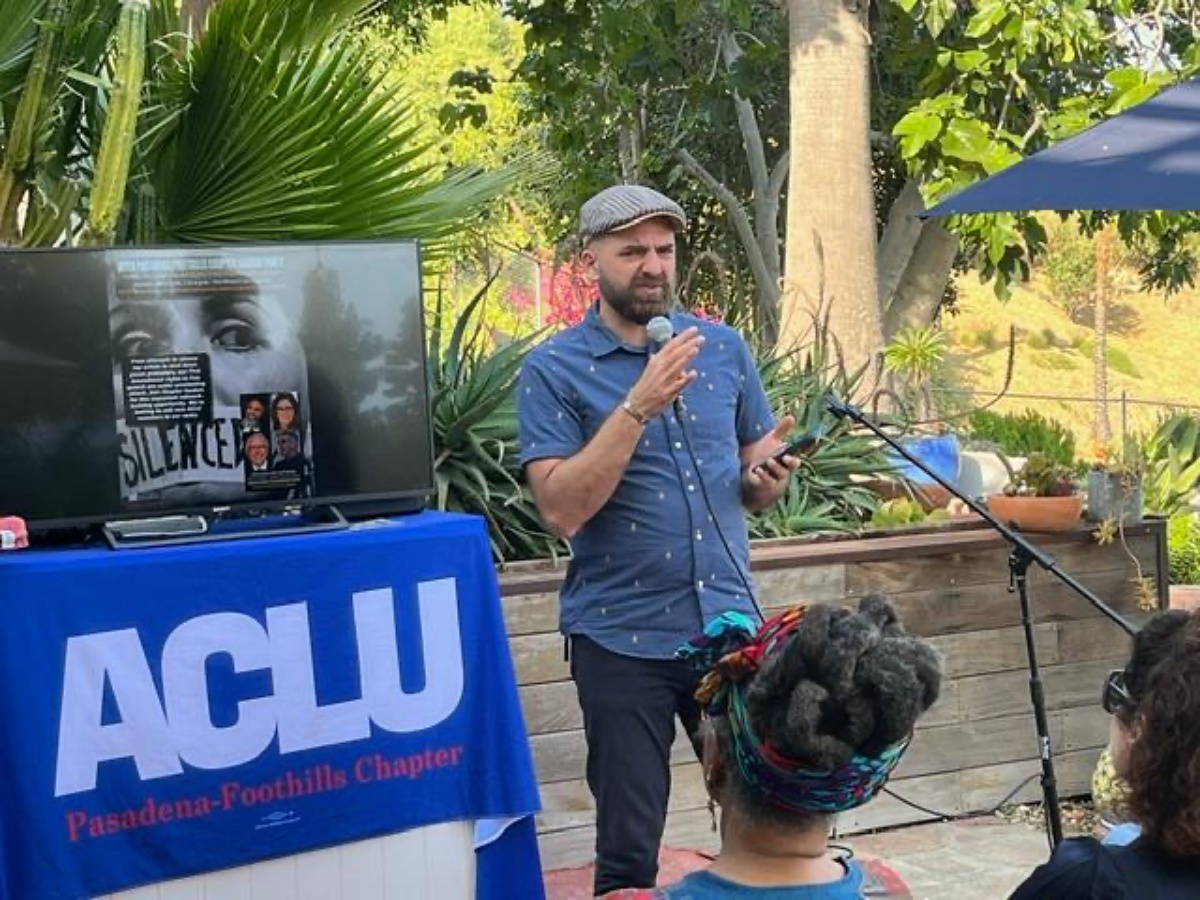
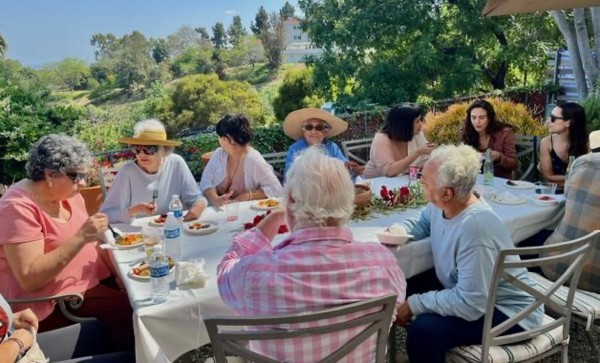
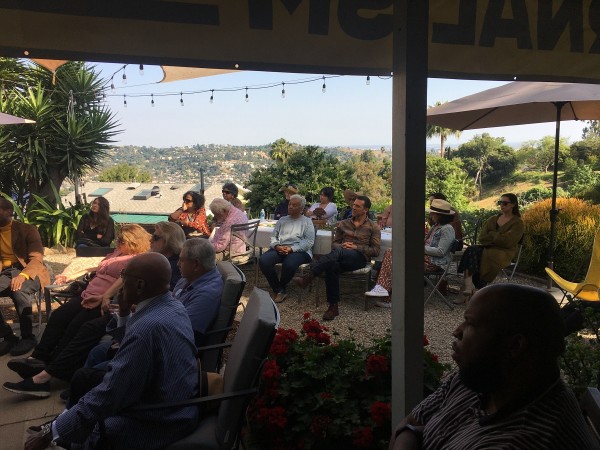
The ACLU of Southern California, Pasadena Foothills Chapter's garden party on March 19th—cosponsored by the LA Progressive—was a phenomenal success! Over 75 people attended from around the area: members, non-members, and neighbors, all extremely concerned about the threats our democracy is facing. And although I am serving as the Chapter's current president, credit is due to our organizing teams and activists who have been at it for many years. It was a celebration of our work and a call to action for the immediate future of our imperiled democracy.
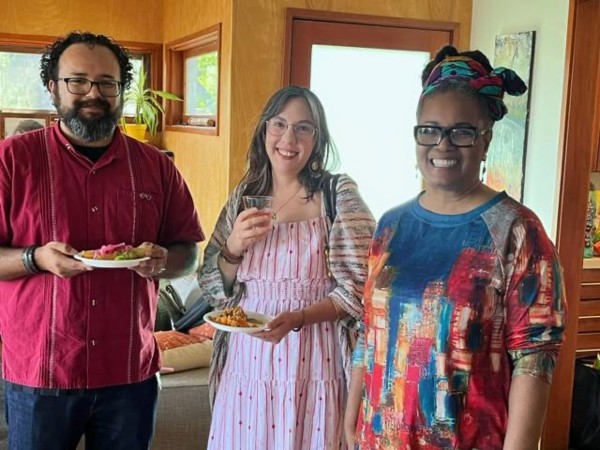
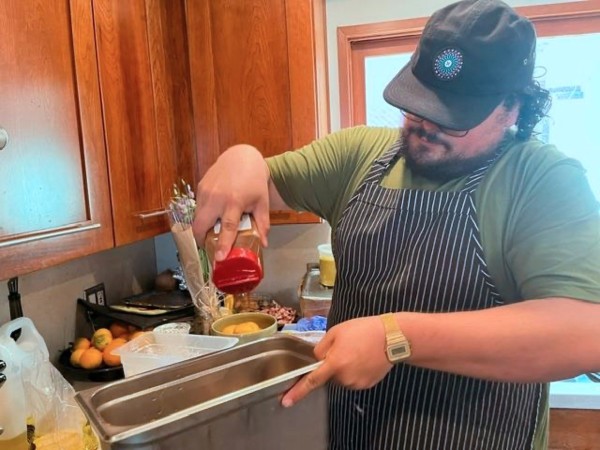
Our message regarding the attacks on Freedom of Speech could not have come at a better moment. Our speakers? On target. And a jazz trio that set the tone for the afternoon. And the food? A superb array of tacos and salsas, of course! And because we are in Los Angeles, on the land that was once the Tongvan nation, there is no debate when it comes to tacos. Siempre excellente!
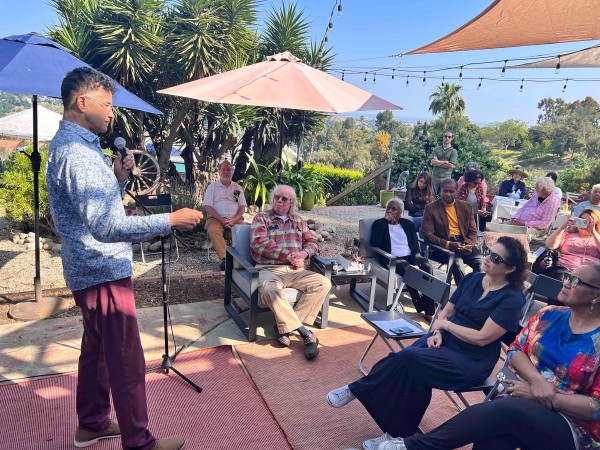
The theme was about the current environment of profound threat targeting freedom of speech and the press, our cherished fundamental rights as Americans, which is the raison d’être for the ACLU. It must be said that the overall consensus of our audience, diverse gathering of old and young, all united in the pursuit of a greater good. But there was something even deeper going on. Serendipity without work is nothing more than a daydream. We happened to find ourselves at the confluence of interconnected issues that collectively and in some ways sub-consciously were woven together by all of our efforts over decades of socio-political activism for social justice and in support of rational perspectives on war and peace. It was an expression of a desire to get to the heart of the matter, extracting truth from a torrent of distraction.
Related stories
Our speaker line-up was compelling and well versed in the current moment of unrest across college campuses worldwide, featuring Estee Chandler, cofounder of Jewish Voice for Peace Los Angeles; USC Law Professor and student liaison Jody Armour; Constitutional expert and Past President of the ACLU of Southern California, Stephen Rohde; Vincent Di Stefano, National Director of Assange Defense; and Mohammed Tajsar, ACLU staff attorney specializing in national security issues and anti-Muslim biases.
Chuck Manning Trio. Nick and Rob Corsini doing double duty.
In a fundamental way, my involvement with the ACLU that led to our garden party, actually began in 2016 while the entire country was embroiled in the presidential election circus. The Hillary and Donald show was quite the spectacle. And while all that was going on, I was producing, field directing, and writing a feature documentary film on the profound denial surrounding the Armenian Genocide that remains in place, from Los Angeles to Washington, Ankara to Yerevan, Jerusalem to Moscow, precisely because the Turks were never held accountable for their crimes. Two narratives, one truth. Sound familiar?
Armenia’s near complete extermination at the hands of the Turks, wherein 1.5 million Armenians were killed between 1915 and 1918, was designed to be an industrialized application of what the United States had been doing to indigenous populations of North America. It was protracted, violent, deeply cruel, and, by design. And from the beginning of both of these sad narratives, a regimen of dogged denial was constructed by the perpetrators to cloister their shame and responsibility, which persists to this day.
So what do Julian Assange, campus protests today, the Armenian Genocide, the Israel/Gaza war, and the ACLU have in common? The simple answer is Wikileaks, freedom of the press, and the US mission in Ankara. Allow me to explain. As I was conducting research on the film that would later be released in 2017 entitled ‘Architects of Denial’, I discovered a video of Julian Assange commenting remotely in a forum about the Armenian Genocide and the broader issue of the ongoing denial of inconvenient facts that Wikileaks was intended to reveal, like any other news organization. At the time, Congress was once again gnashing its teeth over whether to call the ‘genocide’ a ‘genocide’ and not a straight forward human tragedy, or war crime, or unfortunate collateral damage, or some other offensive euphemism used in wartime. And once again, Turkey was very busy attempting to stop the truth from being recognized, because they were busy doing the same thing to the Kurds in their eastern provinces surrounding Diyarbakir and didn’t want anyone to be reminded of their genocidal tactics of violent expropriation of land. My executive producer at the time told me to do everything I could to book an interview with Assange, and I did.
Not being a major network news organization, I was compelled to find alternative pathways to reach Assange as he was already under immense surveillance and scrutiny by the entirety of the national security state. At the time, Assange had taken refuge in the Ecuadoran embassy in London to escape phony extradition demands from Sweden for an alleged rape. A clear US Intel scheme to nab Assange. The US wanted Assange in a bad way for his release of the Iraq War logs in 2010, a trove of information, diplomatic cables, emails, and video evidence that implicated the US military in hundreds of acts of war crimes during its decades long occupation. He was a giant thorn in the side of the US ‘War on Terror’ efforts to subdue the truth of their dark ways.
I knew one person who had the ability to approach the network of human rights attorneys who represented Assange and it was through my friend and longtime fellow activist, Constitutional expert and former Past President of the ACLU of So Cal, Stephen Rohde, one of our esteemed speakers at our garden party. Stephen connected me with the late Michael Ratner of the Center for Constitutional Rights, a legend when it comes to human rights law, who in turn put me in direct communication with Assange’s London-based lawyers at Doughty Street Chambers—KC Geoffrey Robertson and Jennifer Robinson. My connection to the Wikileaks team was established.
An advantage I had at the time was that I wasn’t interested in questioning Assange about Hillary’s emails. My mission was to find the goods on Armenian Genocide denial in the US government. I submitted my questions and Assange soon agreed to do the interview. He had a lot to say on the subject. I hired a film crew in London and conducted the interview from my home studio in Los Angeles in the spring of 2016. From the beginning of the interview, it became clear that Assange’s knowledge base was on an entirely different level. His understanding of geo-politics and interconnectedness of corporate and state power was impressive. He revealed to me that his interest in the Armenian Genocide was based on the massive trove of information Wikileaks had been provided that was sourced to the US mission in Ankara. And within those thousands of communications, it was clear that significant efforts were being made by then Secretary of State Hillary Clinton and the Obama administration to use genocide recognition as a diplomatic tool to influence Turkey’s behavior and decision making regarding its role in NATO.
This also spoke to a deeper corruption of the US Congress over time, involving a massive regimen of bribes directed toward leadership of both parties—to the benefit of Turkish interests. This corruption reached at its high point, third in line to the presidency, Speaker of the House at the time and now a convicted child sex offender, Dennis Hastert, who happily waded waste deep in a tide of corruption involving bribes from Turkish operatives and extravagant fact-finding 'missions’ to Turkish coastlines.
People might be wondering why would the US government be so adamant about suppressing the truth about the Armenian Genocide? At this point, there were two primary reasons. First, Turkey did not want the embarrassment on a global stage of having to confront the truth of its past crimes against humanity after a century of denialism. Nor did they want to suffer the legal implications and territorial claims that would surely follow such a declaration. And second, US foreign policy at the time relied on its relationship with Turkey to enable the American war plan and occupation of Iraq. And President Erdogan made it clear that Armenian Genocide recognition would sour the sweet relationship with Turkey.
Although many in Congress over the years have been sympathetic to the Armenian cause, and although vague Presidential references had been made, no formal statement by the US government calling what happened to the Armenian people and the mass theft of their lands a ‘genocide’ was forthcoming until President Biden did so on Armenian Genocide Remembrance Day, April 24, 2021.
My interview with Assange in 2016 demonstrated that despite all the rhetoric and vilification he has been hit with, the bottom line was that he was a journalist and historian, publishing vitally important information to the public through Wikileaks. And for these reasons and the fact that he has been effectively imprisoned without charge for publishing the truth about US war crimes in Iraq and Afghanistan, and torture in Guantanamo, I have actively worked with several activists here in Los Angeles and others around the country and world to advocate for Julian’s release from a London high-security prison, locked away there now for the past six years facing extradition to the US for committing the crime of journalism. Even President Obama, the most prolific indictor of whistleblowers in US history, decided to drop charges against Assange because of what was termed ‘The New York Times Problem'—a recognition that Assange and Wikileaks’ publishing of the Iraq War Logs was no different than the role the New York Times played in publishing Daniel Ellsberg’s Pentagon Papers during the Vietnam era. Obviously, taking down Assange and Wikileaks was a clear affront to the Constitution that President Obama wisely chose not to follow—unlike his successor.
Following Ecuador’s lifting of Assange’s diplomatic protection with its London embassy, and his subsequent imprisonment at Belmarsh prison, myself and a a dozen notable longtime human rights and inter-religious activists got together to form the Southern California Committee in Defense of Julian Assange. Following our first (pre-covid) in person panel held at UCLA Law in 2019, we have maintained our vigil to win Assange’s release and merged our efforts with the Courage Foundation and later Assange Defense. In 2022 I hosted and ‘live-streamed’ a panel discussion featuring members of our committee, Sharon Kyle, Jody Armour, Marjorie Cohn, Stephen Rohde with John and Gabriel Shipton, father and brother of Julian Assange. It was distributed through the Courage Foundation worldwide, directly from my living room. A veritable modern miracle of technology that empowers our collective efforts.
Being informed from the grassroots up is the only way we can rebuild the narratives to be clearer reflections of reality. Whether in Gaza or on university campuses across the country, a coordinated, concerted effort is clearly being made to silence opposition to genocide in Palestine. And this story directly connects to the extreme suppression exerted upon Wikileaks publisher Julian Assange and his cruel, decade long incarceration without charge, a Guantanamo of a different flavor.
A few weeks ago, at the beginning of the campus protests in Southern California in support of Palestinian rights, my 23-year-old son and recent UC Santa Cruz graduate had expressed some of his outrage regarding the events in Gaza. I suggested that he go and and check out what was happening at UCLA—that it was a historic moment as the fever of dissent was spreading across the country, expressing a desire for something different. That arming and funding a genocide in Gaza was not OK. He took my old Nikon F3 with him and found himself slipping into the encampment and helped to organize its food service for the protesters. For the first time, I could tell that he had felt a sense of solidarity with an issue that said he could be part of a movement greater than himself. He sent me set of images of the Royce Hall encampment the night before it was attacked. It was peaceful and well directed. The next night, the encampment was violently attacked by a cadre of right wing misanthropes, none of whom were students. Somehow, the massive inter-agency police presence decided to stand back and stand by as the chaotic fascists moved in. A profound betrayal to our democratic institutions.
Thankfully, my son wasn’t there that night, and when I woke up the next morning to the news and informed him of what had happened, his entire demeanor changed. Something different was going on in his face. He saw the difference between truth and the poison of false narratives. He realized that the friends he made there out of common cause for justice, had been singled out and attacked for simply advocating for truth. As I continued my work organizing our ACLU event, my son for the first time stepped up, fully engaged and applied his technical skills and passion to help me organize and film the event. It was a moment of clarity for both of us. Hope is not lost on new generations as long as truth is preserved.
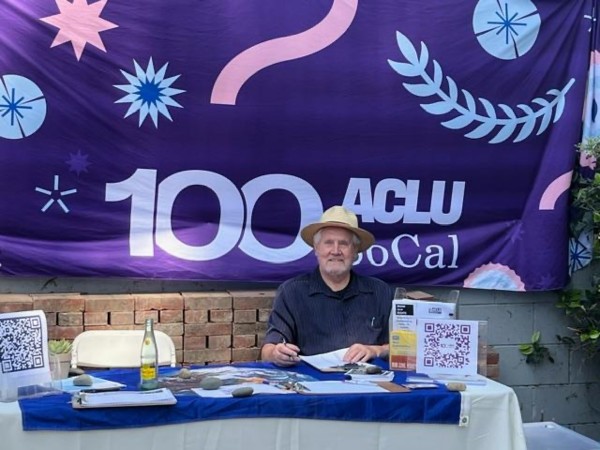
I want to take a minute and thank all those who participated in our chapter garden party, shared food, listened to jazz and heard compelling testimony to the fascist threats our democracy is currently facing. We had nearly 75 attendees from a wide demographic. It was a slice of progressive LA at its best.
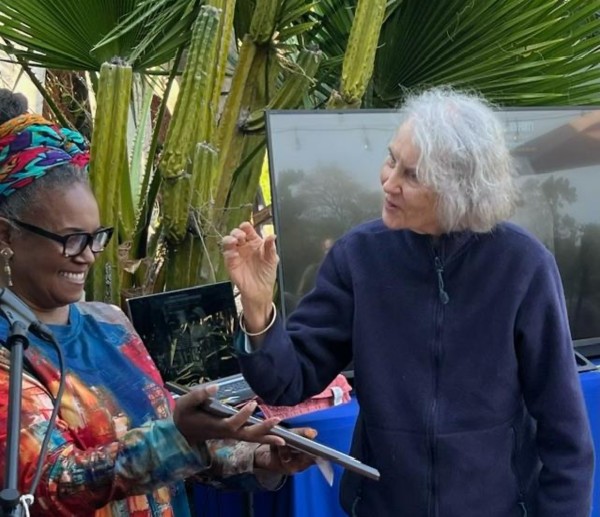
Our chapter also recognized long time ACLU organizer Kris Ockershauser with a lifetime achievement award. Kris was one of the founding members of the chapter and has worked for the NAACP, and CICOPP (Coalition for Increase Civilian Oversight of Pasadena Police). There is no shortage of issues that demand our time and effort to confront. Police behavior, houselessness, LGBTQ rights, economic justice. The key is working from the grassroots up, otherwise, real progress can never be made. I look forward to more events such as this. It's important to know that we are not alone in the struggle to defend the Constitution. It takes a village
Robert Corsini, President Pasadena/Foothills Chapter of the ACLU
Comments

Powered by RoundtableAn AI/DeFi-powered Enterprise Media Operating System. Learn more at Roundtable.io.© Roundtable 2026. By using this site you agree to the Terms of Use and Privacy Policy