


Aug 22, 2015 4:30 PM
Updated Feb 10, 2022 10:14 PM
Scot Nakagawa: Those who say activists for racial justice ought not preach to the choir are too personally invested in the people doing the singing to hear what they sound like to those for whom they are strangers or even the “other.”
As a long-time racial justice worker – a grey head in a movement mainly made up of young people – earnest young Asian Americans, anxious to acknowledge the pivotal role anti-Black racism plays in the perpetuation of white supremacy, often ask me how to “center anti-Blackness” in Asian American racial justice activism. I am as often asked that question by white progressives who aspire to become allies in the Movement for Black Lives.
My answer is simple. Acknowledge the leadership of Black Lives Matter and use the political space and opportunity the movement has created – including the 24/7 media coverage that has finally changed the dominant news narratives about Black crime to one of crimes against Black bodies – to ask ourselves, how does this movement serve me and those like me, whether they be Asian or Latino, Native or white? And then make those connections and tell your story.
Some tell me doing so “de-centers anti-Blackness.” But “centering anti-Blackness” requires us to tell the stories of the many oppressions that hold it in that central role, as the fulcrum of white supremacy, and of the many leverswithout which elites, who are the ultimate beneficiaries of white supremacy, cannot continue to use that fulcrum to continue to propel us toward racial dystopia.
White supremacy, after all, originated as a labor exploitation system. Racism wasn’t its primary product. No. Cotton, sugar, tobacco, produce for our markets, and chattel slaves, these were the commodities around which it was built, and these commodities were created for the sake of profit. Racism and white supremacy were the means, not the end.
Related stories

In today’s more complex economy, the hand that picks the strawberry isn’t the same as the one that packages it for market, but both are exploited for the sake of profit.
Still others tell me that telling such complex stories – stories about connections and intersections, and common cause being rooted in multiple self-interests is too much for most people. Only those already ready to hear it will listen. That it’s preaching to the choir.
To them, I say this –
Those who say activists for racial justice ought not preach to the choir are too personally invested in the people doing the singing to hear what they sound like to those for whom they are strangers or even the “other.” To them, the lack of harmony among our voices makes us sound confusing at best, and like nothing more than noise, even an angry din, at worst. And this has been true for a very long time.
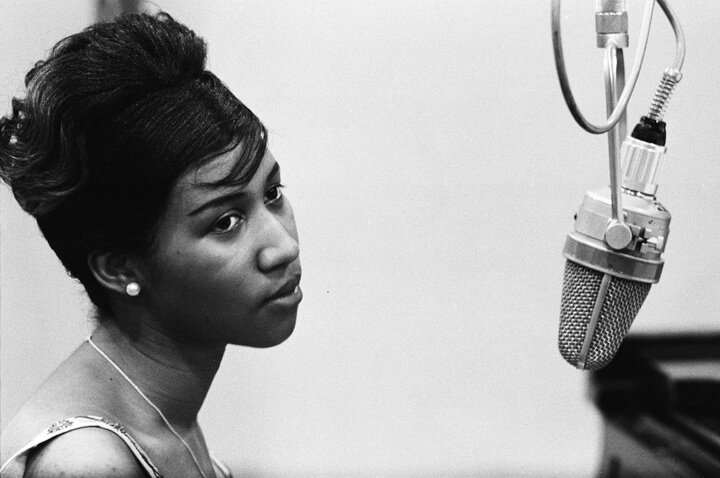
Now, finally, a clear, compelling voice – an Aretha in the form of the Movement for Black Lives – has risen in our midst, cutting through the noise and turning heads everywhere. Our job is not to stop singing in order to hear her, nor to try to copy her and sing along.
To silence ourselves diminishes the potential power and reach of our combined voices. To simply sing along threatens to drown her voice out.
Instead, we need to find our way to harmony, weaving our various voices together while retaining the integrity of each voice. We are, after all, there to sing, to have our voices heard, too. If not, why show up? And our singing is of stories that are clearly deeply intertwined, if only we can sing in harmony.
To help people understand relationship, the social nature of what we have been, are now, and will be in the future we create together, not singly but together, whether we do so with conscious intent or not is the most important message of our music.
Harmony is our goal. Not amalgamation or appropriation or imitation. We need to use the political space and cultural opportunity that the Movement for Black Lives has created for us and use it for this purpose, picking up the diverse threads of our lives and weaving them into a powerful, prophetic cry for justice.
This after all, is the true self-interest we all share in the cause of Black liberation. Black liberation has always has been the teacher, the prophet, the true hope for the liberation of us all.

Scot Nakagawa
RaceFiles
Comments

Powered by RoundtableAn AI/DeFi-powered Enterprise Media Operating System. Learn more at Roundtable.io.© Roundtable 2026. By using this site you agree to the Terms of Use and Privacy Policy