


Apr 14, 2026 11:48 PM
Updated Apr 15, 2026 5:07 PM
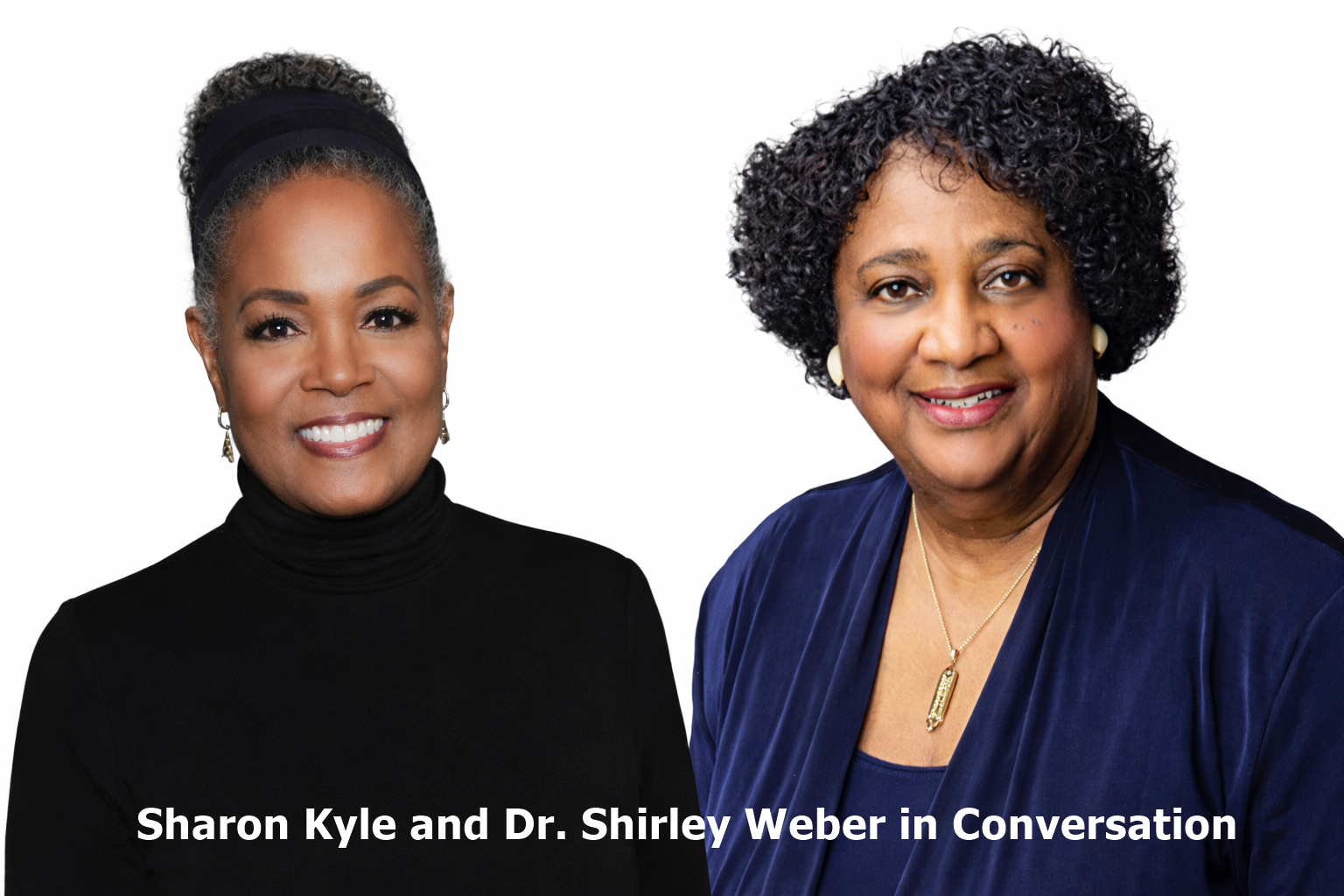
California Secretary of State Shirley Weber reflects on her family’s journey from Arkansas to Los Angeles, the lessons her parents taught her about courage and responsibility, and why protecting democracy requires truth, participation, and persistence.
California Secretary of State Dr. Shirley Weber does not speak about democracy as an abstraction. For her, it is personal. It is rooted in family, memory, discipline, struggle, and an unwavering belief that ordinary people have both the power and the duty to shape the world around them.
When I sat down with Weber, I was reminded immediately why she has become such a formidable public figure in California and beyond. Before serving as Secretary of State, she built a long record in education, civil rights, and public service. She taught for 40 years at San Diego State University, where she helped build Black Studies as one of the institution’s youngest professors. She later served in the California Legislature, where she became known for championing legislation on police reform, voting rights, and racial justice.
But to understand Weber’s public leadership, it helps to begin much earlier—with her father, a sharecropper in Hope, Arkansas.
A Family Forced to Flee
Weber’s family did not come to California under easy or hopeful circumstances. They came because her father fought back.
Related stories
He had worked as a sharecropper in Arkansas, a system designed to keep Black families impoverished and indebted. When he demanded the wages he was owed, the confrontation turned violent. After being struck, he struck back—an act that, in the Jim Crow South, could easily have cost him his life.
Her father was taken out of Arkansas in the middle of the night, hidden in a wagon, brought to Texarkana, and put on a train to Los Angeles, where Weber’s grandmother already lived. Later, once he had found work and some stability, Weber’s mother and the children followed.
“We had very little choice,” Weber recalled. “My father was a sharecropper in Hope, Arkansas. He always fought for his wages, adequate compensation for his farm work. Every year he was denied.”
From Arkansas Sharecropping to Los Angeles Survival
She was only three when the family arrived in California, one of eight children. What followed was not comfort, but determination. Her father could not read. He had been denied an education. But he was absolutely clear about one thing: his children would have opportunities he never had.
“He was determined to have a better life for his kids,” Weber said.
That determination shaped the household. Her father refused to let his children internalize the social codes of submission that had governed Black life in the South. He did not allow “yes, sir” and “no, ma’am” as compulsory rituals of deference. “Yes” and “no,” he insisted, were enough.
It was a small thing on the surface, but it reflected something larger: dignity was not negotiable.
Raised to Expect More
Weber speaks of her parents with deep reverence, but not sentimentality. She describes them as people of discipline, sacrifice, and relentless optimism. Her father worked every day, brought his money home, and spent almost nothing on himself. Her mother stayed home to care for the children, not because the family could easily afford it, but because relatives believed the streets of Los Angeles were too dangerous for the children to be left unguarded.
The family lived in the projects. They did not come from money or privilege. They came from labor, frugality, and a fierce sense of purpose.
“My dad worked hard every day of his life,” Weber said. “He never drank it away. He never threw it away. He never bought himself stuff.”
He believed in every one of his children. He pushed them to study, to achieve, and to imagine futures larger than the world immediately around them. When Weber attended UCLA and saw classmates fixated on marriage, she went home and told her father. His response was immediate and unmistakable: “You better not. You got something to do. You got to go to school.”
Raised to Believe Education Was Non-Negotiable
That was the ethos of the family. Education was not ornamental. It was mission.
When Weber did not receive a scholarship she believed she had earned, her father did not quietly accept the slight. Instead, every time she received an award or public recognition, he pinned the newspaper clipping on the lunchroom wall at his job with a pointed reminder: this was the girl they had refused to invest in.
“He was, to the very end, our cheerleader,” Weber said. “He believed in his kids.”
Building Black Studies and Fighting for Ethnic Studies
Long before Weber entered electoral politics, she was already doing movement work in the classroom and on campus.
She spent 40 years at San Diego State University, where she helped build Black Studies into a serious academic discipline. Later, in the Legislature, she pushed that work even further, helping secure legislation requiring ethnic studies throughout the California State University system.
Her own educational journey was not without conflict. At UCLA, she said, administrators once tried to push her out of graduate school without legitimate cause. But Weber fought back. With the support of her husband, who threatened legal action, she forced the institution to honor its own rules.
That story fits a recurring pattern in Weber’s life: she does not yield easily to power when she knows she is right.
Why She Became Secretary of State
When Governor Gavin Newsom asked Weber to become California Secretary of State, she had not been seeking the post. By then, she had already built an extraordinary career in academia and the Legislature. But she saw something dangerous unfolding in the country.
She watched the rising attacks on voting rights, the spread of election lies, and the willingness of powerful figures to undermine democratic norms. She also drew on what she had seen internationally, particularly in African nations where leaders sought to cling to power through manipulation and intimidation.
“I believed this nation was in peril,” Weber said.
At the time, not everyone took that warning seriously. Then came January 6.
For Weber, the office of Secretary of State was not simply administrative. It was a frontline position in the defense of democracy. She saw clearly that elections were under assault, and she knew California had a special role to play.
“I realized that what do I have to lose?” she said. “I’ve had 40 years as a professor. I’ve had almost 10 years as a legislator. I’m unafraid. I’m not intimidated by this person. And I’ll fight.”
California as a Democratic Firewall
Weber describes California as a state that has been willing to stand where others hesitate.
She says many public officials across the country understand the stakes, but some are constrained by political fear—fear of retaliation, fear of their governors, fear of losing office, fear of being replaced by someone worse. California, she argues, has been different.
“With its governor, with its attorney general, the three of us are like a force across this nation,” Weber said. “We are unafraid and we fight back and we fight for what is right and what is just.”
That fight has taken many forms: resisting federal overreach, refusing to surrender sensitive state data, defending California’s election systems, and pushing back against efforts to undermine access to the ballot.
Her description of the work is not ceremonial. It is active, ongoing, and litigious when necessary. Lawsuits. Court fights. Administrative battles. Public education. Constant vigilance.
“We are a force to be reckoned with,” she said.
Civic Culture Has to Be Built
For Weber, democracy is not sustained by elections alone. It has to be taught, practiced, and renewed.
That is why she places so much emphasis on civic education, especially among young people. Her office has worked to preregister high school students, expand outreach on college campuses, and involve young people directly in the electoral process by training and paying them to work at the polls.
She said California has preregistered more than 1.5 million high school students. The state has also expanded ballot access and voting resources across university campuses, while producing podcasts, educational materials, and online tools to help voters understand not only how to vote, but why it matters.
“We want to educate folks because it’s more than just telling you to do something,” Weber said. “We want you to understand why you’re doing it.”
That educational mission bears the imprint of her years as a professor. Weber is not simply trying to mobilize voters. She is trying to form citizens.
Race, Voting, and the Long Struggle
When the conversation turned to race and political participation, Weber did not minimize the problem. Racial inequity still shapes American democracy in profound ways. But her answer was not defeatist.
She pointed to the long history of Black struggle for the vote—long lines, threats, humiliation, exclusion—and argued that today’s attacks on voting rights must be understood within that deeper history. Efforts to eliminate vote-by-mail, reduce access, and spread disinformation are real, she said. But they should not be allowed to produce surrender.
“Even if all else fails,” Weber said, “you go to those polls and vote.”
Her message was blunt: hardship is not new, and discouragement is one of the tools used against marginalized communities. The answer is not withdrawal. It is persistence.
“These are difficult times,” she said, “but not the worst times we’ve ever seen.”
That perspective matters. It reframes the current moment not as unprecedented doom, but as one chapter in a much longer struggle—one that demands courage rather than despair.
Fighting Disinformation in Real Time
One of the clearest dangers Weber identified is disinformation.
Her office, she said, has staff dedicated to tracking falsehoods and responding quickly before they spread further. Because misinformation mutates fast, delay is dangerous. By the time a lie circulates a second or third time, it often no longer resembles the original claim.
So the strategy is immediate intervention: correct the record through the press, through social media, through trusted messengers, and through the Secretary of State’s own public information channels.
“We encourage folks who may have some information that is incorrect to call us and ask questions,” Weber said. “Is this true? And we will give you the correct answer.”
That emphasis on trusted messengers is especially important in an age when many people are more likely to believe a rumor from a relative or acquaintance than a formal public statement. Weber laughed as she described family members sometimes calling her with wild claims they had heard, only to receive a firm correction—and a warning not to spread the lie any further.
It is a small anecdote, but it points to a larger truth: protecting democracy now requires not only laws and institutions, but everyday acts of discernment.
Responsibility Begins With Us
As the interview came to a close, Weber returned to the principle that seems to animate everything she does: responsibility.
Yes, institutions matter. Yes, elected officials matter. Yes, the state has an obligation to protect access, fairness, and truth. But ordinary people cannot outsource their role in democracy.
“We want to encourage everyone to take responsibility for themselves and for their families,” she said. “Don’t wait for somebody else to change your world. The world will change because you changed it.”
That lesson came directly from her parents, who took responsibility not only for their own children, but for the well-being of the larger community around them. They did not imagine citizenship as passive. They understood it as mutual obligation.
That, in many ways, is Weber’s larger message—not just about voting, but about public life itself.
Democracy is not self-executing. Justice does not sustain itself. Rights do not defend themselves. A healthy civic culture depends on people who refuse to give in to cynicism, who insist on truth in the face of lies, and who understand that the act of participation is itself a form of power.
Shirley Weber has lived that lesson. She learned it first from a father who escaped Arkansas under threat of death, came to California without fear, and raised eight children to expect more from the world than the world was prepared to give.
That legacy still speaks through her.
And California is stronger for it.
Note from the Publisher: This interview was originally captured in video form but for reasons we do not understand, the video froze midstream. We've included it below for those who'd like to see it anyway.
Comments

Powered by RoundtableAn AI/DeFi-powered Enterprise Media Operating System. Learn more at Roundtable.io.© Roundtable 2026. By using this site you agree to the Terms of Use and Privacy Policy