


Jun 10, 2026 8:56 PM
Updated Jun 11, 2026 3:11 AM
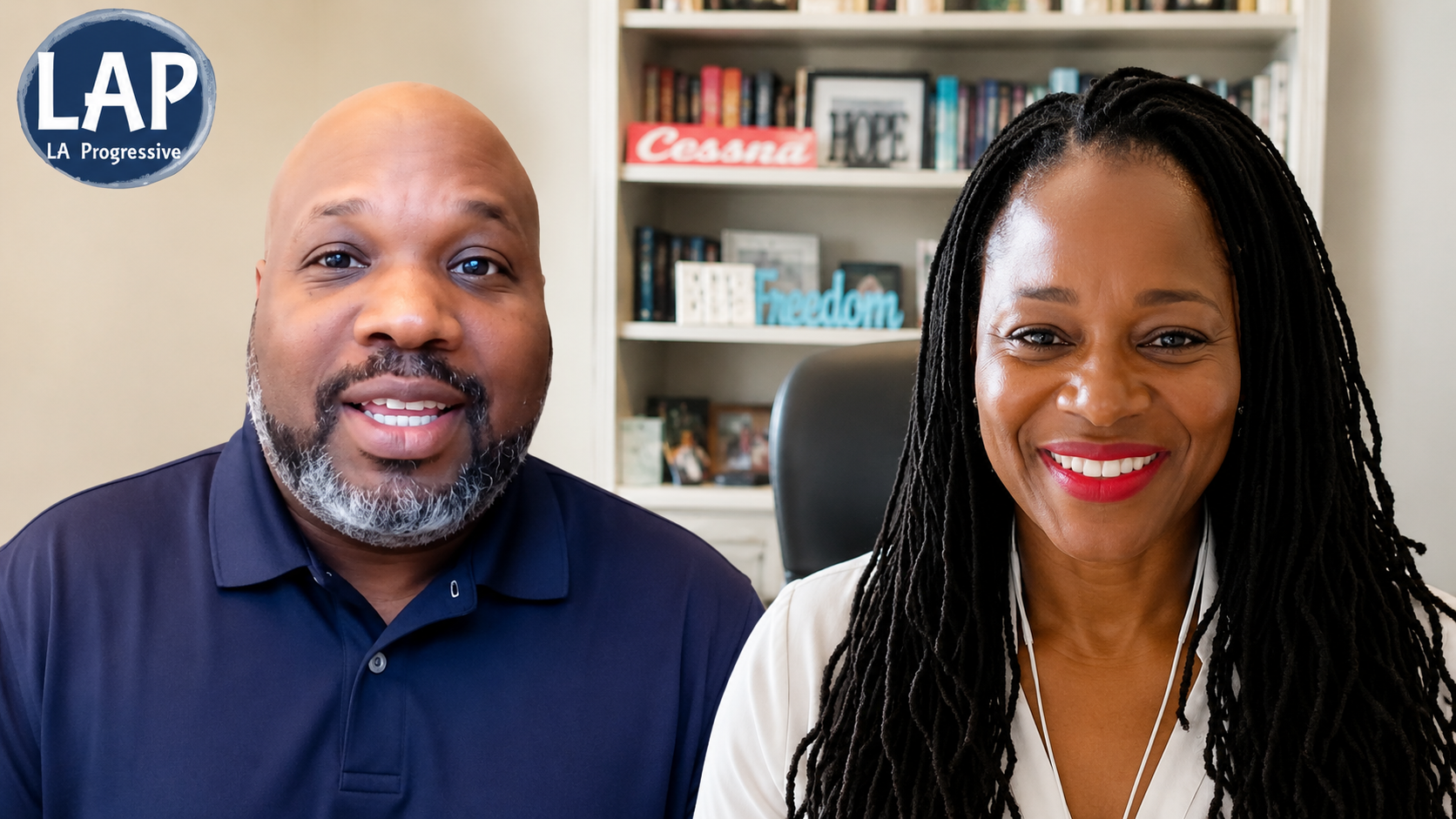
In a wide-ranging conversation with LA Progressive, the California senator explains why protecting workers, strengthening unions, and rebuilding democratic participation are essential to the future of California and the nation.
California State Senator Lola Smallwood-Cuevas has spent her career fighting for economic justice, worker rights, and racial equity. She represents the 28th Senate District, which includes much of South Los Angeles and neighboring communities. Before her election to the State Senate in 2022, Smallwood-Cuevas spent more than two decades as a journalist, labor organizer, educator, and advocate for economic justice. Raised by a single mother who worked as a nurse and home-care worker, she built her career around expanding opportunities for working families and confronting racial inequities in the labor market.
In this conversation with LA Progressive's Wade Kyle, Smallwood-Cuevas discusses the impact of federal workforce cuts, the importance of labor unions, threats to democratic participation, and why she believes community organizing remains the most powerful tool for change.
Wade Kyle: Senator Smallwood-Cuevas, thank you for joining us today.
Sen. Lola Smallwood-Cuevas: I'm so glad to be with LA Progressive. It's always good to be in the house with you all.
Related stories
Kyle: We appreciate you taking the time. The reason I wanted this conversation goes back to something I heard you say at a recent event. You spoke about how today's political climate is targeting Black leadership while simultaneously lamenting high Black unemployment. That struck a chord with me.
I've watched people spend their entire careers in public service, outperform expectations, and dedicate themselves to their communities, only to find themselves suddenly under attack or losing their positions. As an elected official, I felt you might have a unique perspective on what Black leaders are facing right now.
Black Workers and Economic Justice
Smallwood-Cuevas: I appreciate you raising this issue.
My entire political and professional life has focused on expanding access to quality union jobs, particularly for Black workers. I began as a journalist reporting on economic disparities and labor issues. One thing was always clear: our community consistently sat at the top of the charts when it came to unemployment and underemployment. We were often the last hired and the first fired.
After I lost my own journalism job during the transition to online media, I had to fight for my livelihood through my union. That experience taught me a profound lesson: when workers come together collectively, they can make a real difference.
That realization led me to work for SEIU, organizing private security workers in Los Angeles—many of them Black men and women from South Los Angeles. Later, at UCLA's Labor Center, we launched initiatives that eventually helped create the Los Angeles Black Worker Center, which became a national model for Black worker organizing.
The reason I raise these issues so frequently is because economic inequality remains at the root of so many challenges facing our communities. We cannot ignore the historical reality that for generations Black Americans were denied opportunities to accumulate wealth and economic stability. The effects of that history continue to shape employment outcomes today.
Federal Cuts and Their Impact on Black Workers
Kyle: You've spoken about recent federal actions and their impact on workers. How do you see that playing out?
Smallwood-Cuevas: We're living through a moment of tremendous economic concentration. California's economy has grown significantly, yet wealth continues flowing upward into fewer and fewer hands.
What concerns me is that we're seeing policies that remove resources from public systems and redirect them toward the wealthiest individuals and corporations. When funding is pulled from healthcare, education, labor enforcement, civil rights offices, and equal-opportunity programs, it affects real people.
The public sector has historically been one of the few sectors where Black workers have achieved relatively equitable representation in quality employment. That didn't happen by accident. It came from generations of organizing and advocacy, from A. Philip Randolph's efforts to desegregate the military and federal workforce to decades of civil rights struggles.
When cuts target government agencies, those cuts often disproportionately affect Black workers—particularly Black women—who have built careers in public service, education, labor enforcement, and civil rights work.
These jobs have been an important foundation of economic stability in many Black communities. When that foundation is weakened, the consequences ripple far beyond individual workers.
Why Labor Unions Matter
Kyle: As a member of both UTLA and CTA, I'm a strong supporter of labor unions. Unions help workers secure living wages, healthcare, pensions, and workplace protections. Yet organized labor often seems to be under attack.
Smallwood-Cuevas: That's absolutely true.
Unions create collective power. They allow workers to come together around a shared vision and shared strategy. That's precisely why organized labor has often been targeted by those who seek to concentrate power.
When you look at federal workers, you find some of the highest rates of union membership in the country. Those workers have organized for decades to secure fair wages and workplace protections.
An attack on organized labor isn't simply an attack on jobs. It's an attack on democratic participation itself because unions help ordinary people exercise collective power and influence over the conditions of their lives.
Rebuilding Democratic Participation
Kyle: What reforms do you think could make California's democracy more participatory, more accountable, and more engaging—especially for young people?
Smallwood-Cuevas: That's one of the most important questions we face.
First, people need access to reliable information. We are living in an era where misinformation spreads rapidly through social media. Algorithms often amplify division, confusion, and propaganda.
That's why institutions like labor unions, community organizations, churches, civic groups, and publications like LA Progressive matter so much. They provide spaces where people can engage with facts, discuss issues collectively, and make informed decisions.
Second, we need stronger communication between elected officials and the people they represent.
I represent nearly one million constituents. My Senate office has thirteen staff members. It's simply impossible to maintain meaningful communication with everyone through traditional channels.
One of my goals in this term is to build what I think of as an "internal congress" within my district—a more robust system for ongoing dialogue with constituents. We need democratic infrastructure that allows people to participate in policymaking, share concerns, and stay informed in real time.
We also need to remain vigilant about efforts to create barriers to voting. Democracy functions best when participation is easy and accessible. Any measures that make voting more difficult deserve careful scrutiny because barriers often fall hardest on working people and marginalized communities.
Challenging Concentrated Power
Kyle: Looking back over your career as an organizer and now as a policymaker, what have you learned about how ordinary people can challenge entrenched power?
Smallwood-Cuevas: The answer begins with community.
A small number of people should not determine conditions for everyone else. Real change happens when people organize together, learn from one another, identify shared challenges, and build collective solutions.
The people most affected by a problem are often the people who understand it best. They know where systems fail. They know what needs to change.
That's why top-down solutions frequently fall short. Effective policymaking requires a reciprocal relationship between elected officials and the communities most directly impacted by public policy.
When those voices are genuinely included, we create better laws and better outcomes.
"We Are What This Moment Requires"
Kyle: Before we wrap up, is there anything you'd like to say to the community?
Smallwood-Cuevas: Yes.
It's easy to become discouraged by the challenges we face. We know Black communities continue to experience disparities in health, education, housing, and economic opportunity.
But we also know that Black communities have demonstrated extraordinary resilience. We have repeatedly shown moral clarity, courage, and a deep understanding of the leadership needed to move society forward.
What I want people to understand is that we are what this moment requires.
We have the wisdom of lived experience. We have the lessons of our ancestors. We know how to build coalitions across race, class, and geography.
California has demonstrated what's possible. We've expanded healthcare access. We've invested in educational equity. We've worked to reduce incarceration. We've pursued policies aimed at making housing more affordable and communities more stable.
But progress isn't permanent.
We have to rebuild and strengthen our coalitions. We have to create better communication networks. And we have to be prepared to fight for the values we believe in.
If we don't, future generations will be forced to rebuild what we've spent decades creating.
I remain hopeful because I believe we have everything we need. We simply need to come together and use it.
Kyle: Senator Smallwood-Cuevas, thank you for your time and for sharing your vision with our readers.
Smallwood-Cuevas: Thank you, Wade. I appreciate the opportunity, and I look forward to continuing the conversation.
Editor's Note on Statistics
During this interview, Senator Smallwood-Cuevas discusses the impact of federal workforce reductions on Black workers and Black women in particular. Some of the numerical estimates she cites—including references to approximately 300,000 Black women losing public-sector employment and approximately one million federal workers receiving layoffs or workforce reductions—reflect the Senator's assessment of the consequences of recent federal workforce policies.
LA Progressive was able to verify that the Trump administration and federal officials have reported workforce reductions exceeding 300,000 federal employees through layoffs, retirements, buyouts, and other departures. However, we were unable to independently verify specific figures regarding the number of Black women affected by those reductions. Readers should therefore understand those figures as estimates cited by Senator Smallwood-Cuevas rather than independently confirmed government statistics.
California•Black Women•California Legislature•California Democratic Party•Black Journalists•Black Power
Comments

Powered by RoundtableAn AI/DeFi-powered Enterprise Media Operating System. Learn more at Roundtable.io.© Roundtable 2026. By using this site you agree to the Terms of Use and Privacy Policy