


Dec 18, 2022 2:00 PM
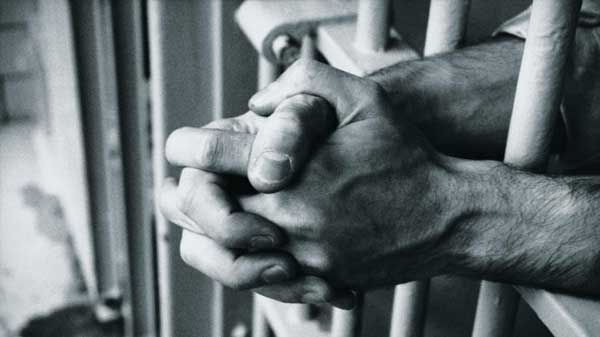
Community members and advocates push to bring loved ones home from incarceration in LA County jails
Two years after the pivotal November election that passed Measure J, Los Angeles voters once again signal that they are for sheriff accountability and care, rather than cages. In November, 2022, Angelenos voted for a progressive vision for a County that prioritizes the needs of its most vulnerable.
This November was also the 2-year anniversary of Measure J. Measure J - now referred to by the county as Care First Community Investment (CFCI) - is a tangible budget reinvestment policy that Black, Indigenous, Latine, Two-Spirit, Queer, Trans, Immmigrant, and Disabled people have stewarded since its passage in November 2020.
In light of this 2 year milestone, we are called to reflect on our community victories – as well as the challenges of pushing the county to move towards #CareFirst. The primary challenge we’ve faced in the implementation of CFCI has been that of moving the Board and the LA County CEO to invest #CareFirst resources commensurate with the need.
In the most recent midterm election, voters succeeded in ousting the corrupt LA County Sheriff (Alex Villanueva), passed Measure A for Sheriff accountability with overwhelming support, and elected Lindsey Horvath to Supervisorial District Three. Notably, Lindsey’s campaign uplifted the need for alternatives to incarceration. Coupled with the passage of Measure ULA and the election of a City Controller who ran on a platform to unapologetically audit LAPD budgets, as well as the election of the first-ever public defender to the judicial bench in the LA County Superior Court, it is unequivocally clear that LA voters are demanding progressive community care across all policy areas.
Related stories
So, with broad support from voters for a Care First agenda, we once again ask ourselves, where does Care First implementation in the County of Los Angeles stand?
As a collective, we continue to push for a #CareFirstBudget. This effort derives from a greater push for participatory budgeting in Los Angeles County. We demand that transparency and accountability are baked into the implementation of public policy.
Despite clarion calls to upend mass incarceration, people are now being caged in Los Angeles County jail at higher rates than before the onset of the pandemic. Even more disturbingly, nearly half of people currently being held in jail against their will are legally innocent, meaning that they are being detained before they have the opportunity to go to trial. And, we are faced with an ongoing human rights crisis at the Inmate Reception Center (IRC) in downtown Los Angeles. The American Civil Liberties Union of Southern California shared photos that exposed disturbing abuses including forced overcrowding and lack of sanitation at IRC. In this dehumanizing and dangerous facility, people are forced to sleep on stone floors, and disturbing photos show vulnerable people chained to chairs.
As community members and advocates push to bring loved ones home from incarceration in LA County jails, we simultaneously re-uplift the demands to close Men’s Central Jail, decarcerate CRDF, and K6G, and divest from probation and into youth justice reimagined. Many grassroots organizations — including the Reimagine-LA Coalition, the Justice LA Coalition, Black Lives Matter-Los Angeles, Los Angeles Youth Uprising Coalition, the Youth Justice Coalition, and so many others – share in these pivotal demands.
What’s more, calls by activists and organizers to fully fund proven solutions to diversion continue. It is clear, our communities are demanding alternatives for crisis response, dollars for more beds within the Office of Diversion and Re-Entry, Permanent Supportive Housing, and funding for the Department of Youth Development, and funding for small businesses, among other interventions.
Despite all of these #CareFirst demands from the community, the Jail Closure Implementation Team (JCIT) – a County group tasked with jail closure that has no leadership from people directly impacted by incarceration – is failing. While this work has been in the JCIT’s hands, it has stalled and floundered. We are reminded that Los Angeles can’t water down #CareFirst demands by calling for “services only” without also calling for tangible accountability for anti-Black and anti-Indigenous violence – like the accountability that voters voted for in Measures A, J, and R. #CareFirst demands are not just to invest in additional community care remedies, but to divest from systems of harm that do not work. The strategy has always been to remove the teeth from the harmful institutions that criminalize and torture Black and Brown Angelenos.
Because of the community’s advocacy, this year, the first dispersal of Care First Community Investment (CFCI) Funds has gone to projects that are 96% percent Black, Indigenous, and People of Color (BIPOC)-led. We are proud of this small step in the right direction, even as we continue to call on County CEO Fesia Davenport and the Board of Supervisors to allocate the full 10% of the County’s budget to CFCI – rather than the meager $300 million that she has allocated (and the Board has approved) thus far. This $300 million is a pittance compared to the total $900 million that was expected to be allocated in the first three years of Measure J implementation.
As we advance the struggle forward for equitable implementation of Care First Community Investment and towards systemic change, we are reminded of the movements that passed Measure J in the first place. This work was birthed in the streets, fostered by directly impacted Black and Indigenous organizers, and supported by many people who resonated with a vision for a safer world. As bell hooks reminds us, powerful movements for social justice are “rooted in a love ethic.” And so, it is with love, courage, and discipline that we celebrate the victories of the first two years of Measure J implementation, and ready ourselves for continued struggle. We won’t give up in our fight to bring equitable resources for authentic public safety to Black and Indigenous communities in Los Angeles County. We encourage all those that are interested in getting involved to take the Care First Budget Survey and follow the work of the Reimagine-LA Coalition, the Justice LA Coalition, and the Los Angeles Youth Uprising Coalitions. This work takes all of us – and we are stronger alongside one another.

Megan Castillo
Megan Castillo serves as the Reimagine LA – Coalition Coordinator for Measure J, which passed November 2020, and requires L.A. County to spend at least 10% of its general funds on social services and jail diversion programs.
Comments

Powered by RoundtableAn AI/DeFi-powered Enterprise Media Operating System. Learn more at Roundtable.io.© Roundtable 2026. By using this site you agree to the Terms of Use and Privacy Policy